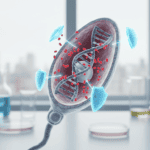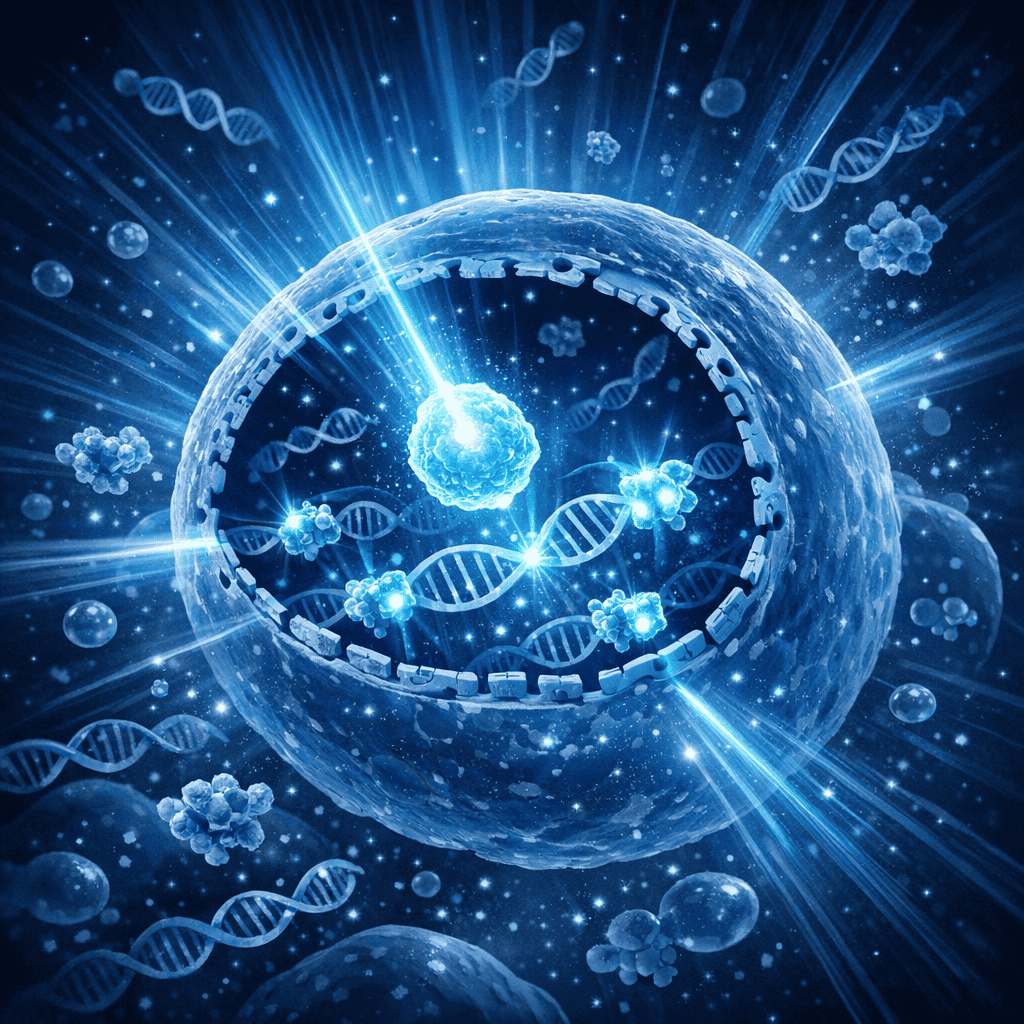

Your DNA is under constant attack. Every day, each cell in your body sustains an estimated 10,000 to 100,000 instances of oxidative DNA damage. This is not a sign of disease. It is a normal consequence of being alive. What determines your health is not whether DNA damage occurs, but how effectively your cells detect and repair it.
How Reactive Oxygen Species Damage DNA
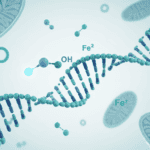
Reactive oxygen species can damage DNA in several ways. The hydroxyl radical, the most reactive of all ROS, can attack both the sugar backbone and the nucleotide bases of the DNA molecule. It can break one or both strands of the double helix. It can modify individual bases, creating lesions that change the genetic code.
The most commonly measured form of oxidative DNA damage is 8-hydroxydeoxyguanosine (8-OHdG), produced when the hydroxyl radical attacks the base guanine. 8-OHdG is used as a biomarker in research because it is relatively stable, measurable in blood and urine, and directly correlated with the level of oxidative stress a cell is experiencing.
Mitochondrial DNA is particularly vulnerable because it sits close to the electron transport chain where reactive species are continuously generated, lacks the protective histone proteins that shield nuclear DNA and has less sophisticated repair mechanisms than the nuclear genome.
The DNA Repair Machinery
Your cells have evolved multiple, overlapping repair systems to address oxidative DNA damage. The primary pathway for repairing oxidative lesions is base excision repair (BER).
In BER, a specialised enzyme called a glycosylase recognises the damaged base and cuts it out of the DNA strand. An endonuclease then removes the sugar backbone at the damage site, creating a small gap. DNA polymerase fills the gap with the correct base, using the opposite strand as a template. Finally, DNA ligase seals the repaired strand, restoring the molecule to its original sequence.
This process is remarkably fast and accurate. Under normal conditions, the vast majority of oxidative DNA lesions are repaired within hours of occurring. The repair enzymes are produced continuously and are present in both the nucleus and the mitochondria.
What Happens When Repair Falls Behind
Problems arise when the rate of DNA damage exceeds the rate of repair. This can happen when oxidative stress is chronically elevated, as occurs with sustained psychological stress, chronic sleep deprivation, environmental toxin exposure or age related decline in cellular communication.
When unrepaired DNA damage accumulates, several consequences follow. Mutations can become permanently encoded in the genome when the cell divides before the damage is repaired. The cell may activate senescence, entering a permanent state of growth arrest where it remains alive but no longer divides. Or the cell may trigger apoptosis, the controlled self destruction programme managed by mitochondria.
Senescence is a double edged outcome. It prevents the damaged cell from dividing and potentially spreading mutations. But senescent cells remain metabolically active, secreting pro inflammatory molecules (the senescence associated secretory phenotype, or SASP) that contribute to the chronic low grade inflammation known as inflammaging.
The NRF2 Connection
The NRF2 pathway plays a direct role in protecting DNA from oxidative damage. Several of the genes activated by NRF2 encode for proteins involved in DNA repair, including components of the base excision repair machinery.
NRF2 also reduces the burden of DNA damage indirectly by upregulating the antioxidant systems that prevent oxidative stress from reaching the DNA in the first place. Increased glutathione production, enhanced superoxide dismutase activity and improved glutathione recycling all reduce the number of reactive species that reach the nucleus.
This dual role, both preventing damage and supporting repair, makes NRF2 pathway maintenance one of the most important strategies for long term genomic integrity.
Lifestyle Factors That Support DNA Repair
The lifestyle factors that support DNA repair mirror those that support cellular health more broadly. Regular exercise activates NRF2 and has been shown to reduce 8-OHdG levels in multiple human studies. Cruciferous vegetables and other NRF2 activating foods support both antioxidant production and repair enzyme expression.
Quality sleep is when many DNA repair processes reach peak activity. Adequate intake of B vitamins, zinc and magnesium supports the enzymatic machinery of base excision repair. Reducing exposure to exogenous oxidative stressors (tobacco smoke, excessive alcohol, air pollution, UV radiation) reduces the total burden of DNA damage that the repair systems must handle.
A System Designed for Resilience
The scale of daily DNA damage sounds alarming, but it is important to put it in context. Your cells have evolved repair systems that are extraordinarily effective at maintaining genomic integrity under normal conditions. The human genome has been subjected to oxidative stress for the entirety of evolutionary history, and the repair machinery reflects that selection pressure.
The challenge of ageing is not that DNA damage occurs. It is that the balance between damage and repair gradually shifts as redox signalling declines, NRF2 responsiveness weakens and repair enzyme production slows. Maintaining that balance through consistent lifestyle support is not a guarantee against genomic damage, but it is the most evidence based strategy available for keeping the repair systems functioning at their best for as long as possible.

Matt Elliott is the editor of Redox News Today, an independent publication covering peer-reviewed research on cellular health, redox signalling, and related biomedical science.