
When people first learn about redox signalling molecules, a natural question follows: how many of these molecules does the body actually produce? The answer reveals something remarkable about the scale at which your cells operate and the sheer volume of molecular communication happening inside you right now.
A Scale That Defies Intuition
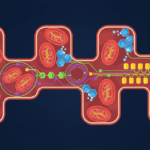
Your body contains approximately 37 trillion cells. The vast majority of these cells contain mitochondria, some housing thousands of individual mitochondria per cell. Highly active tissues like heart muscle, brain, liver and skeletal muscle are particularly mitochondria dense.
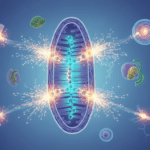
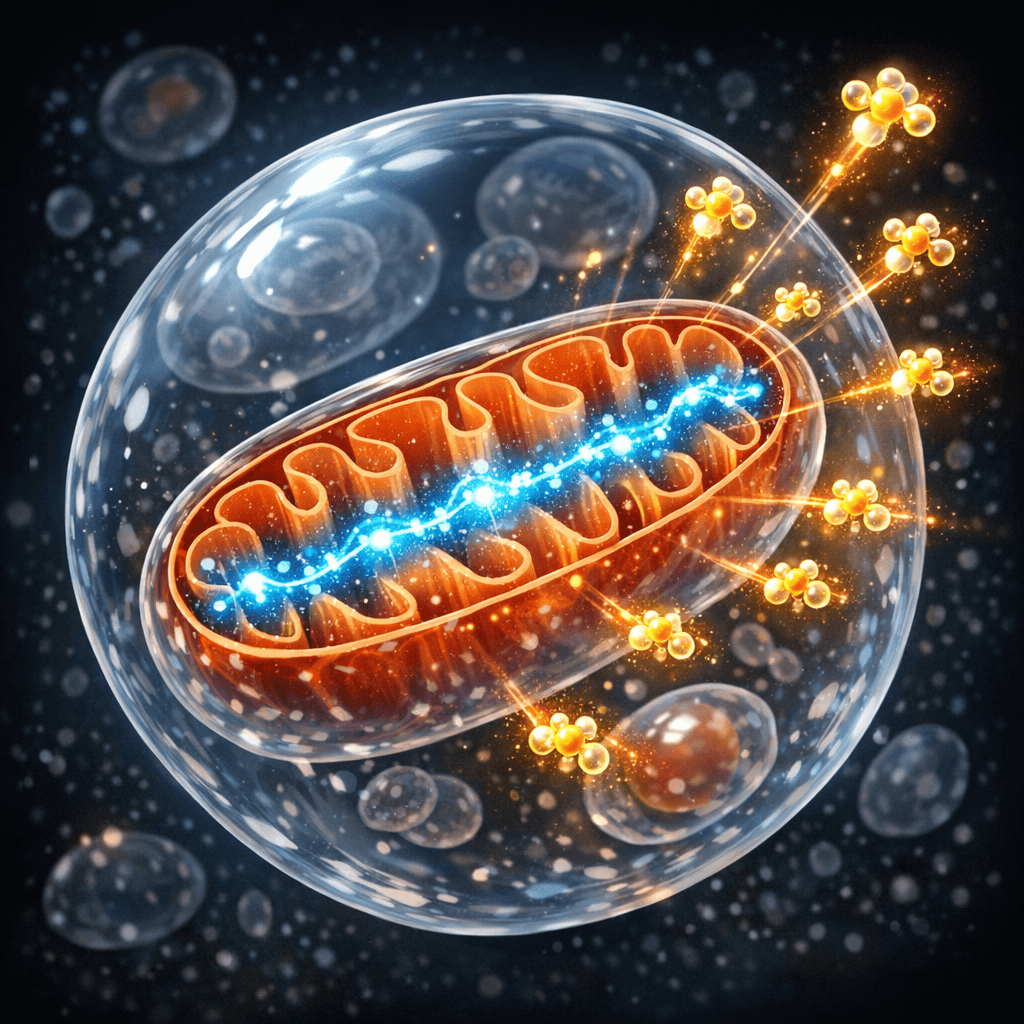
Each mitochondrion runs its electron transport chain continuously, producing ATP and generating reactive oxygen species as part of the normal energy production process. When you multiply the output of a single mitochondrion by the hundreds or thousands per cell, and then by the trillions of cells in your body, the total production of redox active molecules is enormous.
Researchers estimate that your mitochondria collectively produce billions of superoxide molecules per cell per day. Across your entire body, the daily production of reactive oxygen species reaches quantities measured in grams, not milligrams. This is not a trace amount. This is industrial scale molecular production.
NADPH Oxidases: Dedicated Production Lines
Mitochondria are not the only source. As discussed in our article on why your body produces free radicals on purpose, your cells contain a family of enzymes called NADPH oxidases (NOX enzymes) whose primary function is to generate reactive oxygen species deliberately.
Seven NOX isoforms have been identified in humans: NOX1 through NOX5, DUOX1 and DUOX2. Each is expressed in specific tissues and serves distinct functions. NOX2 in immune cells produces the massive oxidative burst used to destroy pathogens. NOX4 in blood vessel walls generates hydrogen peroxide that regulates vascular tone. DUOX enzymes in the thyroid gland produce hydrogen peroxide required for thyroid hormone synthesis.
These are not malfunctioning systems producing waste. They are precision engineered molecular machines that your body has evolved specifically to produce reactive oxygen species in controlled quantities at specific locations for specific purposes.
Hydrogen Peroxide: The Versatile Messenger
Among the redox signalling molecules your body produces, hydrogen peroxide (H2O2) has emerged as one of the most important. Unlike superoxide, which is highly reactive and short lived, hydrogen peroxide is relatively stable and can travel meaningful distances within and between cells.
This stability makes it an ideal signalling molecule. It can be produced in one part of a cell and exert its effects in another. It can even cross cell membranes to carry signals between neighbouring cells. The enzymes that produce and degrade hydrogen peroxide are tightly regulated, allowing your cells to create precise, localised pulses of this molecule when signalling is needed.
Hydrogen peroxide is one of the key signals that activates the NRF2 pathway by modifying the cysteine residues on the KEAP1 protein that normally keeps NRF2 locked up.
The Production Decline With Age
While the total volume of reactive species may actually increase with age due to mitochondrial inefficiency, the quality and precision of redox signalling declines. Ageing mitochondria produce more “noise” (uncontrolled ROS leakage) and less “signal” (precise, regulated ROS production).
This is an important distinction. The problem with ageing is not simply that there are too many reactive species. It is that the ratio of purposeful signalling to random damage shifts in the wrong direction. The NADPH oxidase systems may become dysregulated. The antioxidant systems that manage redox balance, particularly glutathione, decline in capacity. The communication network becomes noisier and less reliable.
Supporting the System
Understanding the scale and sophistication of redox signalling molecule production reinforces a central theme of cellular health science: your body’s internal systems are extraordinarily capable when they are functioning properly. The challenge of ageing is not a shortage of reactive molecules. It is the gradual loss of the precision and balance that allows those molecules to serve their signalling functions effectively.
The lifestyle factors that support this system, regular exercise, adequate sleep, nutrient dense foods and managed stress, work not by supplying something your body lacks but by maintaining the conditions under which your trillions of cells can continue to communicate clearly, repair efficiently and defend themselves against the inevitable accumulation of damage over time.
The sheer volume of redox signalling happening inside you at this moment is a reminder of how active and dynamic your biology really is, even when you are sitting still.

Matt Elliott is the editor of Redox News Today, an independent publication covering peer-reviewed research on cellular health, redox signalling, and related biomedical science.