The breakdown of cellular communication does not announce itself. There is no threshold event, no date after which things are measurably worse. The degradation is gradual, operating across years and decades through the incremental accumulation of small failures: signals that arrive slightly delayed, repair responses that are slightly less complete, immune activations that are slightly less precise. Individually, each failure is inconsequential. Collectively, they reshape what the body can do.
This is why the cellular biology of communication breakdown matters practically. The diseases and declines associated with ageing are not separate problems. They are downstream expressions of the same upstream process: a signalling network that is progressively losing fidelity.
The Repair Backlog
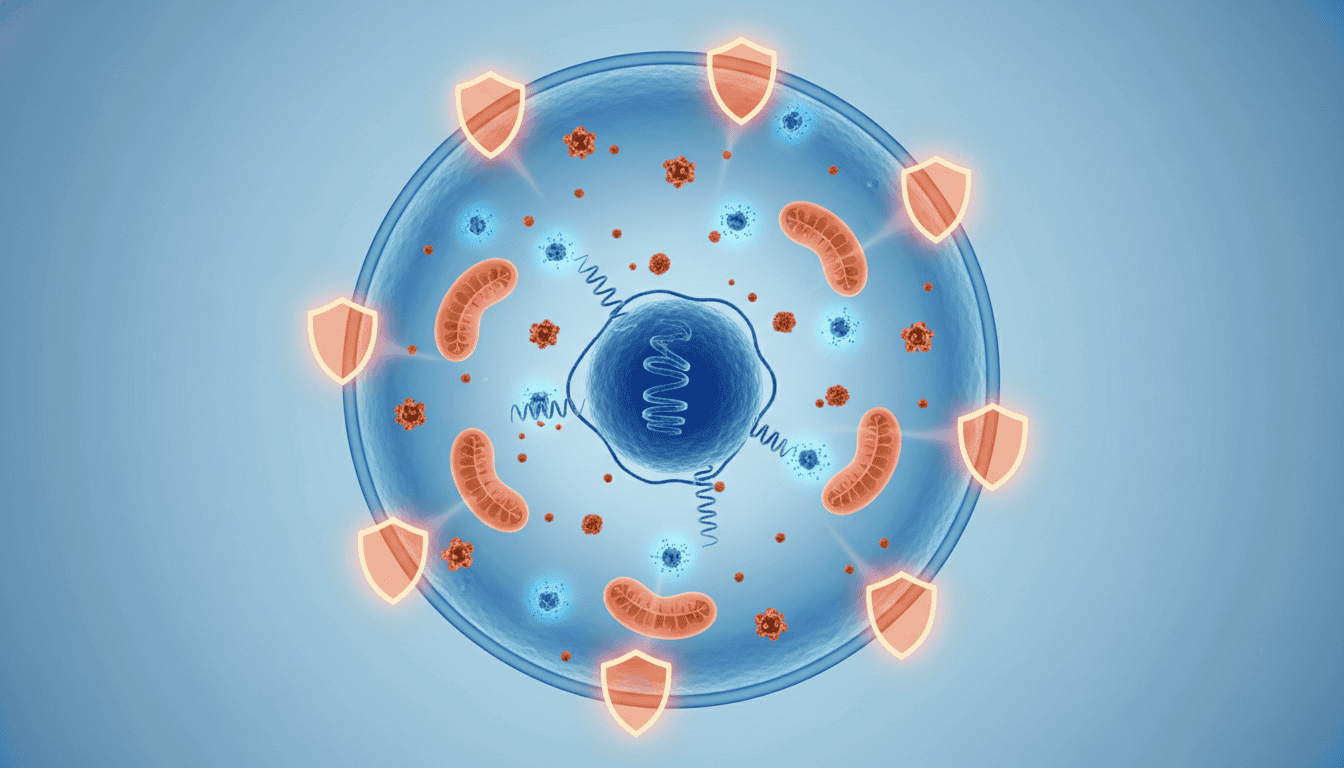
Healthy cells sustain damage constantly. Reactive oxygen species from mitochondrial energy production modify DNA bases, oxidise proteins, and peroxidise membrane lipids. Environmental exposures add to this burden. Physical stress, ultraviolet radiation, dietary metabolites, and transient infections all create cellular damage that must be detected and repaired.
In a young cell, this repair is nearly continuous and nearly complete. DNA damage response pathways detect modifications within minutes, recruit repair enzymes, and restore the sequence before the cell divides and propagates the error. The proteasome identifies and degrades oxidised and misfolded proteins before they aggregate. Mitophagy removes dysfunctional mitochondria before they skew the cell’s reactive species balance.
As cellular communication degrades, this repair backlog grows. DNA damage detection becomes less sensitive. Proteasome activity declines. Mitophagy rates fall. The result is not a cell that cannot repair at all — it is a cell whose repair is incomplete, running behind the rate of damage accumulation. Mutations that would have been corrected persist and are copied into daughter cells. Protein aggregates build up, impairing cellular function in tissue-specific ways. Damaged mitochondria accumulate and shift the cell’s reactive species output toward net oxidative stress.
Inflammaging: When the Off Signal Stops Working
One of the most consequential consequences of impaired cellular communication is the failure of inflammatory resolution. Normal inflammation is a coordinated response: pro-inflammatory signals mobilise immune cells to a site of damage or infection, the threat is addressed, and then a distinct set of anti-inflammatory signals — including specialised lipid mediators called resolvins and protectins — bring the response to a close.
In older adults, this resolution phase is consistently impaired. The pro-inflammatory cytokines IL-6, IL-1β, and TNF-α remain elevated at baseline even without active infection or injury. This state of chronic low-grade inflammation — which the geroscience field has termed inflammaging — was first described systematically by Claudio Franceschi and colleagues in 2000 and has since been associated with cardiovascular disease, type 2 diabetes, neurodegeneration, sarcopenia, and all-cause mortality in older populations.
The connection to redox signalling is direct. NRF2 regulates not only antioxidant gene expression but also the activity of NF-κB, the primary pro-inflammatory transcription factor. When NRF2 activity declines, the brake on NF-κB-driven inflammation weakens. Reactive species that would have triggered protective NRF2 activation instead accumulate and activate NF-κB, which amplifies the inflammatory signal rather than resolving it. The same molecular machinery serves both protective and destructive functions depending on its state of regulation.
Immunosenescence and Signalling Noise
The ageing immune system faces two simultaneous problems that both trace to communication breakdown: reduced effectiveness against genuine threats and increased reactivity against non-threats. T cell function declines as thymic output falls and the proportion of exhausted or senescent T cells rises. Natural killer cell cytotoxicity decreases. Vaccine responses become less robust. The immune system loses the ability to distinguish self from non-self with previous precision, contributing to the increased autoimmune incidence seen in older populations.
Glutathione depletion in immune cells is directly relevant here. T cell proliferation and activation require adequate intracellular glutathione. Studies measuring lymphocyte glutathione in older adults have found consistent deficits compared to younger controls, and these deficits correlate with functional immune measures. The communication problem in the immune system is partly a redox problem — the cells lack the chemical environment they need to respond effectively.
Senescent Cells and the SASP
Cellular senescence — the state in which a cell permanently exits the cell cycle and stops dividing — is a normal cellular response to damage, telomere shortening, and oncogenic stress. A senescent cell is not dead. It remains metabolically active and, critically, it secretes a complex mixture of cytokines, proteases, and growth factors called the senescence-associated secretory phenotype (SASP).
In young tissue, senescent cells are cleared efficiently by the immune system. As immune surveillance declines with age, senescent cells accumulate. Their SASP drives local inflammation, disrupts tissue architecture, and can induce senescence in neighbouring cells through paracrine signalling. This bystander effect means that a small number of senescent cells can have effects disproportionate to their numbers. The accumulation of senescent cells in aged tissue is now considered one of the hallmarks of ageing, and senolytic drugs that selectively clear them are in clinical trials.
What Remains Unknown
The relative contribution of different communication failures to the overall ageing phenotype is not established. Inflammaging, mitochondrial dysfunction, telomere attrition, epigenetic drift, and senescent cell accumulation all co-occur in ageing tissue and influence each other. Determining which processes are primary drivers versus secondary amplifiers, and in which tissues and timeframes, is one of the central challenges of geroscience.
Whether interventions that target one element of the communication network — senolytics, NAD+ precursors, NRF2 activators, mitophagy enhancers — produce benefits that extend beyond their primary target is also unresolved. The interconnected nature of the system suggests they might. The clinical evidence in humans is still early.
What the Research Points To
The signalling network that keeps cells coordinated is not maintained passively. It requires ongoing inputs: the hormetic stress of exercise that stimulates NRF2 and mitochondrial biogenesis, the metabolic rest of adequate sleep that enables mitophagy and protein clearance, the nutritional substrates for glutathione synthesis and enzyme function, and the absence of chronic stressors that drive continuous pro-inflammatory signalling. The same behaviours keep appearing in longevity research because they are addressing the same underlying system. The question is not what intervention reverses ageing. It is which inputs maintain the communication infrastructure that determines how quickly it degrades.

Matt Elliott is the editor of Redox News Today, an independent publication covering peer-reviewed research on cellular health, redox signalling, and related biomedical science.