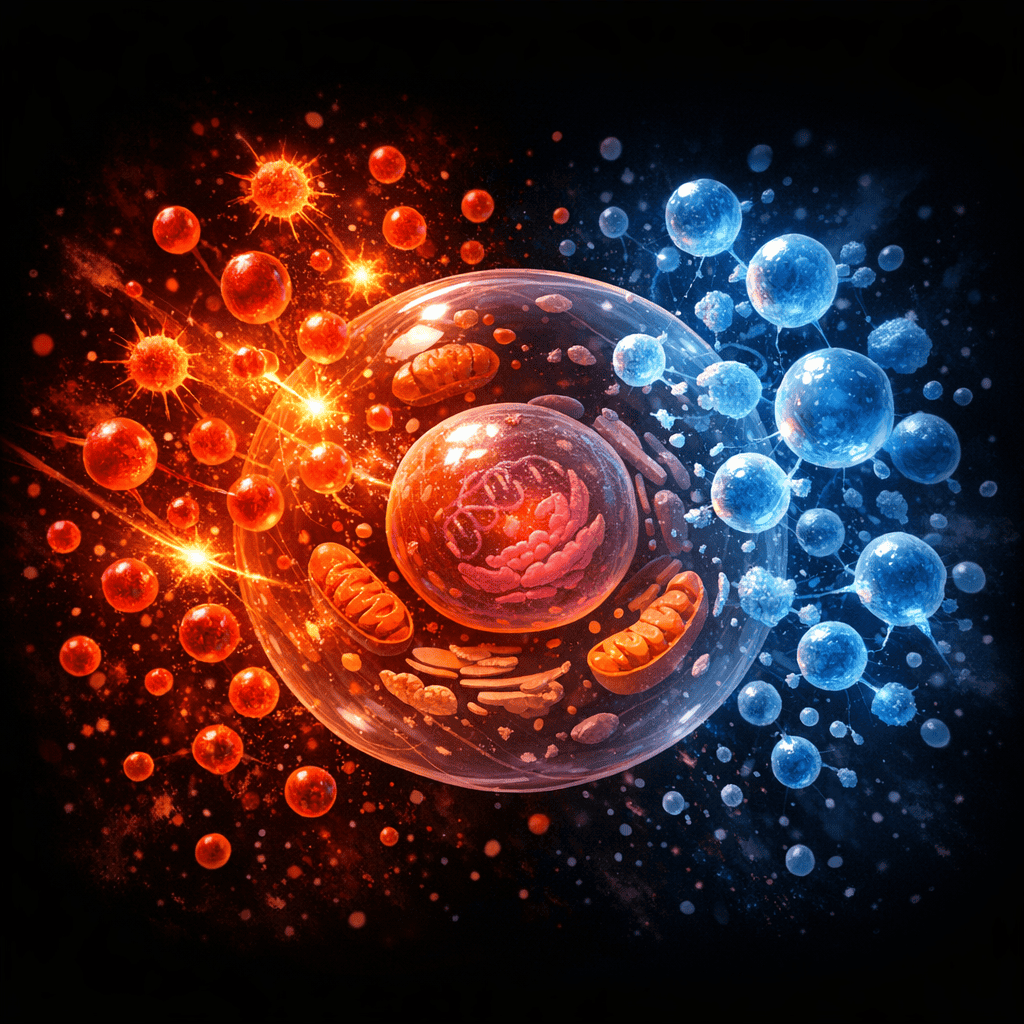

It sounds counterintuitive. Exercise is supposed to be good for you, yet during a workout your muscles produce a significant surge of reactive oxygen species, the very molecules associated with oxidative stress and cellular damage. How can something that increases oxidative stress also be one of the best things you can do for your health?
The answer lies in a biological principle called hormesis, and it fundamentally changes how we should think about exercise, stress and cellular adaptation.
What Happens Inside Your Cells During Exercise
When you exercise, your muscles demand dramatically more energy. Your mitochondria ramp up ATP production, and as they do, the electron transport chain generates significantly more reactive oxygen species as a byproduct of the increased metabolic activity.
During intense exercise, ROS production in muscle tissue can increase by two to threefold. This is a measurable, well documented spike in oxidative stress. According to the old narrative of free radicals as purely harmful agents, this should be damaging. But the research tells a very different story.
This burst of reactive species acts as a signal. It tells your cells that demand has exceeded current capacity and that adaptations are needed. The redox signalling molecules produced during exercise activate a cascade of protective responses that leave your cells stronger than they were before the workout.
NRF2 Activation Through Exercise
One of the most important responses to exercise induced oxidative stress is the activation of the NRF2 pathway. The reactive oxygen species generated during physical activity cause the KEAP1 protein to release NRF2, which then enters the cell nucleus and switches on more than 200 protective genes.
These genes increase the production of glutathione, superoxide dismutase, catalase and other internal antioxidant enzymes. They upregulate DNA repair mechanisms. They stimulate mitochondrial biogenesis, the creation of new, more efficient mitochondria.
The net result is that your cells emerge from the exercise stimulus with greater antioxidant capacity, more mitochondria, better energy production and improved resistance to future oxidative challenges. The temporary stress made them stronger.
Why Antioxidant Supplements Before Workouts Can Backfire
This understanding has important implications for supplementation. Several well designed studies have examined what happens when people take high dose antioxidant supplements, particularly vitamins C and E, before exercise.
The findings are consistent and somewhat uncomfortable for the supplement industry. When the exercise induced ROS spike is blunted by external antioxidants, the adaptive signalling is also blunted. The cells do not receive the signal that they need to strengthen their defences. NRF2 activation is reduced. Glutathione upregulation is diminished. Mitochondrial biogenesis is impaired.
In practical terms, the people taking antioxidant supplements before training experienced fewer of the beneficial adaptations that exercise is supposed to produce. As explored in our article on why your body produces free radicals on purpose, these reactive molecules are not just tolerated during exercise. They are the mechanism through which exercise delivers many of its benefits.
The Dose Response Relationship
The key to understanding exercise and oxidative stress is the dose response relationship. Moderate, controlled increases in ROS production during regular exercise trigger adaptive responses that improve cellular resilience. This is hormesis in action: a moderate stressor producing a disproportionately positive adaptive response.
However, extreme or prolonged oxidative stress without adequate recovery overwhelms the adaptive capacity. Overtraining syndrome, where athletes experience declining performance, increased illness and prolonged fatigue, is partly mediated by chronic oxidative stress that exceeds the body’s recovery capacity.
The practical takeaway is clear. Regular, appropriately challenging exercise produces the oxidative stimulus your cells need to activate their strongest protective mechanisms. Adequate rest and recovery between sessions allows those adaptations to consolidate. And the internal antioxidant systems activated through NRF2, rather than external supplements, provide the protection your cells need.
Exercise as Cellular Medicine
Viewing exercise through the lens of redox biology transforms how we understand its benefits. Exercise is not good for you despite the oxidative stress it creates. It is good for you partly because of it. The temporary disruption to cellular homeostasis is the trigger that drives adaptation.
This principle applies across the spectrum of physical activity. Whether you are walking, swimming, lifting weights or running, your muscles are generating reactive species that signal your cells to improve their defences. The fitter you become, the more efficiently your cells handle oxidative challenges, both during exercise and in everyday life.
Understanding this mechanism does not change the recommendation to exercise. It deepens the reason why.

Matt Elliott is the editor of Redox News Today, an independent publication covering peer-reviewed research on cellular health, redox signalling, and related biomedical science.