Oxidative stress at a glance
What it is: an imbalance in which reactive forms of oxygen outpace the cell’s ability to control them
Where reactive oxygen comes from: mainly mitochondria and a family of enzymes called NADPH oxidases
The twist: at low levels, the same molecules act as essential signals
The concept: formally defined in 1985 and refined since to separate helpful from harmful levels
The supplement question: large trials of antioxidant vitamins have largely failed to show benefit, and some found harm
Oxidative stress is one of the most widely used phrases in health research and one of the most widely misunderstood. It is often presented as a simple story: free radicals are bad, antioxidants are good, so more antioxidants must be better. Four decades of research have shown that the real picture is more interesting. Cells make reactive oxygen on purpose, use it to send signals, and run sophisticated systems to keep it in the right range. Problems arise when that balance tips too far, in either direction.
This guide explains what oxidative stress actually is, where reactive oxygen comes from, how cells keep it in check, how scientists measure it, and what large trials of antioxidant supplements found. Every key point is linked to its source.
In this guide: What oxidative stress is · Where reactive oxygen comes from · Free radicals as signals · How cells keep the balance · The free radical theory of ageing · How oxidative stress is measured · What antioxidant trials found · The exercise paradox · What we still do not know · Common questions · References
What oxidative stress is
Every cell that uses oxygen to make energy also produces small amounts of reactive oxygen species, often shortened to ROS. The term covers several molecules, including free radicals such as the superoxide radical, which carry an unpaired electron, and non-radical molecules such as hydrogen peroxide. These molecules can react with proteins, fats and DNA, changing or damaging them.
The term oxidative stress was formally defined in 1985 by the German biochemist Helmut Sies, and by 2015 it appeared in around 138,000 scientific papers [1]. In a 2015 review in Redox Biology, Sies noted that the concept has merits and pitfalls. Its main pitfall is that the term is often used loosely, without a clear link to the underlying chemistry [1].
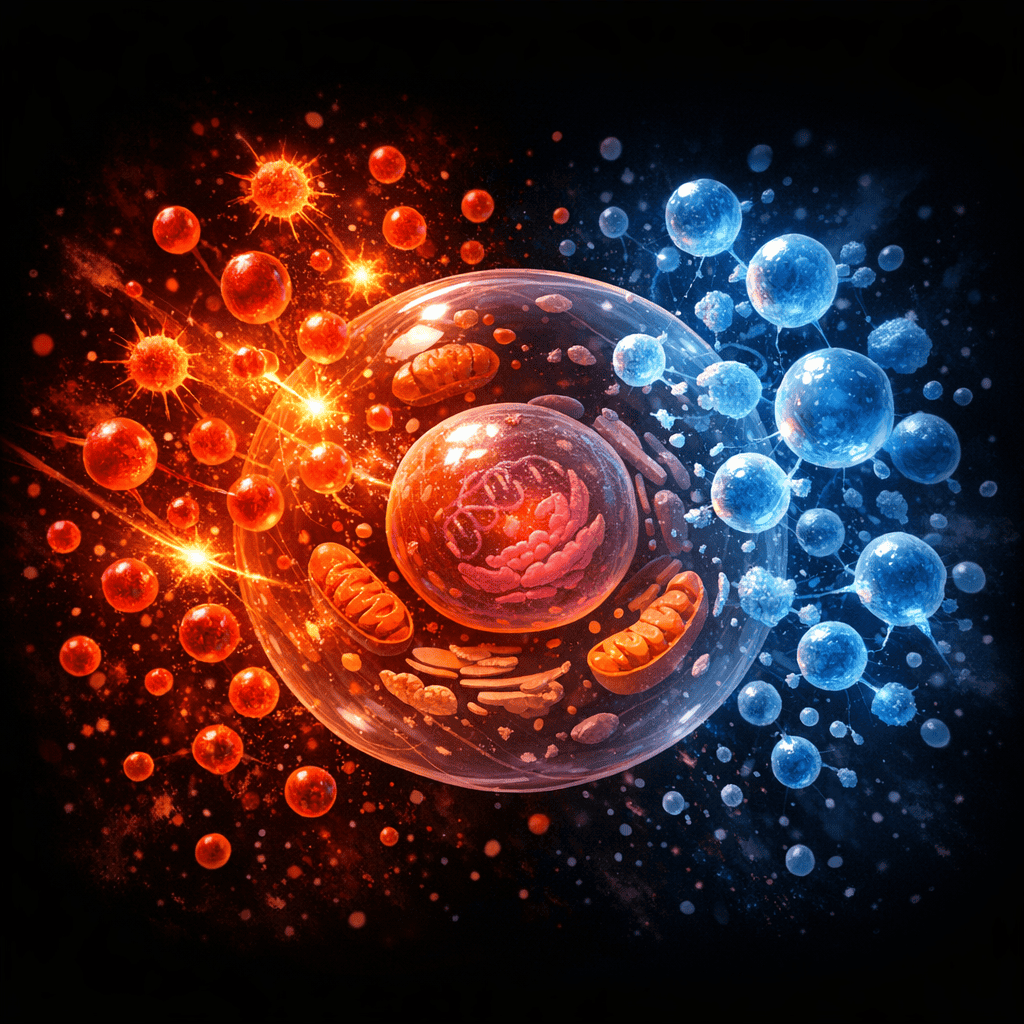
The modern definition is two-sided. A 2017 review in the Annual Review of Biochemistry distinguishes between oxidative distress, where excessive reactive oxygen damages the molecules of the cell, and oxidative eustress, a low, physiological level that is essential for normal life processes [2]. In other words, the goal is not zero reactive oxygen. It is the right amount, in the right place, at the right time.
Where reactive oxygen comes from
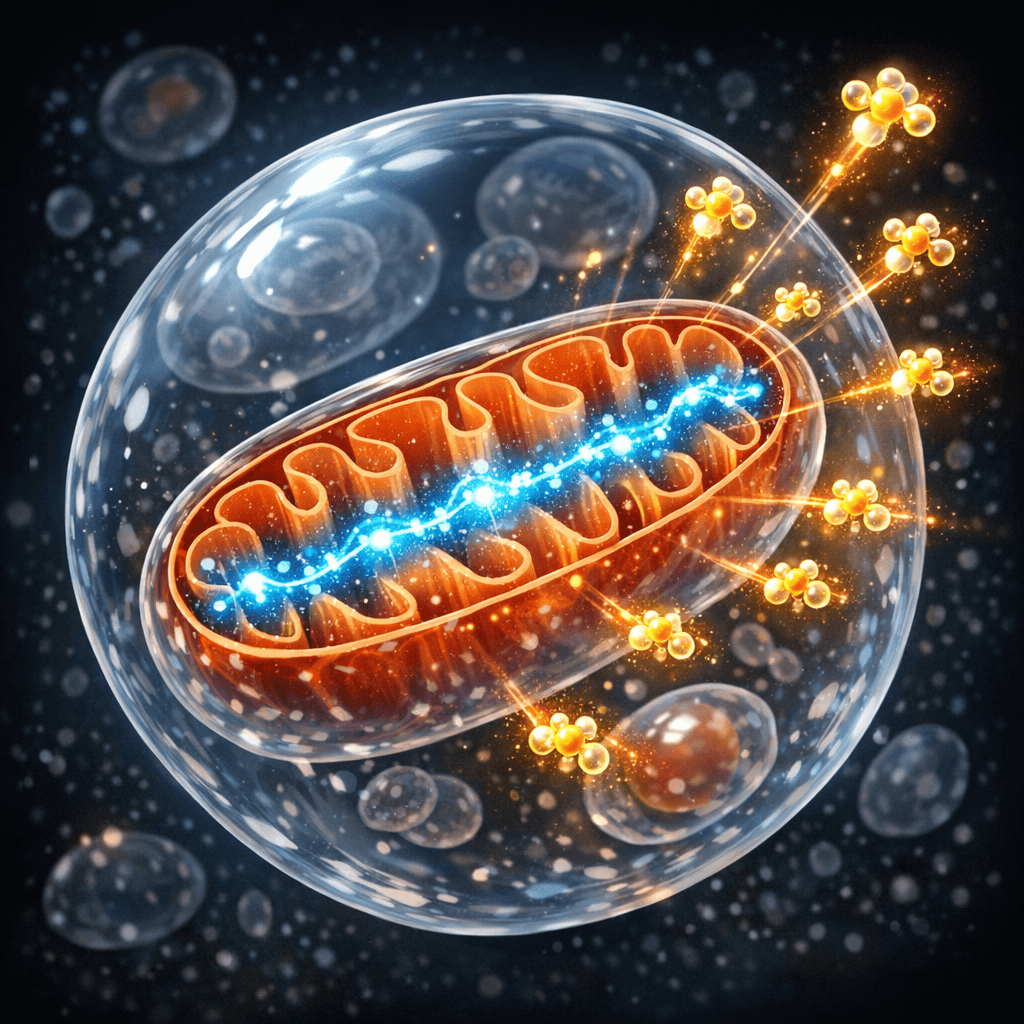
Mitochondria. The mitochondria that produce most of the cell’s energy pass electrons along a chain of proteins to oxygen. A small fraction of those electrons leak out early and form superoxide. A 2009 review in the Biochemical Journal explains that the rate of leakage depends heavily on conditions inside the mitochondrion, and is generally much lower when mitochondria are actively making energy than when they are idle [3].
NADPH oxidases. Cells also make reactive oxygen deliberately, using a family of enzymes called NADPH oxidases, or NOX enzymes. The best known is in white blood cells, which use a burst of reactive oxygen to kill bacteria and fungi. A 2004 review in Nature Reviews Immunology describes how related NOX enzymes are found in many other tissues, where they produce reactive oxygen for signalling and other functions [4].
A 2020 review in Nature Reviews Molecular Cell Biology counts more than 40 enzymes that generate hydrogen peroxide and superoxide in response to growth factors and other signals [5]. Outside sources such as tobacco smoke, air pollution, radiation and some chemicals add to the load.
Free radicals as signals
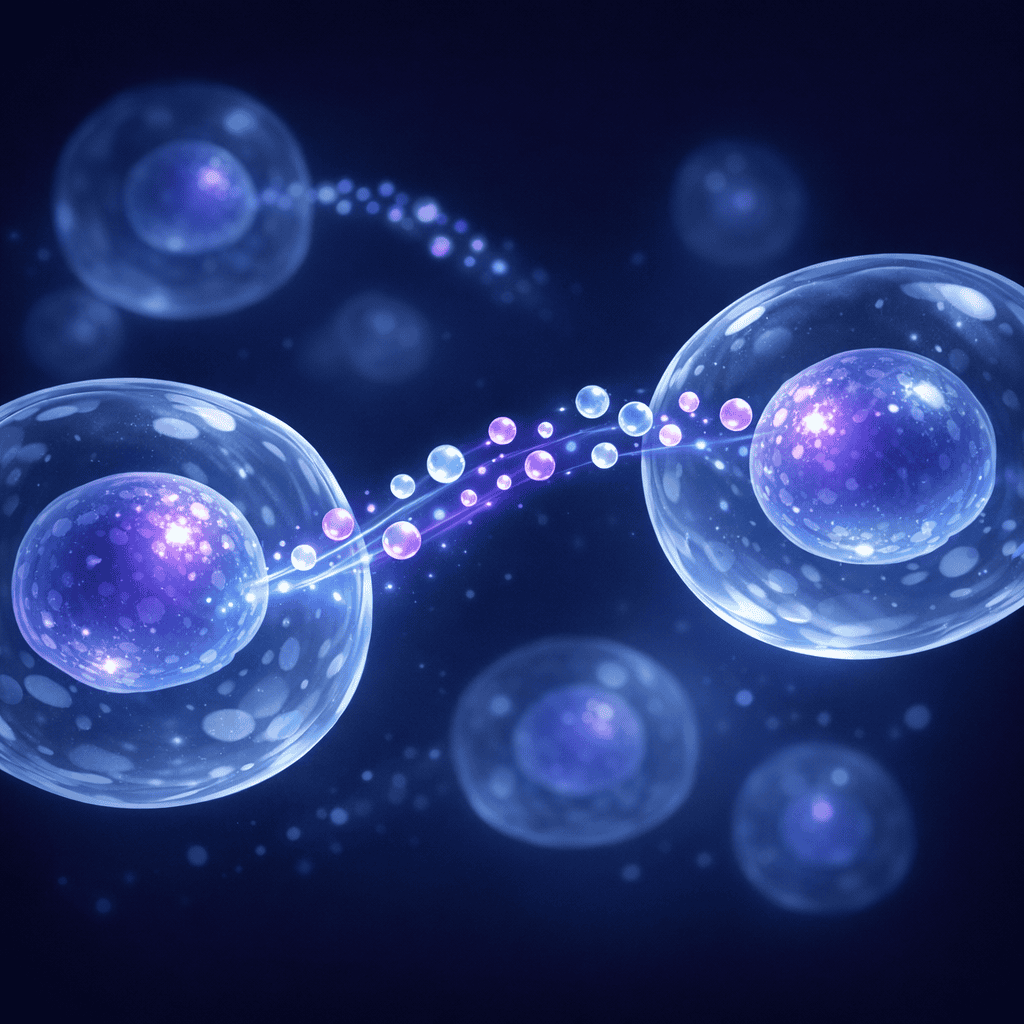
The biggest shift in this field over the past two decades has been the recognition that reactive oxygen is not only a by-product but also a messenger. Hydrogen peroxide in particular is stable enough to travel short distances and reacts selectively with particular sites on proteins, switching their activity on or off [5].
In a 2017 overview in Redox Biology, Sies set out approximate ranges for hydrogen peroxide inside cells. At around 1 to 10 nanomolar, it acts as a normal signal. At higher levels it triggers adaptive stress responses through master switches such as NRF2, and above roughly 100 nanomolar it begins to damage biomolecules [6]. The figures are estimates, but they show why the dose and location of reactive oxygen matter so much. The NRF2 switch is explained in our guide to the NRF2 pathway.
Reactive oxygen signalling is involved in how cells respond to growth factors, adapt to exercise, fight infection and decide whether to divide or die [5]. This is why blocking it indiscriminately can have unintended effects, a point that becomes important in the trial evidence below.
How cells keep the balance
Cells manage reactive oxygen in three broad ways, which the 2017 review describes as prevention, interception and repair [2]. They limit how much is made, neutralise what is made, and repair or replace what is damaged.
Most of the heavy lifting is done by enzymes rather than by small antioxidant molecules. Sies made this point directly in 2015: the major role in antioxidant defence is fulfilled by antioxidant enzymes, not by small-molecule antioxidant compounds [1]. Key enzymes include superoxide dismutases, which convert superoxide to hydrogen peroxide; catalase and the peroxiredoxins, which break down hydrogen peroxide; and the glutathione and thioredoxin systems, which supply the reducing power for many of these reactions [2]. Our guide to glutathione covers the best known of these systems.
Dietary antioxidants such as vitamins C and E do play a role, particularly in protecting cell membranes and fluids. A 2024 review in Nature Reviews Molecular Cell Biology by Barry Halliwell, a leading figure in the field, examines both the successes and the failures of antioxidants in human disease, and suggests that some of the benefits of a healthy diet, exercise and good control of blood glucose and cholesterol may come partly through effects on oxidative balance [7].
The free radical theory of ageing
In 1956, the American scientist Denham Harman proposed that ageing results from the gradual accumulation of damage caused by free radicals [8]. The idea was enormously influential and shaped decades of research, including much of the interest in antioxidant supplements.
The theory has since been substantially revised. Oxidative damage does accumulate with age in many tissues, but researchers now recognise that reactive oxygen also has essential signalling roles, and that simply suppressing it does not reliably extend life or health [2, 5]. Many researchers now see oxidative stress as one contributor among several to the ageing process, rather than its single cause.
How oxidative stress is measured
Measuring oxidative stress in people is harder than it sounds. Reactive oxygen molecules are short lived, so researchers usually measure the marks they leave behind: oxidised fats such as F2-isoprostanes, oxidised DNA bases such as 8-OHdG, oxidised proteins, and changes in antioxidant systems such as the glutathione balance.
A 2015 review in Antioxidants and Redox Signaling on the clinical relevance of these biomarkers found the literature very heterogeneous. Different studies use different markers for different diseases, many common methods are nonspecific, and the more specific methods are often too complex for routine clinical use. The authors concluded that positive findings still need to be validated in larger studies before most markers can be used clinically [9]. This matters when reading research: a change in a single oxidative stress marker is not the same as a change in health.
What antioxidant trials found
If oxidative damage contributes to disease, it seemed logical that antioxidant supplements would help prevent it. Large randomised trials tested that idea, and the results were sobering.
The Physicians’ Health Study gave beta carotene or placebo to 22,071 male doctors in the United States for 12 years. Published in the New England Journal of Medicine in 1996, it found neither benefit nor harm for cancer, cardiovascular disease or death from all causes [10].
The Selenium and Vitamin E Cancer Prevention Trial, known as SELECT, enrolled more than 35,000 men. Its extended follow-up, published in JAMA in 2011, found that men taking vitamin E had a 17 per cent higher risk of prostate cancer than those on placebo [11].
A 2012 Cochrane systematic review pooled 78 randomised trials of beta carotene, vitamin A, vitamin C, vitamin E and selenium, involving 296,707 participants. Across all trials there was no significant effect on mortality. In the 56 trials judged to be at low risk of bias, antioxidant supplements were associated with a small but significant increase in mortality, with beta carotene and vitamin E among the supplements linked to higher risk [12].
These findings apply to the specific supplements and doses tested, mostly in older adults, and do not mean that antioxidant-rich foods are harmful. But they do show that the simple logic of more antioxidants, less disease, did not hold up when tested.
The exercise paradox
Exercise increases reactive oxygen production in muscle, yet regular exercise is one of the best-established ways to support long-term health. Two small human studies suggested that these facts are connected.
In a 2009 study in the Proceedings of the National Academy of Sciences, 39 young men took part in four weeks of exercise training, some with vitamin C and vitamin E supplements and some without. Improvements in insulin sensitivity were seen only in the men not taking antioxidants, along with increases in the body’s own defence genes [13]. A 2008 study in the American Journal of Clinical Nutrition, which combined a small human trial with experiments in rats, reported that vitamin C supplementation hampered some training adaptations in endurance capacity [14].
The researchers proposed that the reactive oxygen produced during exercise acts as a signal that tells muscles to adapt, and that high-dose antioxidants can blunt that signal. Both studies were small, and later research has produced mixed results, so the question is still debated. But the idea fits the broader shift in the field: some oxidative stress is part of how the body gets stronger.
What we still do not know
Several important questions remain open. Scientists still lack simple, reliable ways to measure oxidative stress in specific human tissues, which makes it hard to know who, if anyone, has too much and would benefit from intervention [9].
It is also often unclear whether oxidative stress is a cause of a given disease or a consequence of it. Many conditions show raised markers, but showing that lowering them changes the course of disease has proved much harder [7, 12].
Finally, research is moving from broad antioxidants towards more targeted approaches: specific enzymes, specific cell compartments and specific signalling pathways [5, 7]. Whether those approaches translate into practical benefits for people is still being worked out.
Common questions
Are free radicals always bad?
No. Cells make reactive oxygen deliberately and use it as a signal, and immune cells use it to kill microbes. Problems arise when levels are too high for too long, or in the wrong place [2, 5].
What is the difference between oxidative eustress and distress?
Eustress refers to low, physiological levels of reactive oxygen that support normal signalling. Distress refers to levels high enough to damage proteins, fats and DNA [2, 6].
What causes oxidative stress?
Normal metabolism produces reactive oxygen all the time. The balance can be tipped by outside sources such as smoking, pollution and radiation, by inflammation and infection, and by anything that weakens the cell’s defence enzymes [2, 4].
Do antioxidant supplements prevent oxidative stress?
Large trials of antioxidant vitamins have not shown the expected benefits, and some found harm [10, 11, 12]. Most antioxidant defence inside cells is carried out by enzymes rather than by small molecules from the diet [1].
Can oxidative stress be measured with a blood test?
Researchers use several blood and urine markers, but there is no single agreed test, and most markers are not yet validated for routine clinical use [9].
Further reading: The biology of ageing explained: the twelve hallmarks and what the research shows.
Further reading: Mitochondria explained: how your cells make energy, and why it matters.
Further reading: Ferroptosis explained: how iron drives a distinct form of cell death.
Further reading: Sleep and cellular repair: what happens inside your cells while you sleep.
Further reading: Redox signalling explained: how cells use reactive oxygen as a message.
Further reading: Inflammation explained · Exercise and your cells
References
- Sies H. (2015). Oxidative stress: a concept in redox biology and medicine. Redox Biology. https://doi.org/10.1016/j.redox.2015.01.002
- Sies H, Berndt C, Jones DP. (2017). Oxidative stress. Annual Review of Biochemistry. https://doi.org/10.1146/annurev-biochem-061516-045037
- Murphy MP. (2009). How mitochondria produce reactive oxygen species. Biochemical Journal. https://doi.org/10.1042/BJ20081386
- Lambeth JD. (2004). NOX enzymes and the biology of reactive oxygen. Nature Reviews Immunology. https://doi.org/10.1038/nri1312
- Sies H, Jones DP. (2020). Reactive oxygen species (ROS) as pleiotropic physiological signalling agents. Nature Reviews Molecular Cell Biology. https://doi.org/10.1038/s41580-020-0230-3
- Sies H. (2017). Hydrogen peroxide as a central redox signaling molecule in physiological oxidative stress: oxidative eustress. Redox Biology. https://doi.org/10.1016/j.redox.2016.12.035
- Halliwell B. (2024). Understanding mechanisms of antioxidant action in health and disease. Nature Reviews Molecular Cell Biology. https://doi.org/10.1038/s41580-023-00645-4
- Harman D. (1956). Aging: a theory based on free radical and radiation chemistry. Journal of Gerontology. https://doi.org/10.1093/geronj/11.3.298
- Frijhoff J, Winyard PG, Zarkovic N, et al. (2015). Clinical relevance of biomarkers of oxidative stress. Antioxidants and Redox Signaling. https://doi.org/10.1089/ars.2015.6317
- Hennekens CH, Buring JE, Manson JE, et al. (1996). Lack of effect of long-term supplementation with beta carotene on the incidence of malignant neoplasms and cardiovascular disease. New England Journal of Medicine. https://doi.org/10.1056/NEJM199605023341801
- Klein EA, Thompson IM, Tangen CM, et al. (2011). Vitamin E and the risk of prostate cancer: the Selenium and Vitamin E Cancer Prevention Trial (SELECT). JAMA. https://doi.org/10.1001/jama.2011.1437
- Bjelakovic G, Nikolova D, Gluud LL, et al. (2012). Antioxidant supplements for prevention of mortality in healthy participants and patients with various diseases. Cochrane Database of Systematic Reviews. https://doi.org/10.1002/14651858.CD007176.pub2
- Ristow M, Zarse K, Oberbach A, et al. (2009). Antioxidants prevent health-promoting effects of physical exercise in humans. Proceedings of the National Academy of Sciences. https://doi.org/10.1073/pnas.0903485106
- Gomez-Cabrera MC, Domenech E, Romagnoli M, et al. (2008). Oral administration of vitamin C decreases muscle mitochondrial biogenesis and hampers training-induced adaptations in endurance performance. American Journal of Clinical Nutrition. https://doi.org/10.1093/ajcn/87.1.142
Redox News Today reports on published research for general interest. This guide is not medical advice. Last reviewed October 2026.

Matt Elliott is the editor of Redox News Today, an independent publication covering peer-reviewed research on cellular health, redox signalling, and related biomedical science.