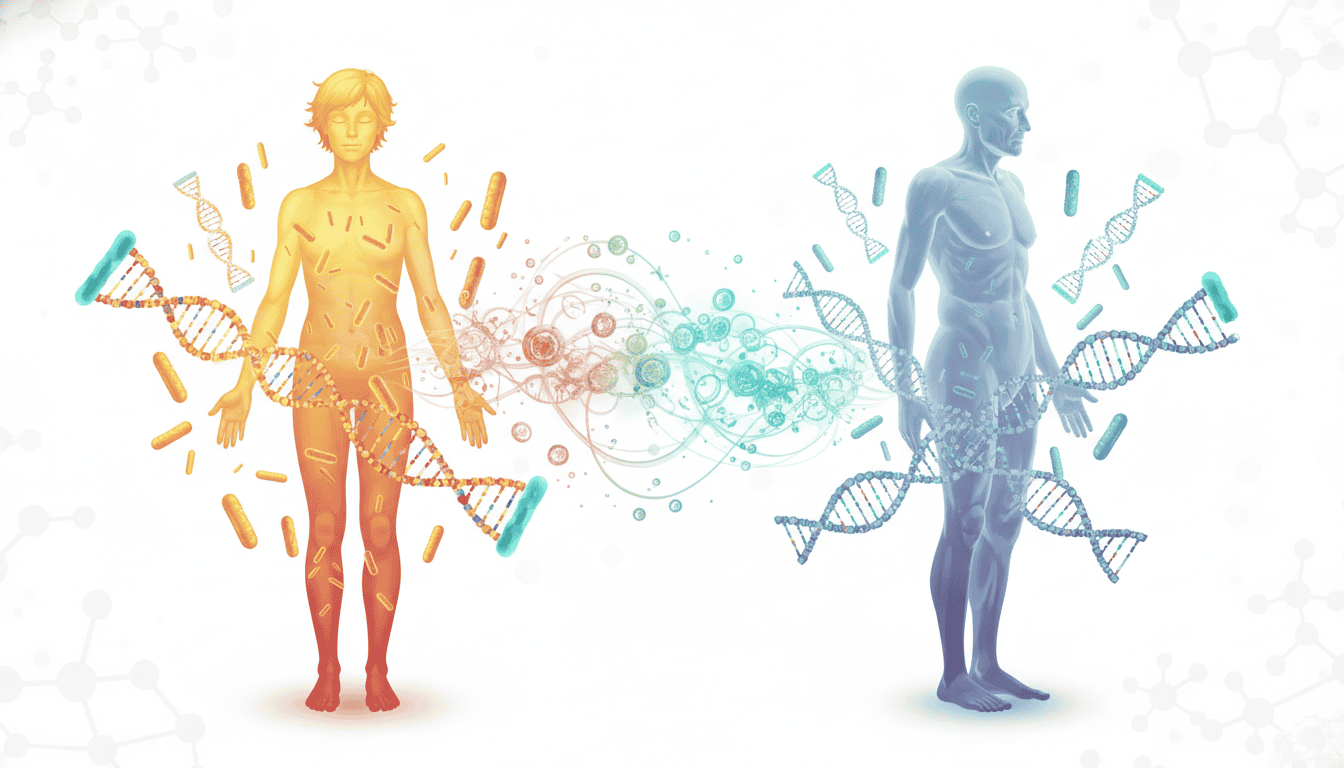

If you search PubMed, the United States National Library of Medicine’s database of biomedical literature, for “redox signalling,” the results now exceed 30,000 peer reviewed articles. This number has been growing by thousands of studies per year, making redox biology one of the most productive and rapidly expanding fields in modern biomedical science.
But what does that number actually tell us? And what are these studies revealing?
The Scale of the Evidence Base
Thirty thousand studies is not a niche literature. For context, the total number of published papers on many well established medical topics is smaller. The volume of redox signalling research reflects the breadth of biological processes that depend on reactive oxygen and nitrogen species as signalling molecules.
The studies span virtually every branch of biology and medicine. Cardiovascular research explores how nitric oxide and hydrogen peroxide regulate vascular tone. Immunology research examines how the respiratory burst destroys pathogens. Neuroscience investigates redox signalling in synaptic plasticity and neuroinflammation. Oncology studies the role of oxidative stress in tumour microenvironments. Exercise science documents the hormetic benefits of training induced oxidative stress.
This diversity of research reflects a fundamental truth: redox signalling is not a specialised topic. It is a universal biological mechanism that touches every organ system and every aspect of cellular function.
What the Research Has Established
Several findings from this body of research are now firmly established in the scientific consensus.
First, reactive oxygen species are not simply toxic waste products. They are essential signalling molecules produced deliberately by dedicated enzyme systems including NADPH oxidases and mitochondrial complexes. This was the paradigm shift that transformed the field from the simplistic free radical theory to the modern redox signalling model.
Second, the NRF2 pathway is a master regulator of cellular protection. Research from institutions including Sichuan University and Monash University has mapped how this single transcription factor coordinates the expression of more than 200 genes involved in antioxidant defence, detoxification and inflammation resolution.
Third, glutathione decline is a measurable hallmark of ageing. Studies from the University of Bath and Western Sydney University have documented 40 to 55 percent reductions in glutathione levels with age, with corresponding increases in oxidative damage markers.
Fourth, high dose antioxidant supplementation does not replicate the benefits of healthy internal redox systems. Multiple large clinical trials, including SELECT, ATBC and comprehensive meta analyses, have established that isolated antioxidant supplements fail to deliver the outcomes their marketing promises.
Where the Research Is Heading
The frontier of redox research is moving in several directions simultaneously.
Single cell redox profiling, reported in a 2025 Nature Communications paper, allows researchers to measure the redox state of individual cells within a population. This technology reveals that cells within the same tissue can have dramatically different redox profiles, information that was invisible when researchers could only measure population averages.
Redox proteomics is mapping which specific proteins are modified by reactive species and how those modifications alter function. This protein level understanding is opening the door to targeted interventions that address specific signalling disruptions rather than blanketing the entire system with antioxidants.
Reactive nitrogen species research is revealing the complex interplay between nitric oxide, peroxynitrite and the broader redox environment. The cardiovascular implications alone have generated thousands of studies.
The connection between redox signalling and autophagy is another active area. Researchers are mapping how oxidative signals trigger cellular cleanup processes and how disruptions to this relationship contribute to age related cellular deterioration.
The Institutional Commitment
The breadth of institutional involvement in redox research is itself significant. Major research universities on every continent are actively contributing to the field. Dedicated redox biology journals, including Redox Biology (impact factor above 11), Free Radical Biology and Medicine, and Antioxidants and Redox Signaling, publish hundreds of papers annually.
The Society for Free Radical Biology and Medicine (SFRBM) and the Society for Redox Biology and Medicine hold annual conferences that attract thousands of researchers. Funding from the National Institutes of Health, the European Research Council and equivalent bodies worldwide supports ongoing programmes across dozens of research areas.
This level of institutional commitment reflects a collective scientific judgment that redox signalling is not a passing research fashion. It is a foundational aspect of biology that we are still in the early stages of fully understanding.
What This Means for You
The 30,000 studies on PubMed represent an enormous and growing evidence base that consistently points to the same practical conclusions. Cellular health depends on maintaining redox balance. That balance is supported by regular exercise, nutrient dense whole foods, quality sleep, managed stress and reduced exposure to environmental toxins.
These are not guesses or marketing claims. They are the conclusions drawn from the largest and most rigorous body of cellular health research ever assembled. The science is not ambiguous. It is overwhelming.

Matt Elliott is the editor of Redox News Today, an independent publication covering peer-reviewed research on cellular health, redox signalling, and related biomedical science.