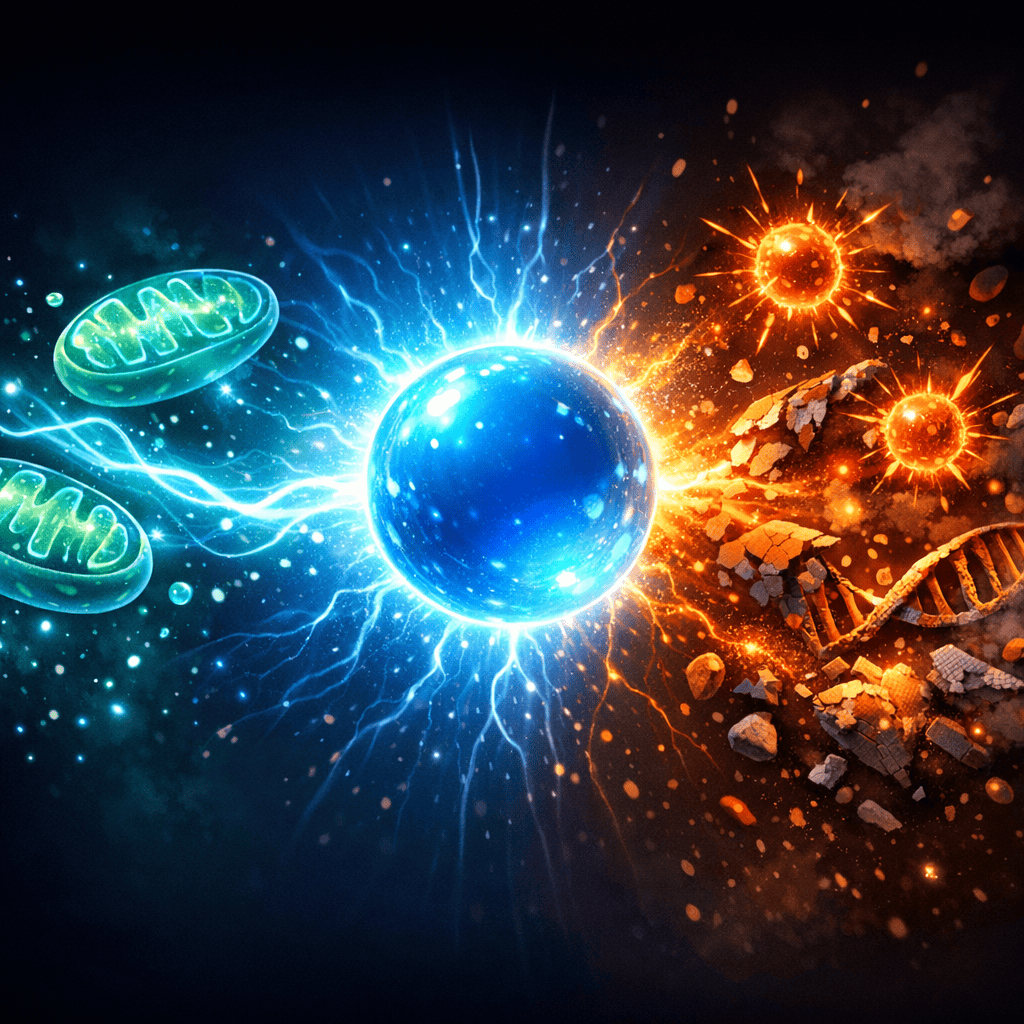
Chemistry students encounter redox reactions early and often find them confusing in a specific way. The definitions seem simple — oxidation is the loss of electrons, reduction is the gain — but applying them consistently requires remembering that the two reactions are always paired and always simultaneous. You cannot have one without the other. When one molecule loses electrons, another gains them. The naming came before the electron theory of chemistry, which is why it seems backwards: a molecule being oxidised loses something, while a molecule being reduced gains something.
The apparent paradox resolves when you stop thinking about the names and start thinking about the transactions. Electrons move between molecules. One side of the transaction is oxidation, the other is reduction. The combined term, redox, describes the whole exchange. That exchange is the foundation of cellular energy production, detoxification, and chemical signalling. Almost everything covered in cellular health research traces back to it.
How Redox Reactions Generate Energy
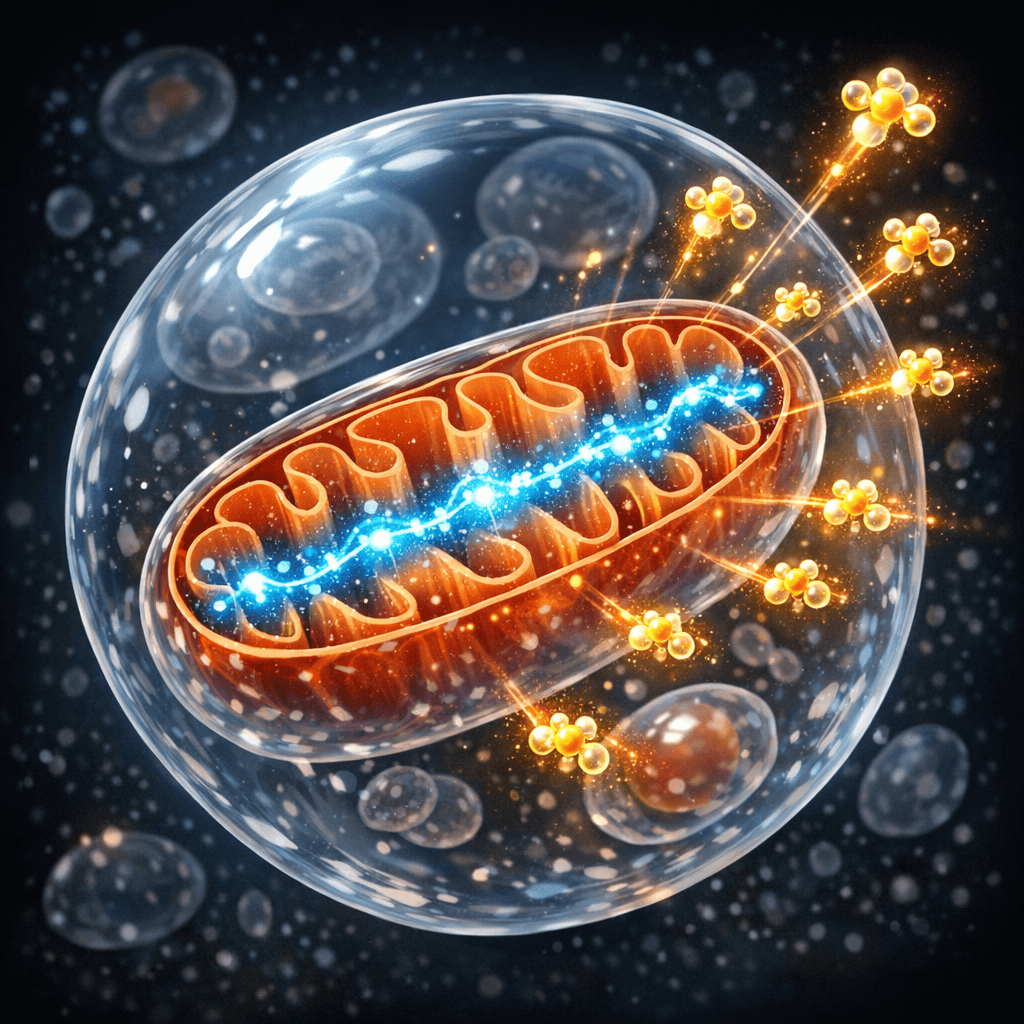
The mitochondrial electron transport chain is the most important redox system in the human body. It sits in the inner mitochondrial membrane and consists of four large protein complexes that pass electrons between them in a carefully ordered sequence.
The electrons enter the chain carried by NADH and FADH2, molecules that picked them up earlier in the metabolic process of breaking down glucose and fatty acids. As electrons move through Complexes I, II, III, and IV, each transfer is slightly downhill in energy terms. The energy released at each step is captured by pumping protons across the inner mitochondrial membrane, creating a proton gradient. Complex V, ATP synthase, uses the flow of protons back across the membrane to phosphorylate ADP into ATP. This is how the chemical energy of food becomes the chemical energy currency your cells actually use.
At Complex IV, the final electron acceptor is oxygen. The electrons combine with oxygen and protons to form water. This is why you need oxygen to produce energy aerobically, and why oxygen deprivation kills cells quickly — it stops the electron transport chain and ATP production collapses.
The scale of this process is worth noting. The body produces and recycles roughly its own body weight in ATP every day during ordinary activity. Every molecule of that ATP was produced by redox chemistry.
Where Reactive Oxygen Species Come From
The electron transport chain is not perfectly efficient. A small fraction of electrons escape before reaching Complex IV and react with oxygen prematurely, producing superoxide (O₂⋅⁻) rather than water. This electron leak is the primary source of mitochondrial reactive oxygen species.
The leak rate increases with mitochondrial dysfunction, which is why damaged or aged mitochondria produce more reactive species relative to ATP output. It also increases transiently during high-intensity activity, which is why exercise generates a burst of reactive oxygen species. That burst, at the right magnitude and duration, is not harmful — it activates NRF2 and other protective pathways. At excessive magnitude, it contributes to oxidative stress.
The management of this leak is therefore a central challenge of cellular biology. Antioxidant enzymes mop up reactive species that escape, signalling pathways respond to their presence, and the cell calibrates its own behaviour based on the redox signals being generated. The entire system described across these articles is, at its foundation, a set of mechanisms for managing the inevitable messiness of redox chemistry in a biological context.
Redox Homeostasis: The Balance That Matters
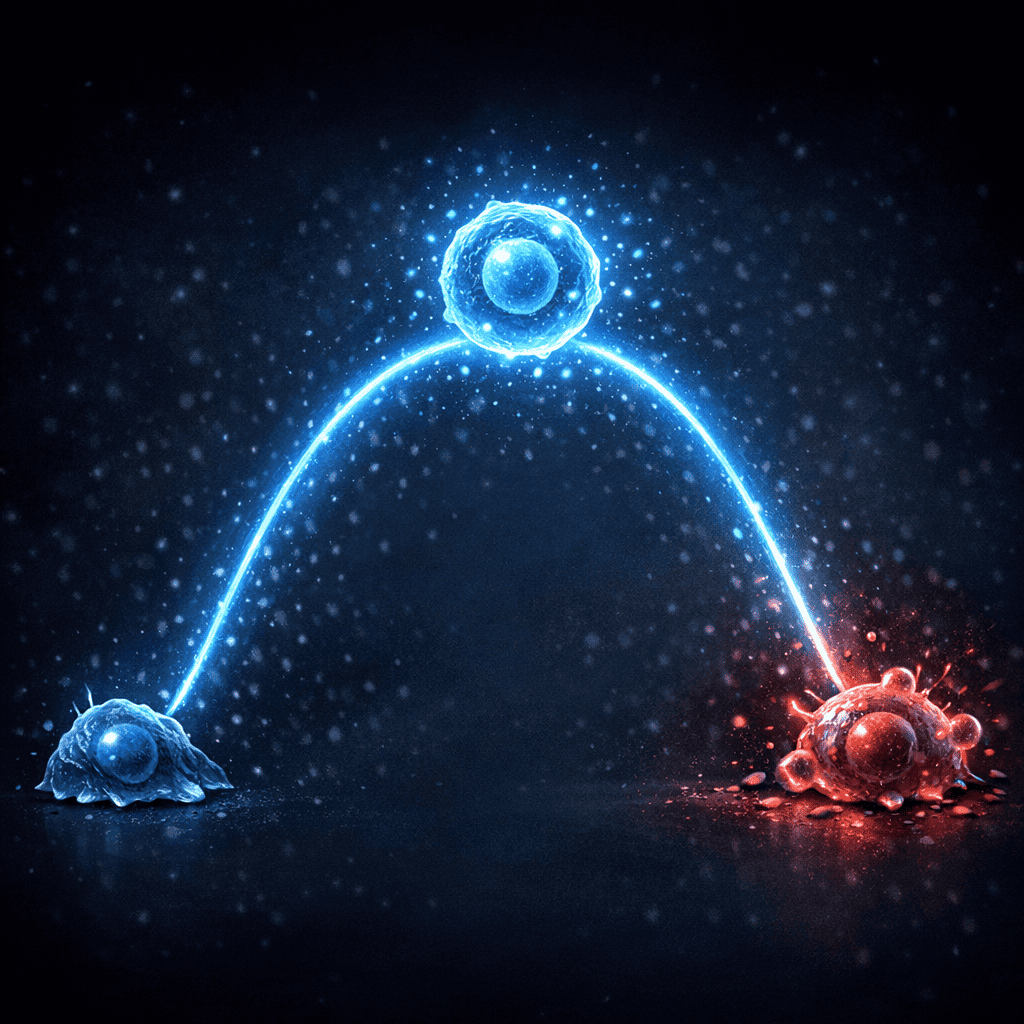
Healthy cells do not aim to eliminate reactive oxygen species. They aim to maintain a stable ratio between oxidising and reducing conditions, a state called redox homeostasis. This ratio is primarily reflected in the balance between reduced glutathione (GSH) and oxidised glutathione (GSSG). A high GSH-to-GSSG ratio indicates a cell in good redox health. A falling ratio indicates mounting oxidative stress.
Reductive stress — an excess of reducing capacity — is a real phenomenon and not simply the benign opposite of oxidative stress. Cells kept in artificially reducing conditions lose the reactive species they need for signalling, cannot properly activate immune responses, and cannot trigger the programmed cell death that eliminates damaged or potentially cancerous cells. High-dose antioxidant supplementation can push cells in this direction, which is the mechanistic explanation for why some antioxidant trials have produced null or negative results.
Redox homeostasis is maintained dynamically, not statically. It shifts during exercise, infection, stress, and recovery. The cell’s ability to tolerate and recover from these shifts is what researchers mean when they talk about redox resilience.
What Remains Unknown
The precise redox conditions that constitute optimal versus harmful states for specific cell types are not fully characterised. Measurements of redox state in living cells are technically challenging — many of the relevant species are too reactive and short-lived to measure directly without disrupting the system. Genetically encoded fluorescent sensors have improved this considerably in recent years, but much of the data on human redox biology still comes from indirect biomarkers measured in blood or tissue samples rather than direct real-time measurement inside cells.
How redox state is coordinated across different cellular compartments is also incompletely understood. The mitochondria, cytoplasm, nucleus, and endoplasmic reticulum each maintain distinct redox environments, and how signals are transmitted between them is an active research area.
Why It Matters
Redox chemistry is not a topic alongside cellular health. It is the mechanism through which cellular health is expressed. Energy production, antioxidant defence, cellular signalling, detoxification, immune activation — all of these depend on the movement of electrons between molecules. Understanding the basics clears up the confusion around antioxidants, explains why balance matters more than maximising any single parameter, and provides a framework for evaluating health claims that involve words like oxidative, reductive, or free radical. The chemistry is doing real work, and knowing what it is makes you a better reader of the research.

Matt Elliott is the editor of Redox News Today, an independent publication covering peer-reviewed research on cellular health, redox signalling, and related biomedical science.