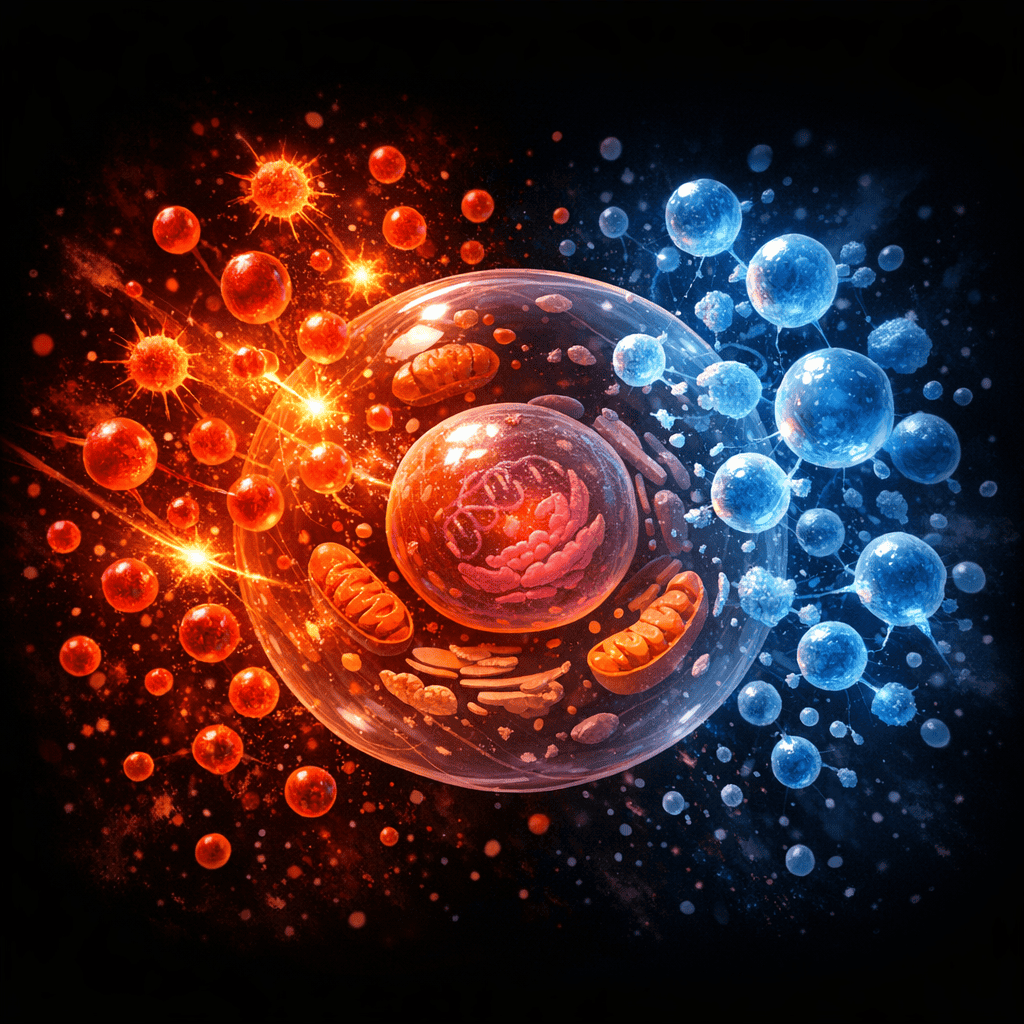
When scientists talk about redox signalling molecules, they are not referring to a single type of molecule. Your cells produce two broad categories of reactive species, each with distinct chemical properties, lifespans and signalling roles. Understanding the difference between them helps explain why redox signalling is so precise despite involving highly reactive chemistry.
Reactive Oxygen Species: The Primary Category
Reactive oxygen species (ROS) are oxygen-containing molecules with unpaired electrons or unstable bonds that make them chemically reactive. The three most biologically important ROS are superoxide, hydrogen peroxide and the hydroxyl radical.
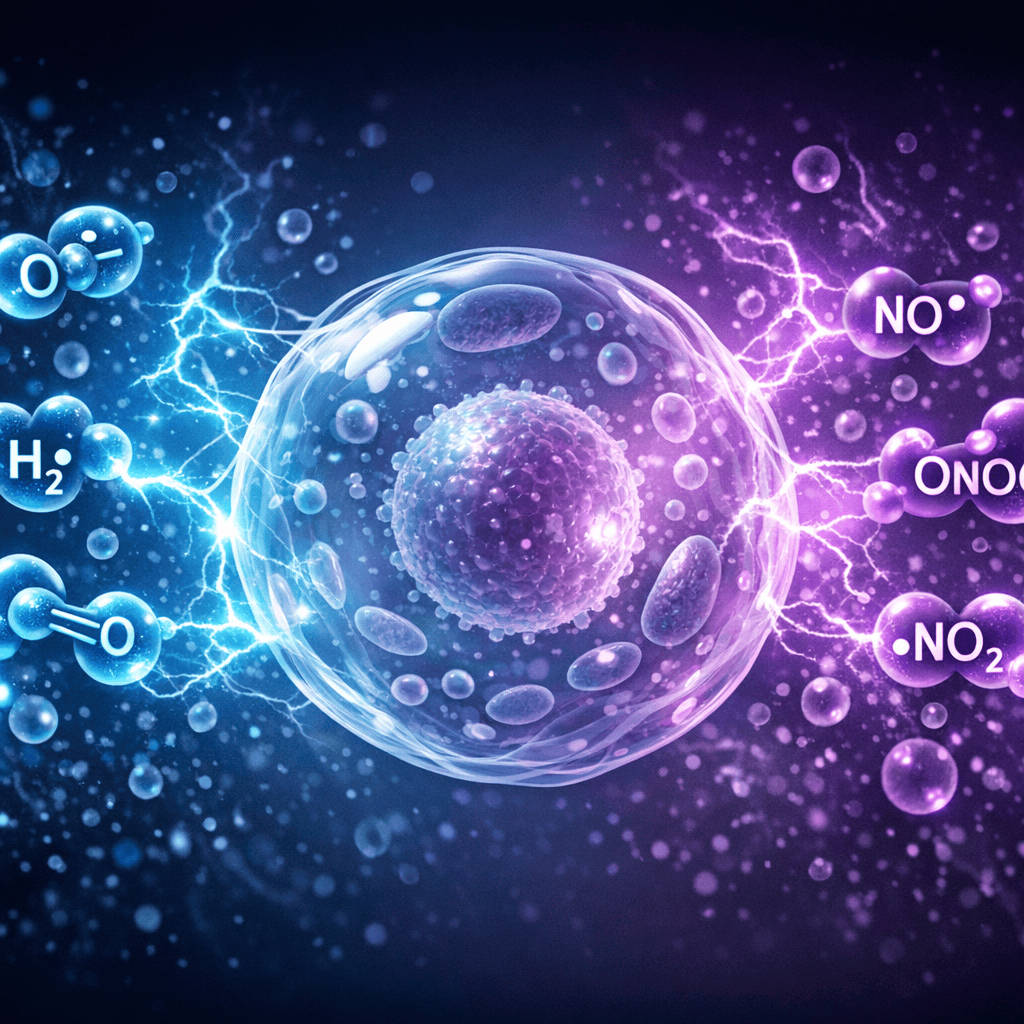
Superoxide (O2-) is the primary ROS produced by mitochondria during energy production. It is generated when electrons leak from the electron transport chain and react with molecular oxygen. Superoxide is also produced deliberately by NADPH oxidase enzymes in immune cells, blood vessels and other tissues.
Superoxide is short lived and does not travel far from its point of production. It is rapidly converted to hydrogen peroxide by the enzyme superoxide dismutase (SOD). This conversion is one of the fastest enzymatic reactions known in biology, occurring almost as quickly as molecules collide.
Hydrogen peroxide (H2O2) is the most important signalling ROS. Unlike superoxide, it is relatively stable, can cross cell membranes and can travel meaningful distances within and between cells. As discussed in our article on the scale of redox production, these properties make hydrogen peroxide an ideal signalling molecule. It is the primary ROS that activates the NRF2 pathway by modifying cysteine residues on the KEAP1 protein.
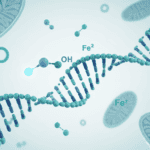
The hydroxyl radical (OH-) is the most reactive of all ROS. It reacts almost instantly with any biological molecule it encounters, including DNA, proteins and lipids. Because it is so reactive, it cannot serve as a signalling molecule. It has no specificity. The hydroxyl radical is primarily a damage agent, and your cells’ antioxidant systems work to prevent its formation by managing the upstream molecules (superoxide and hydrogen peroxide) that can generate it.
Reactive Nitrogen Species: The Second Category
The second category of redox signalling molecules involves nitrogen rather than oxygen. Reactive nitrogen species (RNS) are produced by a family of enzymes called nitric oxide synthases (NOS).
Nitric oxide (NO) is the primary signalling RNS. It is a gas molecule that diffuses rapidly through cell membranes, making it an effective short range messenger. Nitric oxide was the subject of the 1998 Nobel Prize in Physiology or Medicine, awarded for the discovery of its role as a signalling molecule in the cardiovascular system.
In blood vessels, nitric oxide signals the smooth muscle cells to relax, causing vasodilation and reducing blood pressure. In the nervous system, it functions as a neurotransmitter. In the immune system, it is produced at high concentrations by activated macrophages as an antimicrobial weapon, similar to how neutrophils use the respiratory burst.
Peroxynitrite (ONOO-) forms when nitric oxide reacts with superoxide. Like the hydroxyl radical, peroxynitrite is highly reactive and primarily damaging rather than signalling. It modifies proteins, oxidises lipids and can cause DNA strand breaks. Preventing peroxynitrite formation is one of the reasons maintaining redox balance is so important: when both superoxide and nitric oxide are elevated simultaneously, peroxynitrite production increases dramatically.
How the Two Categories Interact
ROS and RNS do not operate in isolation. They interact in ways that can be either protective or damaging, depending on the context and concentrations involved.
At physiological levels, the interplay between hydrogen peroxide and nitric oxide creates a nuanced signalling environment that allows cells to respond to multiple types of information simultaneously. Hydrogen peroxide signals metabolic status and oxidative pressure. Nitric oxide signals vascular and immune conditions. Together, they provide a rich communication landscape.
At pathological levels, the interaction becomes destructive. Excess superoxide reacts with nitric oxide to form peroxynitrite, simultaneously depleting the beneficial nitric oxide signal and generating a potent damaging agent. This is one of the mechanisms by which chronic stress and sleep deprivation cause cellular damage: they elevate both ROS and RNS to levels where the damaging interactions overwhelm the signalling functions.
Why This Distinction Matters
Understanding the two categories of redox signalling molecules explains why blanket antioxidant supplementation is such a blunt instrument. Your cells need specific reactive species at specific concentrations for specific functions. Hydrogen peroxide is essential for NRF2 activation. Nitric oxide is essential for vascular health. Suppressing all reactive species indiscriminately disrupts both signalling systems.
The goal, as always, is not elimination but regulation. A well maintained glutathione system, responsive NRF2 pathway and efficient mitochondria keep both ROS and RNS within the ranges where they serve your cells rather than damage them.

Matt Elliott is the editor of Redox News Today, an independent publication covering peer-reviewed research on cellular health, redox signalling, and related biomedical science.