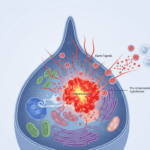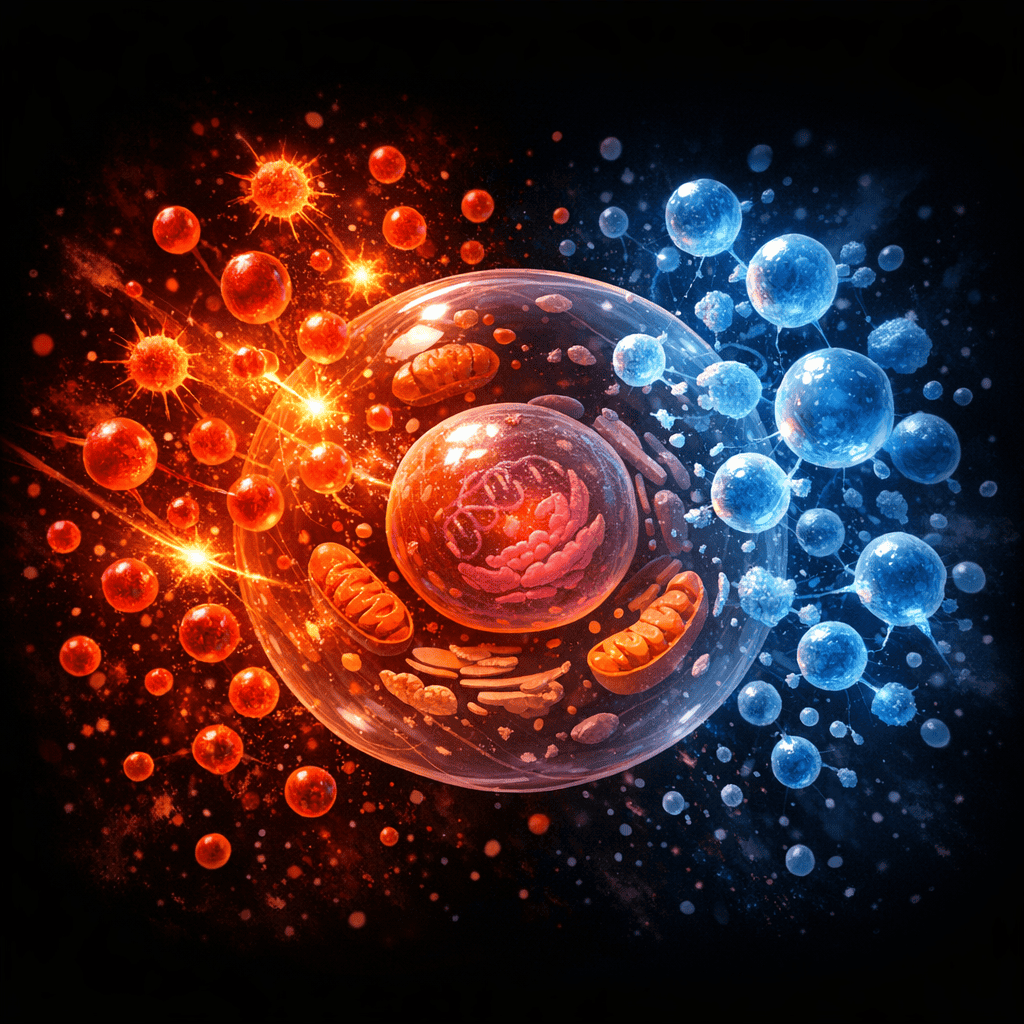
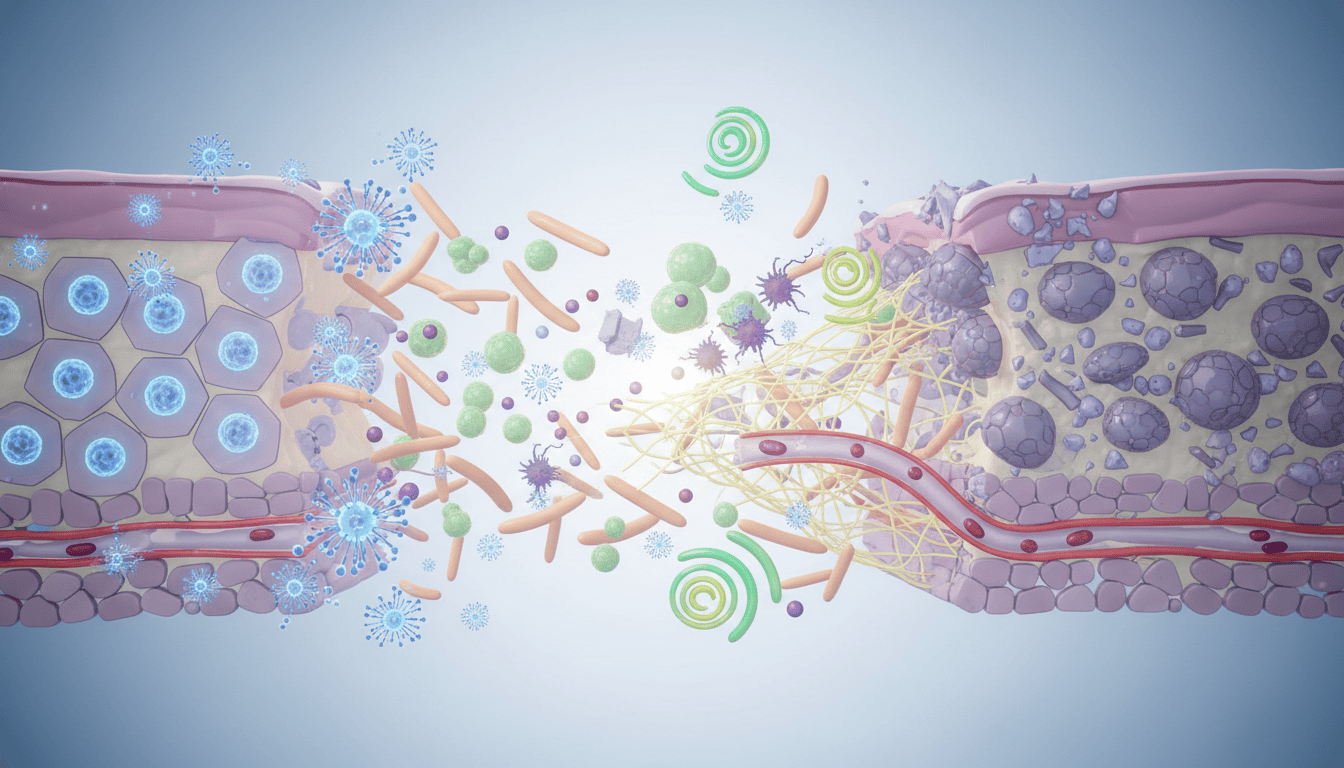
A paper cut triggers an invisible chemical orchestra. Within seconds of injury, cells begin releasing carefully controlled bursts of reactive oxygen species – the same molecules often blamed for ageing and disease. But in wound healing, these reactive molecules become essential messengers, coordinating everything from blood clotting to tissue regeneration.
What is redox signalling in wound healing
Redox signalling involves cells deliberately producing and responding to reactive molecules like hydrogen peroxide and nitric oxide. Think of it as cellular texting. When tissue gets damaged, cells don’t just randomly start repairing themselves. They communicate using these reactive molecules as chemical messages.
The process works through controlled oxidation and reduction reactions – hence “redox.” Cells fine-tune the local chemical environment, creating gradients of reactive molecules that guide healing responses. A neutrophil arriving at a wound site reads these chemical signals to know exactly where to go and what to do.
This system operates on multiple timescales. Immediate signals trigger blood clotting and inflammation within minutes. Medium-term signals guide immune cell recruitment over hours and days. Long-term signals coordinate tissue rebuilding over weeks.
What the research shows
Scientists have mapped how different reactive molecules control specific healing phases. Hydrogen peroxide acts as a recruitment signal, drawing immune cells to injury sites. Neutrophils follow hydrogen peroxide gradients like breadcrumbs leading to damaged tissue.
Nitric oxide serves as a blood vessel controller. It dilates vessels near wounds, increasing blood flow and nutrient delivery. Without adequate nitric oxide signalling, wounds heal more slowly and with poorer quality tissue.
Researchers have also discovered that antioxidant balance matters enormously. Too many antioxidants can actually impair healing by blocking necessary redox signals. Studies show that completely suppressing reactive oxygen species delays wound closure and reduces tissue strength.
The timing proves critical. Early inflammatory signals need reactive molecules to function properly. But sustained oxidative stress later in healing can damage newly formed tissue. Cells must orchestrate this chemical dance with precise timing.
Why cells need this signalling system
Wound healing requires extraordinary cellular coordination. Millions of cells must work together to stop bleeding, fight infection, remove debris, and rebuild tissue. Chemical signalling provides the communication network that makes this possible.
Evolution preserved redox signalling because it offers speed and specificity. Reactive molecules can travel quickly through tissue and trigger rapid responses. They also break down quickly, allowing for precise temporal control of healing phases.
The system also provides built-in quality control. Cells use redox sensors to monitor their local environment and adjust their behaviour accordingly. A fibroblast can detect whether it’s in healthy tissue or damaged tissue based on local redox conditions.
This chemical communication system allows cells to self-organise during repair. No central authority directs wound healing – cells coordinate through local signalling networks. Redox molecules provide much of the vocabulary for these cellular conversations.
What affects redox signalling in wounds
Age significantly impacts redox signalling during healing. Older adults often show altered reactive oxygen species production and reduced antioxidant enzyme activity. This contributes to slower wound healing commonly seen with ageing.
Blood sugar levels influence redox balance in healing tissue. Chronic high glucose can overwhelm cellular antioxidant systems, leading to sustained oxidative stress that impairs normal healing progression. This explains why diabetes often complicates wound repair.
Physical factors matter too. Poor blood circulation reduces oxygen delivery, altering local redox conditions. Mechanical stress on wounds can trigger additional reactive molecule production, sometimes disrupting normal healing timelines.
Nutrition affects the raw materials cells need for redox signalling. Deficiencies in nutrients like vitamin C, zinc, or selenium can impair antioxidant enzyme function. But excessive supplementation can also disrupt the delicate balance healing requires.
What remains unknown
Scientists still don’t fully understand how cells coordinate redox signalling across different tissue types. Skin, muscle, and blood vessels all participate in wound healing, but the cross-talk between their redox systems remains partly mysterious.
The role of mitochondria in wound healing redox signalling needs more research. These cellular powerhouses produce many reactive molecules, but how they coordinate with other signalling systems during repair isn’t clear.
Researchers are also trying to understand individual variation in redox signalling. Why do some people heal faster than others with similar injuries? Genetic differences in antioxidant enzymes might explain some variation, but environmental factors clearly matter too.
The long-term consequences of altered redox signalling during healing remain unclear. Does disrupted signalling during repair affect tissue quality years later? This question has implications for understanding chronic wound problems.
Wound healing reveals how cells transform potential cellular damage into precise communication. The same reactive molecules that can harm cells in excess become essential coordinators of repair when properly controlled. This research illuminates a fundamental principle of cellular biology – context determines whether molecules help or harm. Understanding these signalling networks brings us closer to grasping how cells orchestrate their most complex cooperative behaviours.

Matt Elliott is the editor of Redox News Today, an independent publication covering peer-reviewed research on cellular health, redox signalling, and related biomedical science.