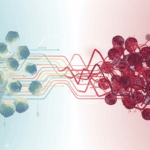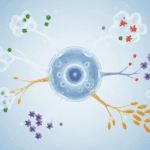

Your immune cells are having a conversation right now. They’re sharing chemical messages about threats, coordinating attacks on pathogens, and deciding which cells need backup. But as we age, this cellular chatter becomes increasingly garbled. The problem isn’t just that immune cells get old – it’s that their entire communication system starts breaking down.
What cellular stress signalling actually does
Every cell in your body runs a sophisticated alarm system. When something goes wrong – a virus invades, toxins accumulate, or DNA gets damaged – cells don’t suffer in silence. They release specific molecules that work like emergency flares, signalling distress to neighbouring cells and the immune system.
These stress signals include everything from inflammatory cytokines to damage-associated molecular patterns (DAMPs). Think of DAMPs as cellular debris that shouldn’t be floating around outside cells. When immune cells detect these molecules, they know something has gone seriously wrong. The system works beautifully when we’re young. Cells send clear distress signals, immune cells respond appropriately, threats get neutralised, and the alarm gets switched off.
But ageing throws multiple spanners into this well-oiled machine.
What the research shows
Scientists have discovered that older immune cells live in a state of chronic low-level alarm. Their stress detection systems become hypersensitive, firing off warnings even when no real threat exists. At the same time, they become paradoxically less responsive to genuine emergencies.
Researchers studying aged immune cells find elevated levels of inflammatory markers like IL-6 and TNF-alpha circulating constantly in the bloodstream. This isn’t the sharp, targeted inflammation that helps fight infections. It’s more like a car alarm that won’t switch off – annoying background noise that everyone eventually learns to ignore.
The cellular machinery that normally clears up stress signals also becomes less efficient with age. Mitochondria, the power plants inside cells, start producing more reactive oxygen species as they wear out. These molecules act as stress signals themselves, creating a feedback loop where cellular stress generates more cellular stress.
Perhaps most significantly, the cells responsible for resolving inflammation – specialised macrophages that essentially tell everyone to calm down and clean up the mess – become less effective at their jobs. Without proper resolution signals, the immune system stays partially activated, like a security system stuck between normal and high alert.
Why cells need this system
Evolution didn’t design our bodies to last forever, but it did create remarkably sophisticated repair and defence systems. Cellular stress signalling serves as an early warning network that prevents small problems from becoming catastrophic failures.
When you’re young, this system helps coordinate complex immune responses. A skin cell infected with a virus releases distress signals that attract immune cells to the exact location of trouble. Those immune cells then release their own signals to recruit backup and coordinate their attack. Once the threat is eliminated, anti-inflammatory signals tell everyone to stand down and start repairing damage.
This communication network also helps maintain tissue health by identifying cells that are too damaged to function properly. Cellular stress signals can trigger programmed cell death in cells that might otherwise become cancerous or dysfunctional. The immune system then clears away these cellular corpses before they cause problems.
The system works because it balances sensitivity with specificity. Cells need to detect real threats quickly, but they also need to avoid false alarms that waste energy and cause unnecessary tissue damage.
What affects cellular stress signalling
Age is the primary driver of communication breakdown in cellular stress systems, but it’s not the only factor. Chronic sleep deprivation disrupts the normal rhythms of immune cell activity, leading to inappropriate stress signalling at the wrong times of day.
Physical inactivity appears to increase baseline levels of inflammatory stress signals, while regular moderate exercise helps maintain the sensitivity and responsiveness of immune cells. The key word here is moderate – excessive exercise can overwhelm cellular repair systems and increase stress signalling.
Diet plays a significant role through multiple pathways. Processed foods high in advanced glycation end products (AGEs) can trigger stress responses in cells throughout the body. Conversely, foods rich in polyphenols and omega-3 fatty acids appear to support proper resolution of inflammatory signals.
Psychological stress creates its own cascade of cellular stress signals through elevated cortisol and other stress hormones. Chronic stress essentially teaches immune cells to stay on high alert, contributing to the background inflammation that characterises immune ageing.
Environmental factors like air pollution, UV radiation, and exposure to toxins all generate cellular stress that requires immune system resources to manage. Over decades, this environmental burden appears to contribute to the gradual degradation of cellular communication systems.
What remains unknown
Scientists still don’t fully understand why some people maintain robust cellular stress signalling well into advanced age while others show early signs of immune system decline. Twin studies suggest genetics plays a role, but which specific genes and pathways matter most remains unclear.
The relationship between cellular stress signalling and autoimmune diseases in older adults is particularly puzzling. Some researchers think chronic low-level inflammation eventually causes immune cells to attack healthy tissues, but others argue that autoimmune conditions might actually represent failed attempts to resolve cellular stress.
There’s also the chicken-and-egg problem of cellular ageing. Do cells start sending more stress signals because they’re damaged, or does increased stress signalling actually accelerate cellular damage? The answer likely involves complex feedback loops that researchers are still mapping.
Perhaps most intriguingly, scientists don’t yet understand how to safely recalibrate aged cellular stress systems. Early interventions that simply block inflammatory signals often backfire, leaving people vulnerable to infections and cancer. The immune system needs some level of surveillance and response capability to function.
Understanding cellular stress signalling offers a window into one of biology’s most elegant systems – the constant communication network that keeps our bodies functioning despite daily assaults from pathogens, toxins, and simple wear and tear. As this system gradually loses precision with age, it reveals just how sophisticated and fragile the machinery of life really is. The more we learn about these cellular conversations, the more we appreciate the remarkable engineering that keeps us healthy for as long as it does.

Matt Elliott is the editor of Redox News Today, an independent publication covering peer-reviewed research on cellular health, redox signalling, and related biomedical science.