Every minute, your cells produce millions of damaged proteins and worn-out cellular components. Without a cleanup system, these molecular scraps would pile up like garbage in a city without sanitation workers. Within hours, your cells would choke on their own waste and die. Autophagy is that cleanup system, and it might be one of the most important biological processes you’ve never heard of.
What is autophagy
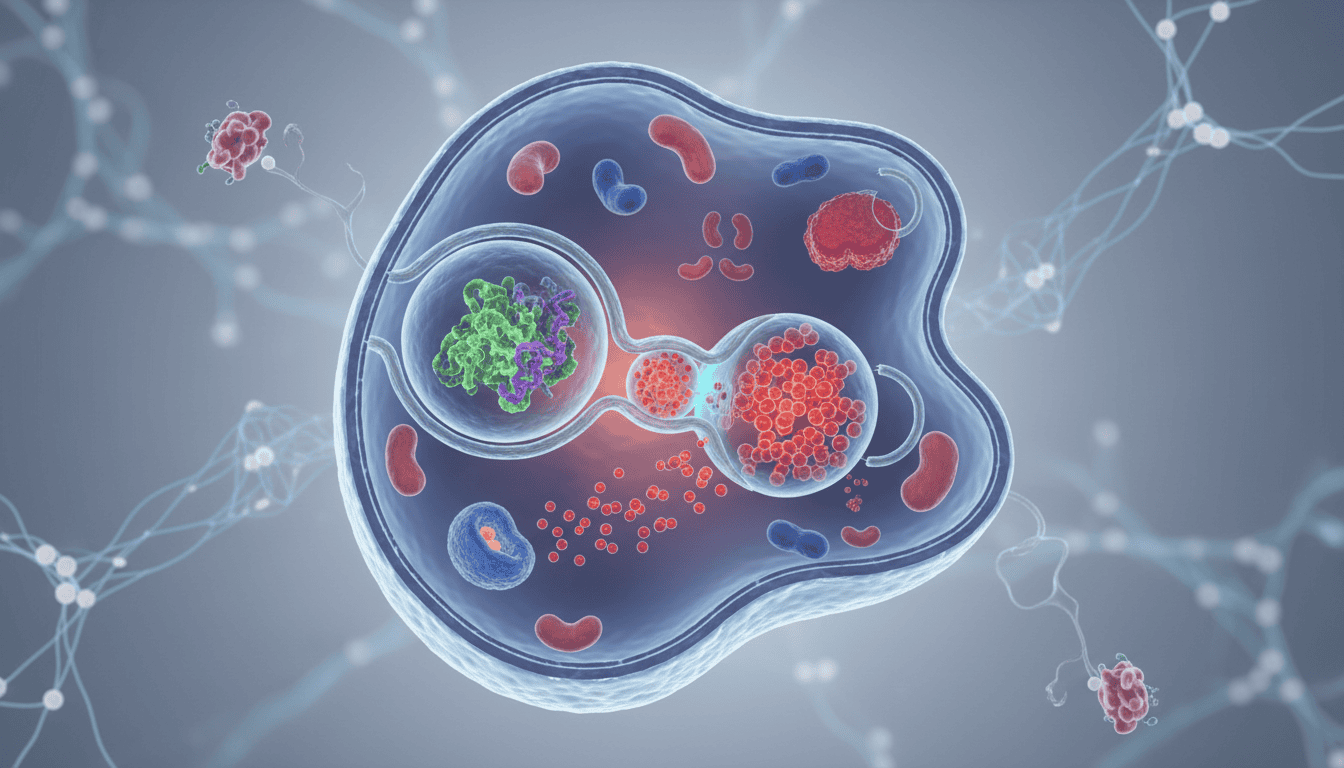
Autophagy literally means “self-eating,” and that’s exactly what it is. Cells wrap their damaged components in membrane bubbles called autophagosomes, then deliver them to specialised recycling centres called lysosomes. Think of it as cellular recycling on steroids.
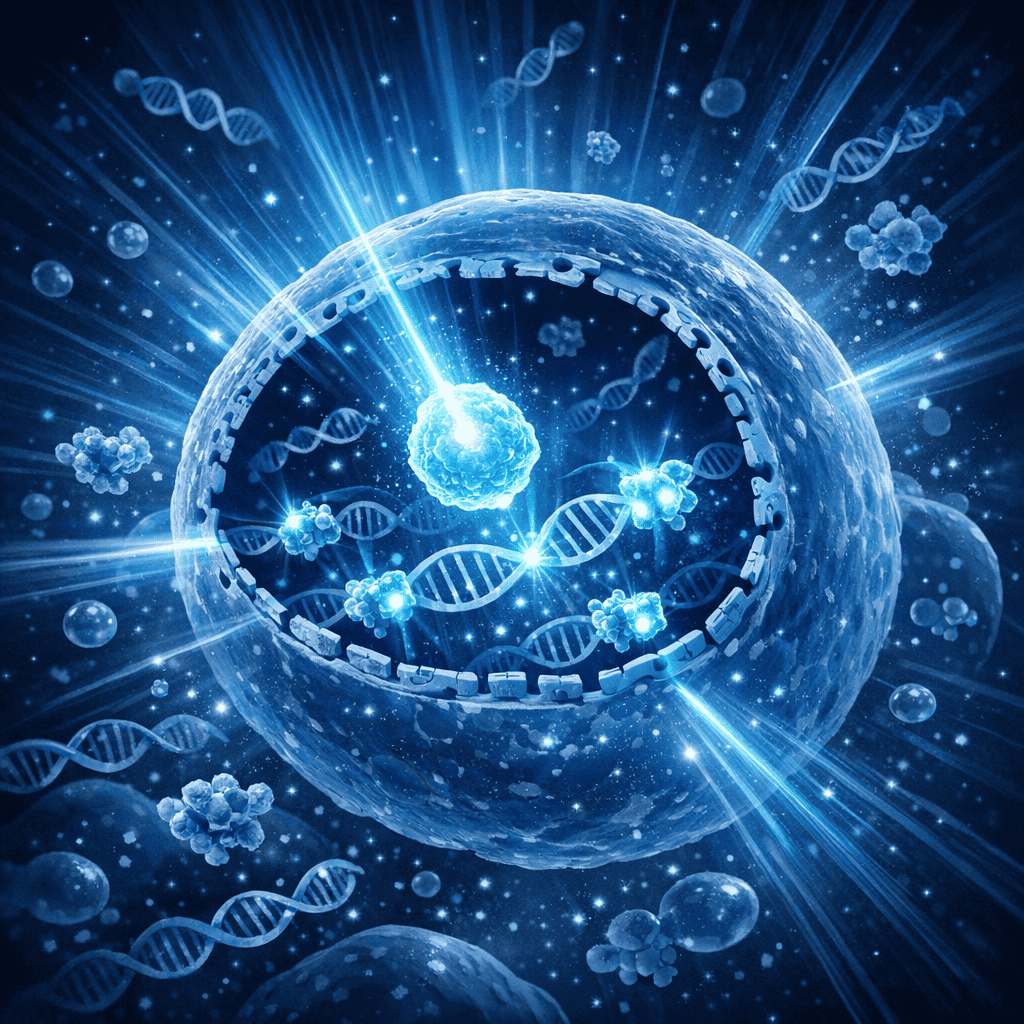
The process starts when cells detect stress, starvation, or damaged cellular machinery. A protein called ULK1 acts like a foreman, coordinating the construction of the autophagosome. This double-membraned sac grows around the target cargo, whether that’s a clump of misfolded proteins, a damaged mitochondrion, or invading bacteria.
Once sealed, the autophagosome travels through the cell like a delivery truck. It fuses with a lysosome, which contains over 60 different digestive enzymes. These enzymes break down the contents into basic building blocks that the cell can reuse. Amino acids go back into protein synthesis, lipids return to membrane production, and the cycle continues.
This isn’t just spring cleaning. Autophagy runs constantly at low levels, ramping up dramatically when cells face stress, infection, or nutrient shortage.
What the research shows
Scientists have discovered that autophagy doesn’t just remove cellular junk randomly. It targets specific threats with remarkable precision. When researchers tracked fluorescently labelled proteins in living cells, they watched autophagy selectively grab damaged mitochondria while leaving healthy ones untouched.
The selectivity comes from molecular tags. Damaged proteins get marked with specific signals, like putting a “please recycle” sticker on cellular waste. The autophagy machinery recognises these tags through adapter proteins that act like postal workers reading addresses.
Studies using electron microscopy revealed something unexpected: autophagy can engulf entire cellular neighbourhoods. Researchers observed autophagosomes large enough to contain multiple organelles, suggesting cells sometimes opt for wholesale renovation rather than targeted repairs.
When scientists blocked autophagy in laboratory animals, the results were dramatic. Mice with defective autophagy genes accumulated protein clumps in their neurons, developed liver damage, and showed accelerated signs of ageing. Their cells looked like hoarder houses, crammed with broken cellular furniture.
Perhaps most striking, research has shown autophagy can literally eat cancer. When cells detect DNA damage that might lead to malignant transformation, autophagy can destroy the entire cell from within. It’s cellular suicide prevention and tumour suppression rolled into one mechanism.
Why cells need this
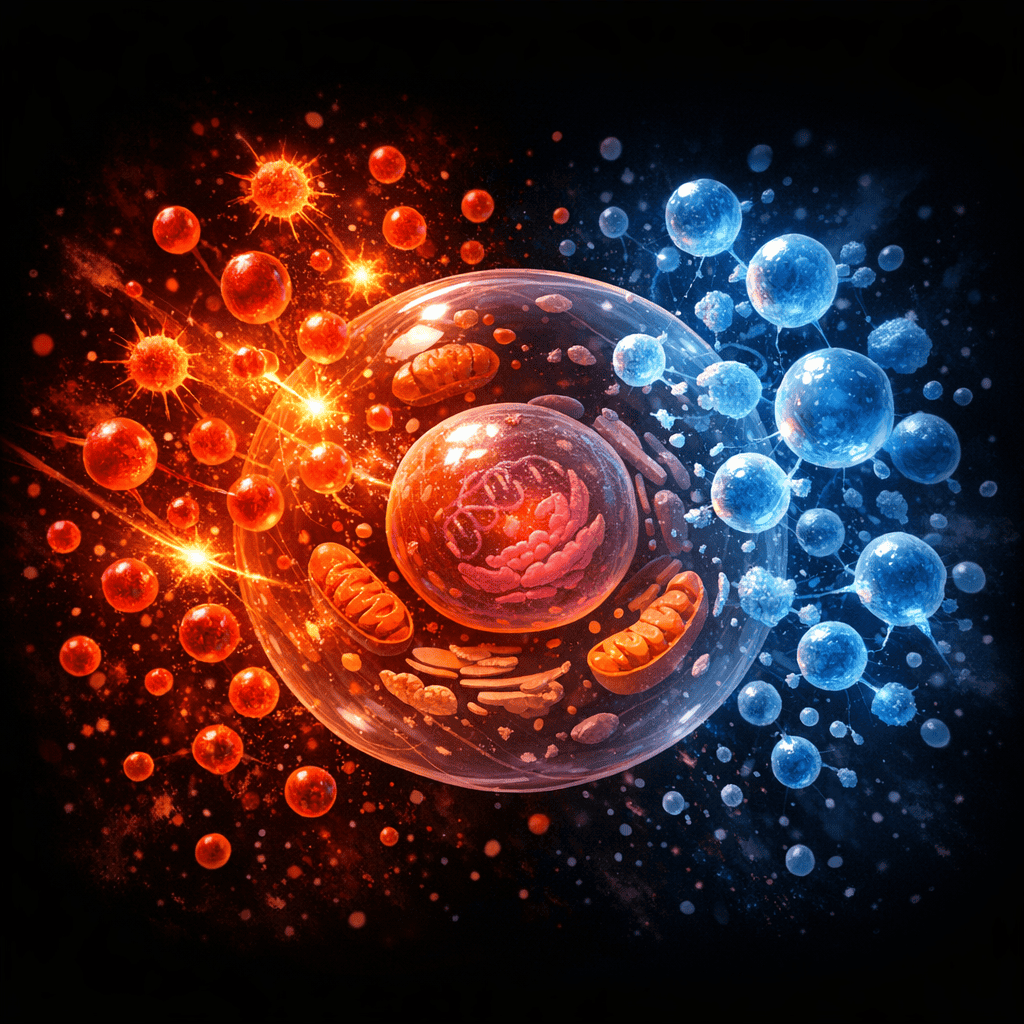
Life is inherently damaging. Every time a cell burns glucose for energy, it produces reactive oxygen molecules that can damage nearby proteins. Every time DNA replicates, errors creep in. Every cellular process generates waste products that would be toxic if left to accumulate.
Autophagy evolved as evolution’s answer to this fundamental problem. Single-celled organisms developed it billions of years ago as a survival mechanism during starvation. When nutrients ran low, cells could literally eat themselves, recycling their own components to stay alive until conditions improved.
As multicellular life evolved, autophagy took on new roles. It became quality control for cellular components, immune defence against intracellular pathogens, and a way to remodel cells during development. When a tadpole loses its tail during metamorphosis, autophagy digests the unwanted tissue from within.
The process also serves as cellular memory management. Neurons, which never replace themselves, rely heavily on autophagy to maintain function across decades. Without it, these long-lived cells would accumulate so much molecular damage that they’d stop working properly.
This explains why autophagy defects appear linked to ageing and neurodegeneration. When the cellular cleanup crew stops working efficiently, the accumulated damage eventually overwhelms the cell’s ability to function.
What affects autophagy
Age is autophagy’s biggest enemy. Research shows that autophagy efficiency declines significantly as organisms get older. The cellular machinery that builds autophagosomes becomes less responsive, and lysosomes lose some of their digestive punch.
Nutrient status dramatically influences autophagy activity. Fasting or caloric restriction triggers a surge in autophagy as cells switch to internal recycling mode. Conversely, constant nutrient availability, especially high levels of insulin and amino acids, suppresses the process.
Sleep plays an unexpected role. Studies in both fruit flies and mice show that sleep deprivation impairs autophagy in brain cells. During sleep, cerebrospinal fluid flow increases, helping clear waste products that autophagy brings to the cell surface.
Exercise appears to boost autophagy, particularly in muscle cells. The cellular stress of physical activity triggers cleanup mechanisms that remove damaged proteins and organelles, potentially explaining some of exercise’s protective effects.
Environmental toxins can overwhelm autophagy systems. Cells exposed to heavy metals, pesticides, or other pollutants often show impaired autophagy function, possibly because the cleanup machinery gets backed up trying to process too much damage at once.
What remains unknown
Scientists still don’t fully understand how cells decide what to target for autophagy. The tagging systems that mark cellular components for destruction involve hundreds of proteins, and researchers are still mapping these complex networks.
The timing question puzzles researchers too. Why do some cells ramp up autophagy immediately under stress while others wait? The molecular clocks that control autophagy timing remain largely mysterious.
Perhaps most intriguingly, scientists don’t know why autophagy declines with age. Is it because the machinery wears out, or do cells actively suppress it? Some evidence suggests both mechanisms might be at work, but the relative importance of each remains unclear.
The relationship between autophagy and different diseases presents another puzzle. While defective autophagy appears linked to neurodegeneration and cancer, some cancer cells actually use enhanced autophagy to survive treatment. Understanding when autophagy helps versus harms represents a major research frontier.
Autophagy reveals something profound about life itself: survival depends not just on building and growing, but on knowing when and how to tear things down. Every cell in your body runs its own demolition and recycling operation, quietly preventing the molecular chaos that would otherwise overwhelm biological systems. The more scientists learn about this cellular housekeeping, the clearer it becomes that staying alive requires constant, precise destruction.

Matt Elliott is the editor of Redox News Today, an independent publication covering peer-reviewed research on cellular health, redox signalling, and related biomedical science.