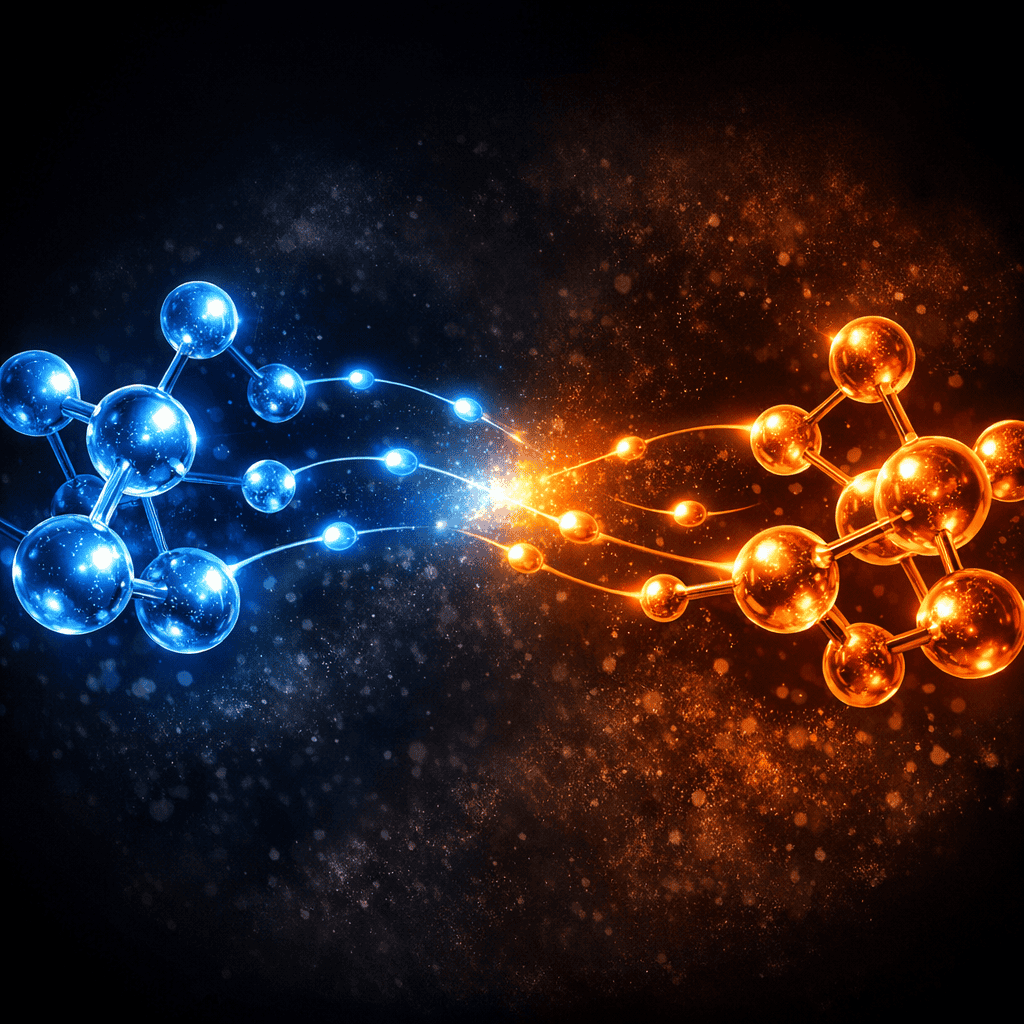

Your body does not just produce glutathione. It recycles it. This recycling system is one of the most elegant features of cellular biochemistry, allowing each glutathione molecule to neutralise multiple reactive species before being broken down. Understanding how this system works explains why glutathione is so effective and why maintaining it matters so much.
How Glutathione Works in Real Time
When glutathione encounters a reactive oxygen species, it donates electrons to neutralise the threat. In doing so, the glutathione molecule itself becomes oxidised. In its active, reduced form, glutathione is abbreviated as GSH. After donating electrons, it becomes oxidised glutathione, abbreviated as GSSG.
Two molecules of GSH combine to form one molecule of GSSG. This oxidised form is no longer able to neutralise reactive species. If this were the end of the story, your cells would rapidly exhaust their glutathione supply under any significant oxidative stress.
But it is not the end of the story.
Glutathione Reductase: The Recycling Enzyme
Your cells contain an enzyme called glutathione reductase that converts GSSG back into two molecules of GSH. This enzyme uses electrons from NADPH (nicotinamide adenine dinucleotide phosphate) to reduce the oxidised glutathione back to its active form.
NADPH is produced primarily through the pentose phosphate pathway, a metabolic route that runs parallel to glycolysis. This means your cells’ ability to recycle glutathione is directly linked to their metabolic health and glucose processing capacity.
The recycling is fast. Under normal conditions, the ratio of GSH to GSSG in a healthy cell is approximately 100 to 1. This overwhelming predominance of the reduced form means that the vast majority of glutathione in your cells is active and ready to work at any given moment.
The GSH/GSSG Ratio as a Health Indicator
Researchers use the ratio of reduced to oxidised glutathione as a direct measure of cellular redox balance. A high GSH/GSSG ratio indicates that the cell has ample antioxidant capacity and is managing oxidative challenges effectively. A declining ratio signals that oxidative stress is beginning to overwhelm the recycling system.
This ratio shifts with age. As mitochondrial function declines and overall oxidative burden increases, the GSH/GSSG ratio gradually tips toward the oxidised side. The NRF2 pathway becomes less responsive, reducing the production of new glutathione through the GCL enzyme. The recycling system must work harder with less support.
The Glutathione Peroxidase System
Glutathione does not just work alone. It partners with a family of enzymes called glutathione peroxidases (GPx). These selenium-dependent enzymes use glutathione as a cofactor to neutralise hydrogen peroxide and lipid peroxides, two of the most common reactive species that threaten cellular membranes.
In this reaction, GPx converts hydrogen peroxide into water while oxidising GSH to GSSG. The GSSG is then recycled back to GSH by glutathione reductase. The net result is that one threatening molecule is converted to harmless water, and the glutathione is regenerated for reuse.
This partnership between glutathione and glutathione peroxidase is one of the primary defences against lipid peroxidation, the chain reaction that can damage cell membranes if left unchecked.
Glutathione S-Transferases: The Detoxification Branch
Glutathione also participates in detoxification through a family of enzymes called glutathione S-transferases (GSTs). These enzymes attach glutathione to toxic compounds, including environmental pollutants, drug metabolites and carcinogens, marking them for excretion.
This conjugation reaction is particularly active in the liver, where the highest concentrations of glutathione are found. Each conjugation consumes one molecule of GSH, which is why heavy toxin exposure can deplete glutathione faster than it can be recycled or resynthesised.
Supporting the Recycling System
The practical strategies for supporting glutathione recycling align with those for supporting glutathione production. Regular exercise increases both glutathione synthesis and recycling enzyme activity. NRF2-activating foods upregulate the genes encoding glutathione reductase and glutathione peroxidase. Adequate selenium intake (from Brazil nuts, seafood, eggs) supports the GPx enzyme family. Quality sleep provides the restoration window during which depleted glutathione stores are replenished.
Reducing unnecessary exposure to environmental toxins preserves the glutathione pool by reducing the detoxification demand that drains it.
A System, Not a Molecule
The glutathione recycling system illustrates a broader principle: cellular health depends on interconnected systems, not isolated molecules. Glutathione, glutathione reductase, NADPH, glutathione peroxidase, selenium and NRF2 all work together. Optimising one component while neglecting others produces limited results. Supporting the entire system through consistent lifestyle factors is what maintains the high GSH/GSSG ratio that keeps your cells resilient.

Matt Elliott is the editor of Redox News Today, an independent publication covering peer-reviewed research on cellular health, redox signalling, and related biomedical science.