Your liver cells burn through glutathione faster than a chainsaw burns fuel. Every second, they’re neutralising toxins, mopping up free radicals, and maintaining the delicate chemical balance that keeps you alive. But here’s the catch: your cells can’t absorb glutathione directly from supplements. Instead, they need the raw materials to build it themselves. That’s where N-acetyl cysteine comes in.
What is N-acetyl cysteine
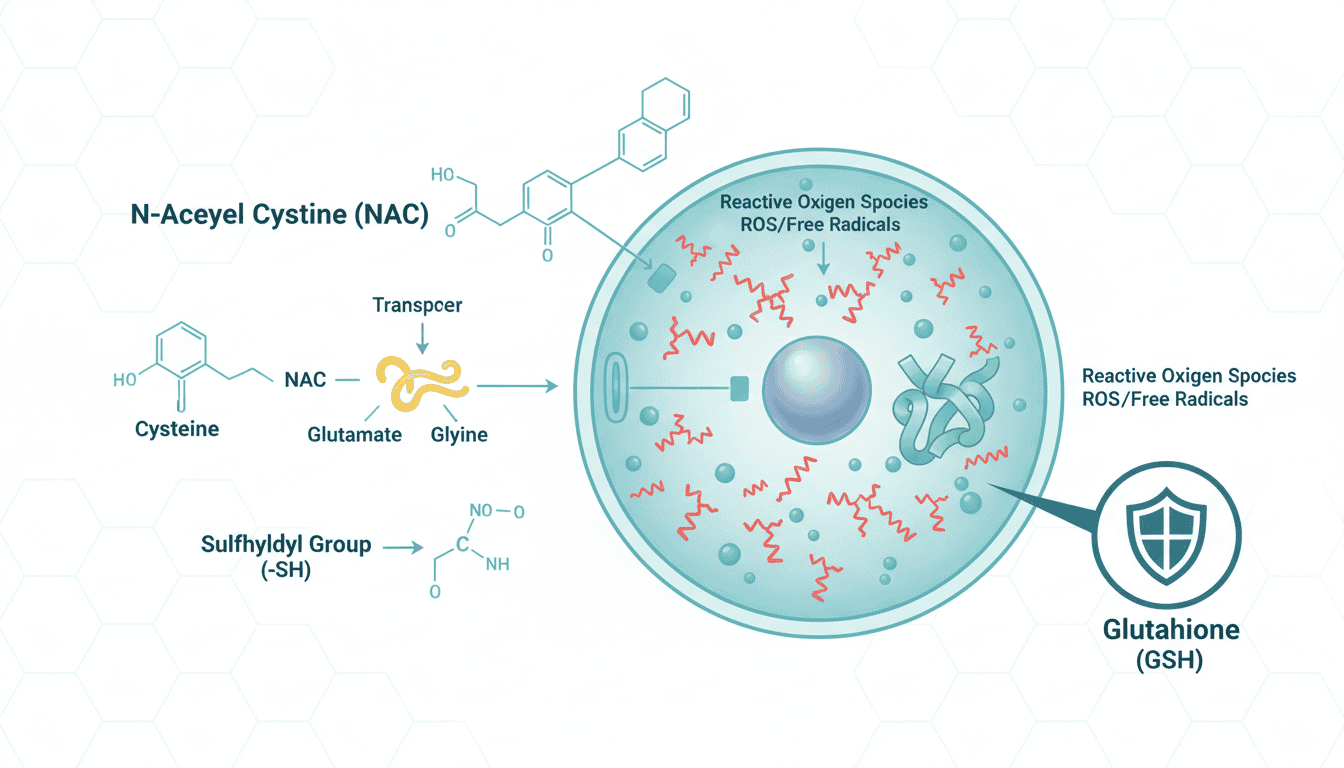
N-acetyl cysteine is cysteine with a molecular bodyguard attached. Plain cysteine, an amino acid, gets torn apart by stomach acid and enzymes before it reaches your cells. Scientists solved this by adding an acetyl group, creating a stable compound that survives the journey through your digestive system.
Once inside your cells, enzymes strip away the acetyl group, releasing cysteine. This matters because cysteine is the rate-limiting ingredient in glutathione production. Think of glutathione as a three-piece puzzle made from cysteine, glycine, and glutamic acid. Your cells usually have plenty of glycine and glutamic acid lying around, but cysteine is the scarce piece that determines how much glutathione they can make.
Glutathione itself is your cell’s primary antioxidant defence system. It doesn’t just neutralise one type of damage. This molecule tackles free radicals, breaks down hydrogen peroxide, regenerates other antioxidants like vitamin C, and helps shuttle toxins out of cells. When glutathione levels drop, cellular damage accelerates rapidly.
What the research shows
Studies consistently show that N-acetyl cysteine raises cellular glutathione levels within hours. Researchers have measured this increase in red blood cells, liver cells, and lung tissue. The effect isn’t subtle. In some studies, glutathione levels double or triple after N-acetyl cysteine administration.
The mechanism is straightforward. Cells absorb N-acetyl cysteine through amino acid transporters, then convert it to cysteine using the enzyme N-acetyl cysteine deacetylase. From there, two enzymes work in sequence. First, gamma-glutamylcysteine synthetase combines cysteine with glutamic acid. Then glutathione synthetase adds glycine to complete the glutathione molecule.
This process happens rapidly. Researchers tracking the pathway with radioactive markers found that N-acetyl cysteine appears as glutathione in cells within 30 minutes. Peak glutathione levels typically occur 1 to 2 hours after N-acetyl cysteine reaches the bloodstream.
The increase isn’t just measurable. It’s functional. Cells with higher glutathione levels from N-acetyl cysteine show better resistance to oxidative stress in laboratory tests. They maintain normal function longer when exposed to toxins, produce fewer inflammatory molecules, and recover more quickly from chemical challenges.
Why cells need this
Evolution kept glutathione around for good reason. Every oxygen-breathing organism faces the same problem: the very process that powers cellular life also produces dangerous byproducts. Mitochondria leak electrons during energy production, creating superoxide radicals. Normal metabolism generates hydrogen peroxide. Even essential processes like immune responses flood tissues with reactive molecules.
Without constant antioxidant defence, these molecules would destroy cellular machinery within hours. Proteins would unfold, DNA would fragment, and cell membranes would rupture. Glutathione prevents this cascade by sacrificing itself to neutralise threats before they cause permanent damage.
But glutathione does more than just antioxidant work. It regulates cell division, influences gene expression, and maintains the proper chemical environment inside cells. When glutathione levels drop too low, cells often trigger their own death rather than risk becoming cancerous or spreading damage to neighbouring tissues.
This makes cysteine availability crucial for survival. Unlike other amino acids, cells can’t easily substitute something else when cysteine runs short. The unique sulfur chemistry that makes cysteine perfect for glutathione synthesis also makes it irreplaceable.
What affects N-acetyl cysteine and glutathione production
Age significantly reduces glutathione synthesis capacity. Older adults often show 20-30% lower baseline glutathione levels compared to young people. This happens partly because the enzymes that build glutathione become less active, and partly because chronic low-grade inflammation constantly depletes glutathione stores.
Alcohol consumption dramatically increases glutathione turnover. The liver uses glutathione to process acetaldehyde and other toxic alcohol metabolites. Regular drinking can exhaust glutathione reserves, which explains why alcohol causes oxidative damage throughout the body.
Certain medications also drain glutathione. Paracetamol (acetaminophen) depletes liver glutathione so rapidly that overdoses cause liver failure within days. Chemotherapy drugs, some antibiotics, and other pharmaceuticals increase glutathione consumption as the body works to process and eliminate them.
Exercise creates an interesting paradox. Intense physical activity generates massive oxidative stress that temporarily depletes glutathione. But regular training upregulates the enzymes that synthesise glutathione, leading to higher baseline levels over time. This adaptation explains why trained athletes often show superior antioxidant capacity despite subjecting themselves to repeated oxidative challenges.
Dietary factors matter too. Selenium deficiency impairs glutathione function because the enzyme glutathione peroxidase requires selenium to work. Magnesium, zinc, and B vitamins all play supporting roles in glutathione metabolism.
What remains unknown
Scientists still debate optimal dosing and timing for N-acetyl cysteine. Most research uses doses between 600mg and 1800mg daily, but individual variation appears enormous. Some people show dramatic glutathione increases with small amounts, while others need much higher doses for similar effects.
The relationship between blood glutathione levels and tissue glutathione levels isn’t fully clear. Blood tests might not reflect what’s happening inside specific organs like the brain or heart. Different tissues also seem to respond differently to N-acetyl cysteine supplementation.
Long-term effects remain poorly understood. Most studies track glutathione levels for days or weeks, not months or years. Whether sustained N-acetyl cysteine intake continues providing benefits, reaches a plateau, or causes adaptation that reduces effectiveness over time isn’t known.
Researchers are also investigating whether N-acetyl cysteine affects glutathione distribution within cells. Glutathione exists in different cellular compartments, and some evidence suggests that N-acetyl cysteine might preferentially boost glutathione in certain areas while leaving others unchanged.
The story of N-acetyl cysteine and glutathione reveals how cellular chemistry operates like an intricate supply chain. Cells can’t stockpile everything they need, so they depend on steady delivery of raw materials to maintain their defences. Understanding these pathways doesn’t just satisfy scientific curiosity. It illuminates the fundamental challenge every cell faces: generating enough energy to stay alive while protecting itself from the dangerous byproducts that energy production inevitably creates.

Matt Elliott is the editor of Redox News Today, an independent publication covering peer-reviewed research on cellular health, redox signalling, and related biomedical science.