Your blood has a pH of 7.4. Drop it to 7.0 and you’re in a coma. Push it to 7.8 and you’re having seizures. Yet every second, your cells dump acid into your bloodstream as they burn glucose for energy. How does your body keep this delicate balance when the margin for error is razor thin?
What is cellular pH balance
pH measures how acidic or alkaline something is on a scale from 0 to 14. Pure water sits at 7.0, perfectly neutral. Your cells need to maintain their internal pH around 7.2, while keeping blood pH at 7.4. That might sound easy, but cellular metabolism is essentially controlled chaos.
Every time a cell breaks down glucose, it produces carbon dioxide and organic acids. Proteins fold and unfold, releasing hydrogen ions. Mitochondria pump protons across membranes to generate energy. All of this activity constantly threatens to tip the pH scales.
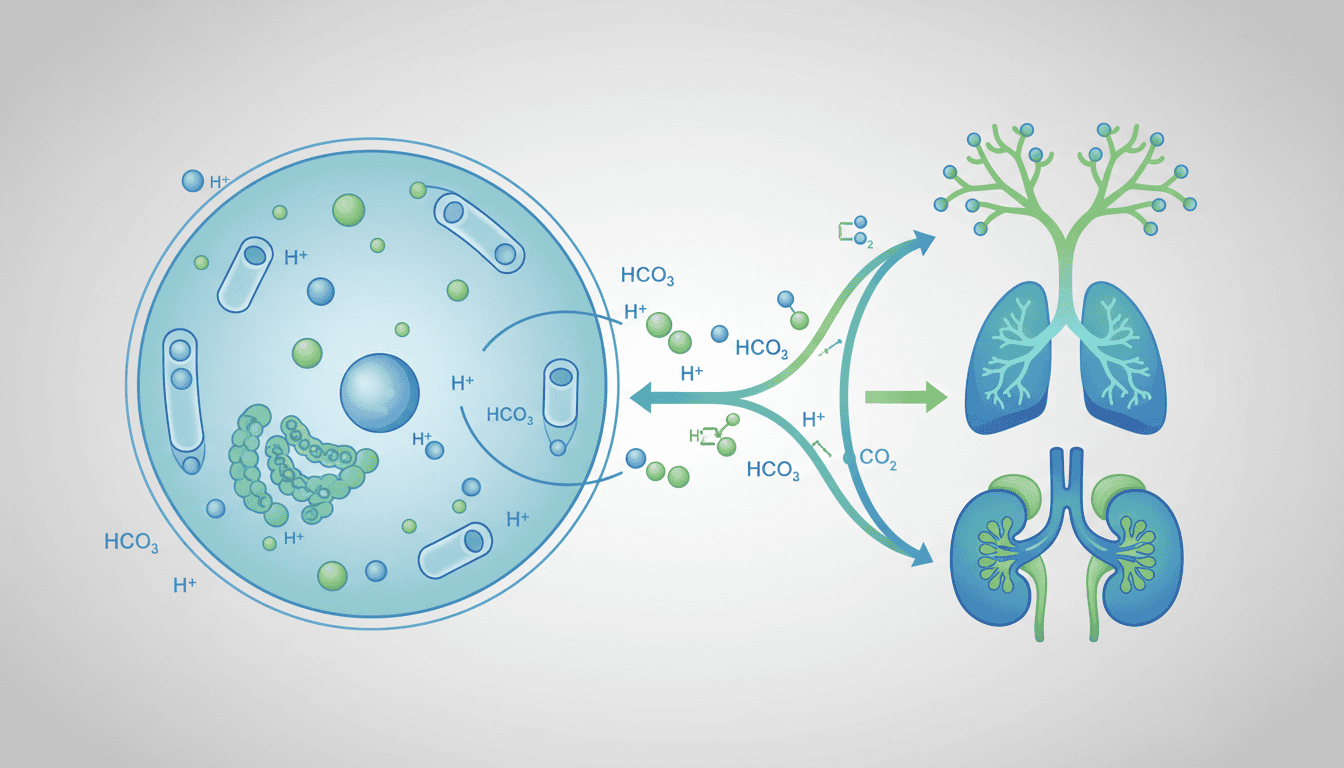
Your cells fight back with an elegant three-tier defence system. First, chemical buffers immediately neutralise excess acid or base. Think of bicarbonate ions as molecular sponges, soaking up hydrogen ions before they can cause trouble. Second, your lungs exhale carbon dioxide to remove acid from your system. Third, your kidneys filter out excess acids and reclaim bicarbonate from urine.
This system works so well that most people never think about it. But at the cellular level, it’s a constant balancing act that keeps you alive.
What the research shows
Scientists have discovered that cells don’t just passively respond to pH changes. They actively monitor and adjust their internal environment through sophisticated sensing mechanisms.
Researchers found that when cellular pH drops even slightly, cells activate emergency protocols. They ramp up production of buffer molecules and start pumping excess protons out through specialised membrane proteins. Some cells can detect pH changes as small as 0.05 units and respond within seconds.
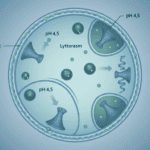
Studies using fluorescent pH indicators revealed something unexpected: different parts of the same cell maintain different pH levels. The cytoplasm might sit at 7.2 while organelles like lysosomes deliberately maintain a much more acidic environment at pH 4.5. This isn’t a bug in the system. It’s a feature.
Exercise physiology research showed what happens when the system gets overwhelmed. During intense exercise, muscle cells produce lactic acid faster than the body can clear it. pH drops, proteins start malfunctioning, and you feel the burn. But even then, protective mechanisms kick in to prevent dangerous pH swings.
Cancer research has revealed how some tumour cells hijack pH regulation. They pump excess acid into surrounding tissues, creating an acidic microenvironment that helps them invade healthy tissue. Normal cells struggle in this acidic soup, but cancer cells adapt and thrive.
Why cells need this
Proteins are picky. They only work properly within narrow pH ranges because their shape depends on precise chemical interactions. When pH shifts, proteins unfold, enzymes stop working, and cellular machinery grinds to a halt.
Evolution solved this problem by building multiple backup systems. If one mechanism fails, others compensate. The bicarbonate buffer system handles day-to-day fluctuations. The phosphate system manages cellular waste. Protein buffers provide additional backup.
Your brain cells are particularly sensitive to pH changes. Even small shifts can alter nerve transmission and affect consciousness. That’s why your body prioritises maintaining brain pH above almost everything else. Your lungs will work overtime to blow off excess carbon dioxide, and your kidneys will sacrifice other functions to preserve proper pH balance.
The evolutionary pressure to maintain pH balance was so strong that these mechanisms appear in everything from bacteria to humans. Single-celled organisms developed pH regulation billions of years ago, and we’ve inherited and refined these same basic strategies.
What affects cellular pH balance
Age gradually weakens your pH buffering capacity. Kidney function declines, reducing your ability to excrete acids and conserve bicarbonate. Lung capacity decreases, making it harder to exhale carbon dioxide efficiently. These changes happen slowly, but they add up over decades.
Diet plays a surprisingly small role in healthy people. Your body’s buffering systems easily handle the acid load from normal food. Even extreme diets rarely budge blood pH more than 0.1 units. However, certain medical conditions can overwhelm these systems.
Diabetes can trigger ketoacidosis, where the body produces so much acid that buffers can’t keep up. Kidney disease impairs acid excretion. Lung problems prevent proper carbon dioxide removal. These conditions require medical intervention because the body’s natural systems aren’t enough.
Exercise temporarily stresses pH balance as muscles produce lactic acid. Well-trained athletes develop better buffering capacity and can tolerate higher acid loads. But even elite athletes hit a wall when acid production exceeds clearance capacity.
Some medications affect pH regulation. Diuretics can disrupt electrolyte balance, while certain pain medications may impair kidney function. Environmental factors like high altitude can also challenge the system by affecting breathing patterns and oxygen availability.
What remains unknown
Scientists are still mapping how different cell types coordinate pH regulation. How do brain cells communicate their pH status to the lungs and kidneys? What molecular signals trigger the rapid responses researchers observe?
The relationship between cellular pH and ageing remains murky. Does declining pH regulation contribute to ageing, or is it simply a consequence? Some researchers suspect that subtle, chronic pH imbalances might accelerate cellular damage over time, but proving this connection is challenging.
Researchers are also investigating how modern lifestyles might stress ancient pH regulation systems. Does chronic stress affect buffering capacity? Can certain nutrients support better pH balance? The mechanisms are complex, and teasing apart cause and effect requires careful study.
Cancer cells’ pH manipulation tactics offer clues about normal cellular behaviour, but many questions remain. How do healthy cells normally coordinate their pH with their neighbours? What goes wrong in diseases where this coordination breaks down?
The bigger picture
pH regulation reveals how cellular life operates on multiple timescales simultaneously. Buffers work in milliseconds, breathing adjustments take minutes, and kidney responses unfold over hours. Yet somehow these systems coordinate seamlessly to maintain the precise conditions your cells need to function. It’s a reminder that what seems simple on the surface often relies on remarkable biological sophistication underneath.

Matt Elliott is the editor of Redox News Today, an independent publication covering peer-reviewed research on cellular health, redox signalling, and related biomedical science.