Your cells run on glucose, but they can have too much of a good thing. When blood sugar levels stay elevated, glucose molecules start behaving like molecular vandals, damaging proteins and overwhelming the cellular machinery designed to keep oxidative stress in check.
What is glucose-induced oxidative damage
Glucose damage happens through a process called glycation. When glucose concentrations rise beyond what cells can immediately use for energy, the excess sugar molecules start sticking to proteins and fats without any enzymatic control. Think of it like caramelisation, but happening inside your cells.
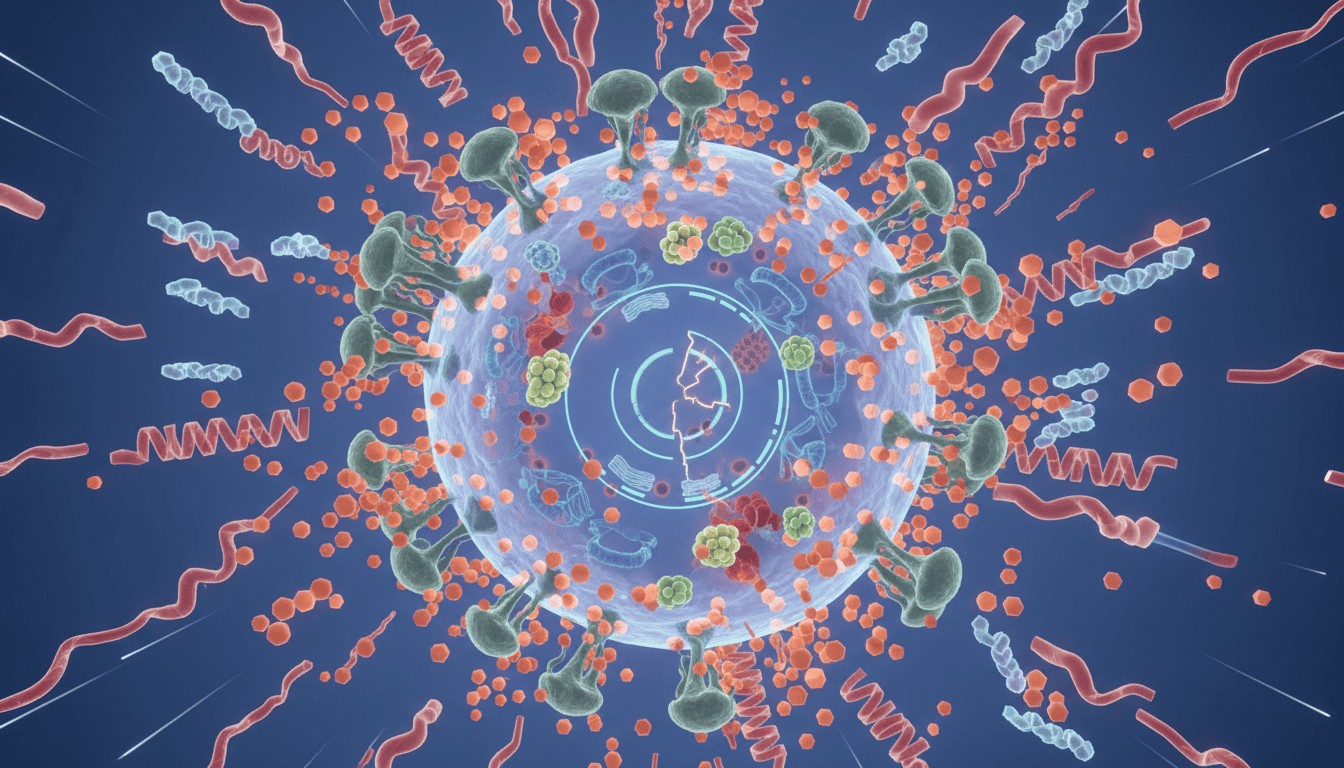
These glycated proteins, known as advanced glycation end products or AGEs, are particularly troublesome. They’re chemically unstable and generate reactive oxygen species as they form. Meanwhile, the mitochondria, your cellular power plants, start working overtime to process the glucose flood. This ramped-up energy production creates more electron leakage and more free radicals than the cell’s antioxidant systems can neutralise.
The cell finds itself caught in a vicious cycle. High glucose triggers oxidative stress, which damages the very systems meant to process glucose efficiently, leading to even more oxidative stress.
What the research shows
Scientists have observed this glucose damage cascade in laboratory studies using cell cultures exposed to high glucose concentrations. Within hours, these cells show increased production of superoxide and hydrogen peroxide. Their antioxidant enzyme levels drop while inflammatory markers spike.
Research using fluorescent markers reveals that high glucose environments cause mitochondrial dysfunction. The organelles swell, their membrane potential drops, and they produce less ATP while generating more oxidative byproducts. Electron microscopy studies show physical damage to mitochondrial cristae, the folded inner membranes where energy production occurs.
Perhaps most telling are studies tracking protein modification over time. Researchers have documented how prolonged glucose exposure creates cross-linked protein aggregates that accumulate in cells. These damaged proteins lose their normal function and become sources of ongoing oxidative stress themselves.
Measurements of cellular antioxidant capacity show that glutathione levels plummet under high glucose conditions. The cells burn through their protective reserves faster than they can replenish them.
Why cells need glucose regulation
Evolution designed cellular glucose metabolism for feast-and-famine conditions, not constant abundance. Our ancestors experienced periodic food scarcity, so cells developed robust systems for glucose uptake and storage, but relatively limited mechanisms for handling chronic excess.
The cellular machinery that processes glucose works efficiently within normal concentration ranges. Hexokinase, the enzyme that kicks off glucose metabolism, actually gets inhibited by its own product when glucose processing becomes excessive. This built-in brake system prevents cells from burning through glucose too quickly during times of plenty.
But these protective mechanisms assume glucose levels will eventually return to baseline. When they don’t, the cellular defence systems become overwhelmed. The antioxidant networks that evolved to handle normal metabolic byproducts simply can’t cope with the sustained oxidative load that chronic glucose excess creates.
Insulin signalling, which normally helps cells take up glucose efficiently, also becomes impaired under conditions of glucose abundance, creating a cellular traffic jam where glucose accumulates outside cells while energy production inside becomes less efficient.
What affects glucose-induced oxidative stress
The timing and pattern of glucose exposure matters enormously. Research shows that sustained high glucose creates more oxidative damage than intermittent spikes of the same magnitude. Cells can recover from brief glucose elevations, but chronic exposure depletes their repair capacity.
Physical activity dramatically changes how cells handle glucose. Exercise increases the expression of glucose transporters and antioxidant enzymes, giving cells more capacity to process glucose cleanly. Active muscle tissue can absorb glucose without triggering the same oxidative cascade seen in sedentary conditions.
Age plays a significant role. Older cells show reduced antioxidant enzyme activity and slower protein turnover, making them more vulnerable to glucose-induced damage. The accumulated AGEs in aged tissues create a baseline level of oxidative stress that compounds with any new glucose exposure.
Certain nutrients influence this process. Compounds like alpha-lipoic acid and vitamin E can bolster cellular antioxidant systems, while deficiencies in minerals like magnesium and chromium impair glucose metabolism and worsen oxidative stress.
What remains unknown
Scientists are still working out why some cell types show more vulnerability to glucose damage than others. Nerve cells and kidney cells seem particularly susceptible, but the exact mechanisms behind this selective vulnerability aren’t fully understood.
The relationship between glucose variability and oxidative stress needs more investigation. Some research suggests that fluctuating glucose levels might be more damaging than stable elevated levels, but other studies contradict this finding.
Researchers don’t yet know whether cells can fully recover their antioxidant capacity after prolonged glucose exposure, or if some damage becomes permanent. The timeline for cellular repair after glucose normalisation remains unclear.
There’s also ongoing debate about which specific reactive oxygen species cause the most damage during glucose overexposure, and whether targeting particular molecules might provide more protection than general antioxidant approaches.
Understanding glucose-induced oxidative stress reveals why cellular energy metabolism requires such precise regulation. Your cells evolved elegant systems for handling the fuels they need, but those same systems become liability when overwhelmed by excess. The research highlights how cellular health depends not just on having adequate resources, but on maintaining the delicate balance that keeps those resources from becoming cellular toxins.

Matt Elliott is the editor of Redox News Today, an independent publication covering peer-reviewed research on cellular health, redox signalling, and related biomedical science.