Your knee starts aching after a long run. Within hours, the joint feels warm and slightly swollen. While you might blame the physical stress of exercise, something far more subtle is happening at the cellular level: a cascade of oxidative reactions is triggering an inflammatory response that your immune system can’t ignore.
What is oxidative stress in joints
Oxidative stress occurs when cells produce more reactive oxygen species than their antioxidant defences can neutralise. Think of it like a cellular fire that spreads faster than the sprinkler system can contain it.
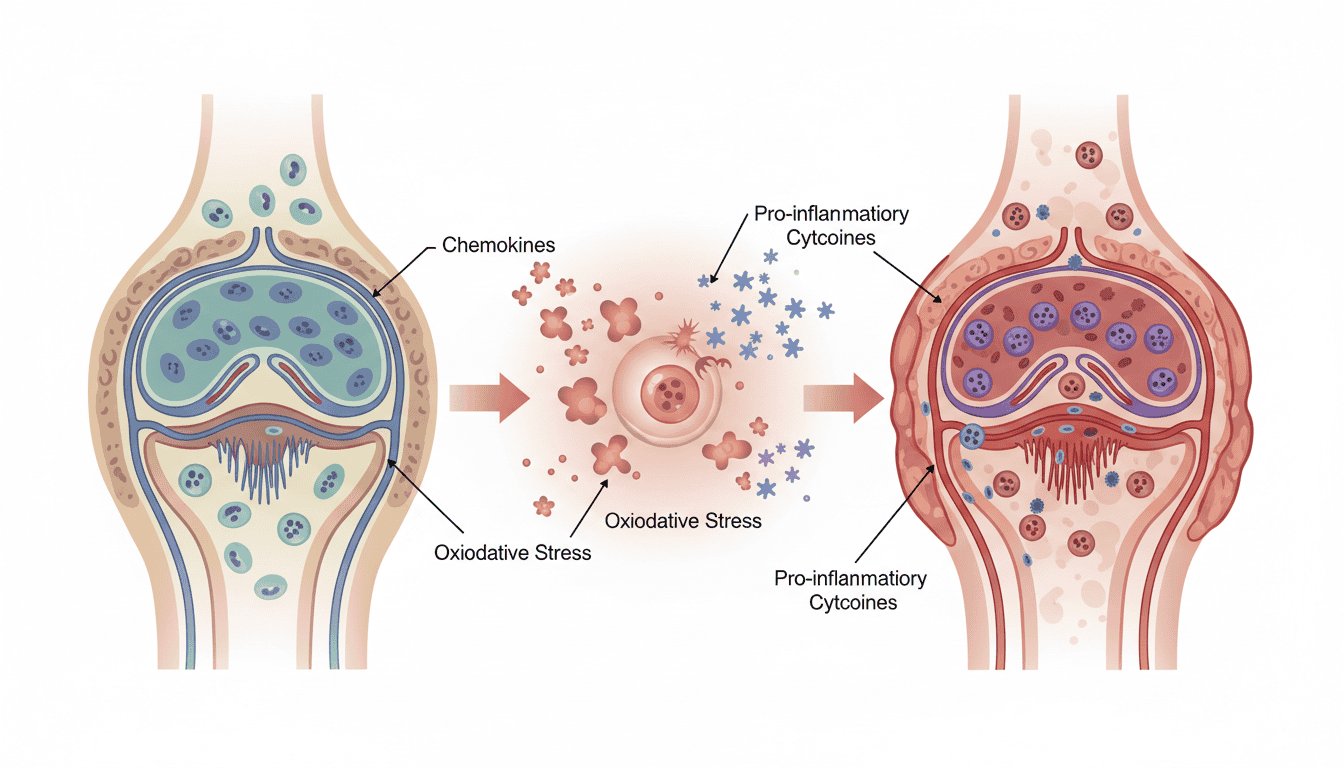
In joints, this process is particularly complex. Synovial fluid, the lubricant that keeps your joints moving smoothly, contains relatively few antioxidants compared to blood. This makes joint tissues vulnerable targets. When cartilage cells, immune cells, and synovial lining cells start producing excess free radicals, they create a hostile environment.
The reactive oxygen species don’t just damage nearby structures. They act as alarm signals, alerting immune cells that something is wrong. These molecular distress calls trigger a defensive response that we experience as inflammation: heat, swelling, pain, and stiffness.
What the research shows
Studies of joint tissue reveal a clear pattern. When researchers examine inflamed joints, they consistently find elevated markers of oxidative damage alongside inflammatory molecules. The timing matters: oxidative stress often appears before obvious signs of inflammation.
Scientists have tracked this process in real time using animal models. They observe that mechanical stress on joints rapidly increases free radical production. Within minutes, antioxidant enzymes start working overtime. If the oxidative load overwhelms these defences, inflammatory genes switch on within hours.
The relationship works both ways. Inflammatory cells themselves are major producers of reactive oxygen species. Neutrophils, the first responders of the immune system, deliberately release oxidising compounds to fight perceived threats. This creates a feedback loop where oxidative stress fuels inflammation, which generates more oxidative stress.
Research also shows that different joints respond differently to oxidative stress. Weight-bearing joints like knees and hips seem more susceptible than smaller joints, possibly because they endure greater mechanical stress and have larger volumes of synovial fluid to maintain.
Why cells need this response
This oxidative-inflammatory connection isn’t a design flaw. It’s an ancient defence mechanism that helped our ancestors survive injuries and infections.
When joint tissues detect damage through oxidative signals, the inflammatory response serves multiple purposes. It increases blood flow to deliver immune cells and nutrients to the affected area. It makes blood vessels more permeable so healing factors can reach damaged tissues. The pain and stiffness force rest, preventing further damage.
The system evolved assuming that most joint stress would be temporary. A twisted ankle or minor injury would trigger oxidative stress, inflammation would help repair the damage, and then both would subside. The problem arises when oxidative stress becomes chronic, turning a protective response into a source of ongoing tissue damage.
Evolution also didn’t anticipate modern lifestyles where joints might face repetitive stress for decades. The same protective mechanisms that helped heal acute injuries can become problematic when activated continuously.
What affects oxidative stress in joints
Age is the strongest predictor of joint oxidative stress. As we get older, our cells produce more free radicals and fewer antioxidant enzymes. Mitochondria, the cellular powerhouses, become less efficient and leak more reactive oxygen species during energy production.
Physical activity creates a paradox. Moderate exercise increases antioxidant defences and generally reduces joint inflammation over time. But intense or prolonged exercise can temporarily overwhelm these defences, creating acute oxidative stress. The key seems to be the balance between challenge and recovery.
Diet influences the equation significantly. Foods rich in antioxidants can boost cellular defences, while processed foods high in sugar and refined fats can increase oxidative load. Research suggests that dietary antioxidants can reach joint tissues, though not as easily as they reach other organs.
Environmental factors matter too. Air pollution, cigarette smoke, and exposure to certain chemicals all increase systemic oxidative stress. Sleep quality affects the balance, with poor sleep linked to higher inflammatory markers and reduced antioxidant activity.
Body weight plays a role beyond simple mechanical stress. Fat tissue produces inflammatory molecules that circulate throughout the body, creating a background of oxidative stress that can affect joint health even in non-weight-bearing joints.
What remains unknown
Scientists still debate whether oxidative stress is primarily a cause or consequence of joint inflammation. The evidence suggests it’s both, but the relative importance likely varies between individuals and conditions.
The timing of interventions remains unclear. Researchers don’t know the optimal windows for supporting antioxidant defences or whether there are critical periods when joints are most vulnerable to oxidative damage.
Individual variation is another puzzle. Some people seem remarkably resistant to joint problems despite high levels of physical stress, while others develop issues with minimal apparent cause. Genetic factors that influence antioxidant enzyme production might explain some of this variation, but much remains unexplored.
The role of different types of free radicals is also unclear. Not all reactive oxygen species behave the same way, and some might even have protective effects in certain contexts. Understanding these nuances could lead to more targeted approaches.
This research reveals how intimately connected our cellular defence systems are to our daily experience of movement and comfort. The oxidative stress that begins in individual cells ultimately shapes whether we can climb stairs without pain or wake up feeling stiff. Understanding these connections brings us closer to supporting the cellular processes that keep our joints healthy throughout life.

Matt Elliott is the editor of Redox News Today, an independent publication covering peer-reviewed research on cellular health, redox signalling, and related biomedical science.