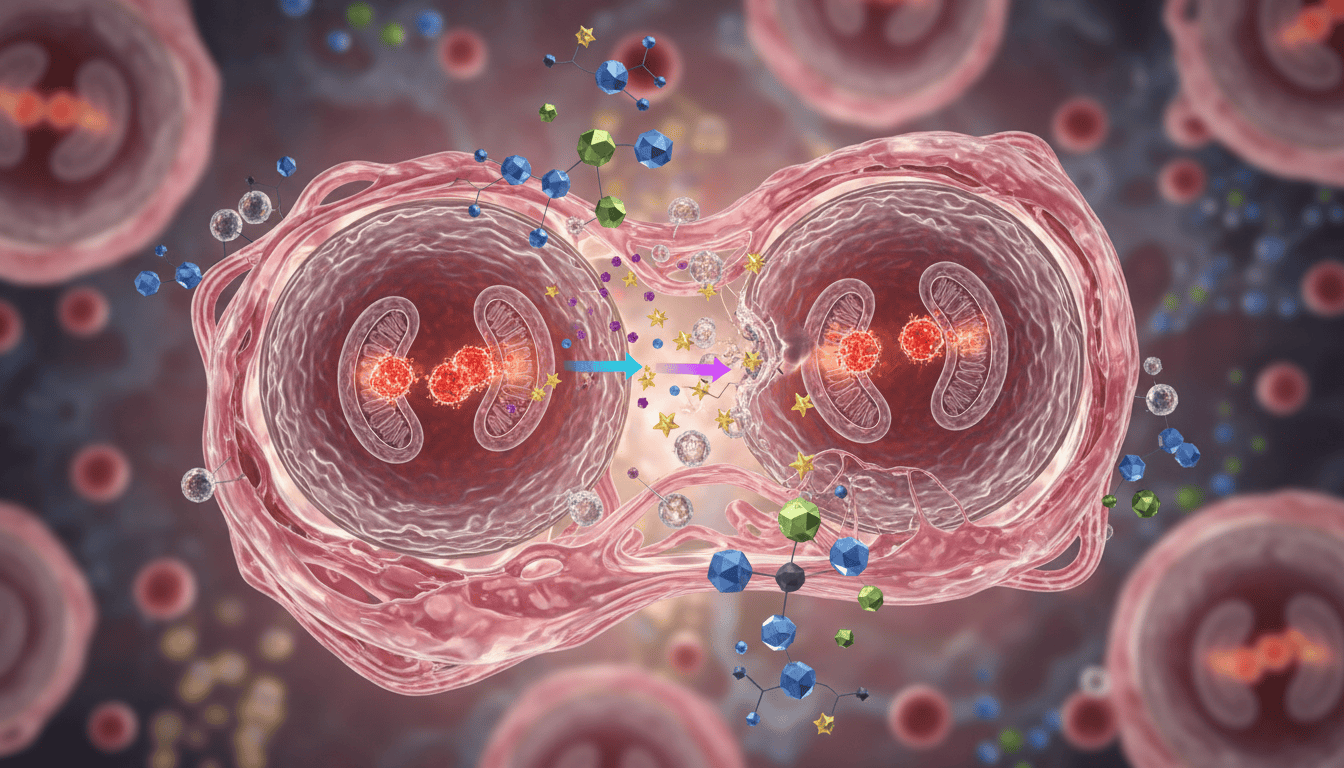
Your cells are constantly sending chemical messages about their health. In reproductive tissues, these signals become particularly urgent when oxidative stress overwhelms cellular defences. Scientists have learned to read these molecular distress calls, revealing how cellular dysfunction contributes to fertility problems.
What is oxidative stress in reproductive cells
Oxidative stress occurs when reactive oxygen species overwhelm a cell’s antioxidant defences. Think of it as cellular rust. These highly reactive molecules, including hydrogen peroxide and superoxide, form naturally during energy production in mitochondria.
Reproductive cells face unique challenges. Sperm cells pack enormous amounts of DNA into tiny spaces and need explosive energy bursts for swimming. Eggs remain dormant for years or decades, accumulating molecular damage over time. Both cell types rely heavily on mitochondria, the cellular powerhouses that inevitably leak reactive oxygen species during energy production.
When antioxidant systems can’t keep pace with oxidative damage, cells start leaking specific molecules into surrounding fluids. These leaked molecules become biomarkers that scientists can measure in blood, semen, or follicular fluid. It’s like detecting smoke to know there’s a fire inside the cell.
What the research shows
Studies consistently find elevated oxidative stress markers in people with reproductive disorders. Men with poor sperm quality show higher levels of malondialdehyde, a byproduct of lipid damage, in their semen. Their sperm also contain more DNA breaks caused by oxidative damage.
Women with endometriosis display increased 8-hydroxydeoxyguanosine in their blood and peritoneal fluid. This marker appears when reactive oxygen species attack DNA. Similarly, women with polycystic ovary syndrome show elevated lipid peroxidation products and reduced antioxidant enzyme activity.
Researchers have also measured protein carbonylation, which occurs when proteins get oxidatively damaged. Higher levels correlate with poorer pregnancy outcomes during assisted reproduction. The pattern emerges clearly: reproductive dysfunction often coincides with cellular oxidative damage.
Advanced techniques now allow scientists to measure multiple biomarkers simultaneously. They’ve discovered that the ratio between oxidative damage markers and antioxidant capacity often matters more than individual measurements. This oxidative stress index provides a more complete picture of cellular health.
Why cells need this signalling system
Oxidative stress biomarkers aren’t just signs of cellular damage. They serve as early warning systems that help cells coordinate protective responses. When cells detect rising oxidative stress, they activate the NRF2 pathway, which switches on dozens of antioxidant genes simultaneously.
This system evolved because reproductive success requires precise cellular control. Sperm need enough reactive oxygen species for capacitation, the final maturation step that enables egg fertilisation. But too much oxidative stress damages their DNA and swimming ability. The biomarker system helps maintain this delicate balance.
For eggs, oxidative stress signalling helps coordinate ovulation timing and embryo development. Moderate oxidative stress actually supports normal cellular processes, while excessive levels trigger protective shutdown mechanisms. Evolution preserved these signalling pathways because they’re essential for reproductive success.
What affects oxidative stress biomarkers
Age dramatically influences these markers. Women over 35 show progressively higher oxidative stress levels in their follicular fluid. Men experience similar patterns, with sperm oxidative damage increasing after age 40. The cellular machinery simply accumulates wear over time.
Lifestyle factors significantly impact biomarker levels. Smoking elevates lipid peroxidation markers throughout the reproductive system. Excessive alcohol consumption increases protein carbonylation. Obesity raises inflammatory markers that contribute to oxidative stress.
Diet plays a protective role. People who eat more fruits and vegetables show higher antioxidant capacity and lower oxidative damage markers. Exercise presents a paradox: moderate activity reduces oxidative stress markers, while intense training can temporarily increase them.
Environmental toxins consistently elevate oxidative stress biomarkers. Exposure to heavy metals, pesticides, or air pollution correlates with higher DNA damage markers in reproductive cells. Even psychological stress increases cortisol levels, which can overwhelm cellular antioxidant defences.
What remains unknown
Scientists still debate whether oxidative stress causes reproductive disorders or simply accompanies them. The chicken and egg question persists: does cellular dysfunction create oxidative stress, or does oxidative stress drive cellular dysfunction? Probably both occur simultaneously in complex feedback loops.
The timing of biomarker measurements remains problematic. Oxidative stress levels fluctuate throughout menstrual cycles and vary daily in men. Researchers haven’t established when measurements provide the most clinically relevant information. Single snapshots might miss important patterns.
Individual variation complicates biomarker interpretation. Some people naturally produce higher baseline levels of certain markers without apparent reproductive problems. Others show seemingly normal levels despite clear fertility issues. Genetic differences in antioxidant enzyme production likely explain some of this variation.
The relationship between different biomarkers also needs clarification. Do elevated DNA damage markers predict reproductive outcomes better than lipid peroxidation products? Should clinicians focus on single markers or comprehensive oxidative stress profiles? These questions await larger, longer studies.
What this research reveals
Oxidative stress biomarkers offer a window into cellular health that was invisible just decades ago. They reveal how environmental pressures, lifestyle choices, and ageing affect the most fundamental biological process: reproduction. This research illuminates the intricate connections between cellular metabolism and reproductive success, showing how our cells constantly balance energy production with protective mechanisms. Understanding these molecular conversations between cells helps explain why reproduction sometimes fails and why cellular health matters for species survival.

Matt Elliott is the editor of Redox News Today, an independent publication covering peer-reviewed research on cellular health, redox signalling, and related biomedical science.