
Cancer cells need to solve a deadly problem: how to survive in an environment that should kill them. They grow fast, consume oxygen rapidly, and create toxic waste products that would normally trigger cell death. Yet somehow they thrive. Part of their survival strategy involves hijacking a cellular defence system that normally protects healthy cells from oxidative stress.
What is the cysteine-NRF2 connection
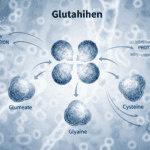
Cysteine is an amino acid that cells use to build glutathione, their primary antioxidant molecule. Think of glutathione as a cellular janitor that cleans up reactive oxygen species before they can damage DNA, proteins, or cell membranes. When cysteine levels rise, cells can produce more glutathione and better defend themselves against oxidative stress.
This is where NRF2 enters the picture. NRF2 is a transcription factor that acts like a master switch for cellular defence systems. When cells detect stress, NRF2 moves into the nucleus and activates dozens of protective genes at once. These genes produce enzymes that neutralise toxins, repair damaged molecules, and maintain cellular balance.
Under normal conditions, NRF2 stays inactive, bound to a protein called KEAP1 that marks it for destruction. But when oxidative stress hits, this binding releases and NRF2 springs into action. The system works beautifully in healthy cells, providing protection when needed and staying quiet when not.
What the research shows
Scientists have discovered that many cancer cells maintain abnormally high levels of cysteine, and this excess amino acid creates a cascade of survival advantages. When cancer cells have abundant cysteine, they produce massive amounts of glutathione. This flood of antioxidants doesn’t just protect them from normal oxidative stress, it shields them from the very mechanisms that should eliminate them.
The excess cysteine also affects NRF2 activity in unexpected ways. Instead of the carefully regulated on-off switch seen in healthy cells, cancer cells often show constitutively active NRF2 signalling. The pathway stays turned on continuously, providing constant protection against cellular death signals.
Research shows this creates a feedback loop. High cysteine levels support sustained NRF2 activation, which in turn promotes the expression of genes that help cells import even more cysteine. Cancer cells essentially rewire their metabolism to maintain this protective state.
Studies have also revealed that this cysteine-driven NRF2 hyperactivation helps cancer cells resist chemotherapy. Many cancer drugs work by overwhelming cells with oxidative stress, but cells with supercharged antioxidant systems can neutralise these therapeutic attacks.
Why cells need this mechanism
Evolution preserved the NRF2 pathway because oxidative stress poses a constant threat to cellular survival. Every time cells use oxygen to produce energy, they create reactive molecules as byproducts. Without proper antioxidant defences, these molecules would quickly destroy vital cellular components.
The cysteine connection makes biological sense too. Cells need a way to ramp up antioxidant production when facing increased oxidative stress, and having more building blocks available allows for rapid glutathione synthesis. This system helps healthy cells survive temporary periods of high stress, such as during intense physical activity or exposure to environmental toxins.
The problem arises when cancer cells exploit this normally protective mechanism. They’ve essentially turned a survival tool into a weapon against the body’s natural cancer suppression systems. The same pathway that helps a liver cell survive alcohol detoxification can help a tumour cell resist chemotherapy.
What affects cysteine-NRF2 interactions
Diet plays a significant role in cellular cysteine levels. Protein-rich foods provide cysteine directly, while some plant compounds can influence how cells process this amino acid. Sulforaphane from broccoli, for example, can modulate NRF2 activity through mechanisms that don’t depend on cysteine availability.
Age affects this system too. Older cells often show changes in both cysteine metabolism and NRF2 responsiveness. Some research suggests that the coordination between these systems becomes less precise with ageing, though the implications for cancer risk remain unclear.
Genetic variations influence how effectively cells can use cysteine and respond to NRF2 signalling. Some people carry mutations that affect cysteine transport proteins or NRF2 regulatory genes, potentially altering their cellular responses to oxidative stress.
Environmental factors also matter. Exposure to certain chemicals can deplete glutathione stores, forcing cells to increase cysteine uptake. Chronic inflammation creates oxidative stress that can dysregulate the normal balance between cysteine availability and NRF2 activity.
What remains unknown
Scientists still don’t fully understand how cancer cells initially reprogram their cysteine metabolism. Does excess cysteine contribute to cancer development, or do cells increase cysteine uptake only after they become malignant? The timing and sequence of these changes could have major implications for prevention strategies.
The heterogeneity question puzzles researchers too. Not all cancer cells show the same patterns of cysteine dependence or NRF2 activation. Why do some tumours rely heavily on this pathway while others use different survival strategies? Understanding these differences could help predict which cancers might be vulnerable to therapies targeting cysteine metabolism.
Researchers are also working to understand the broader metabolic networks affected by cysteine-NRF2 interactions. This pathway connects to numerous other cellular processes, from energy production to DNA repair, but mapping these connections in cancer cells remains challenging.
The therapeutic implications remain murky too. While blocking cysteine uptake or NRF2 activity might harm cancer cells, these interventions could also damage healthy tissues that depend on the same protective mechanisms.
This research highlights how cancer cells co-opt fundamental cellular defence systems for their own survival. The same mechanisms that protect healthy cells from oxidative damage can become tools for malignant cells to evade destruction. Understanding these molecular hijacking events offers insights into both normal cellular physiology and the complex biology of cancer progression.

Matt Elliott is the editor of Redox News Today, an independent publication covering peer-reviewed research on cellular health, redox signalling, and related biomedical science.