Drop the pH inside a human cell by just 0.2 units and watch everything fall apart. Proteins unfold like melting sculptures. Enzymes stop working. The cell’s power plants shut down. Yet somehow, your cells maintain their internal pH within a razor-thin range of 7.0 to 7.4, even when your blood turns acidic from intense exercise or your diet throws acid loads at your system.
What is cellular pH regulation
Every cell in your body runs a sophisticated buffering system that keeps its internal environment slightly alkaline. Think of it like a chemical thermostat, but instead of controlling temperature, it controls acidity. The pH scale runs from 0 to 14, with 7 being neutral. Your cells need to stay between 7.0 and 7.4 to function properly.
This narrow range exists because almost every biological process depends on proteins, and proteins are incredibly pH-sensitive. Change the acidity even slightly, and these molecular machines change shape. When proteins change shape, they stop working. It’s like trying to use a key that’s been slightly bent.
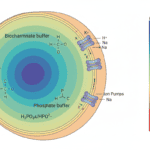
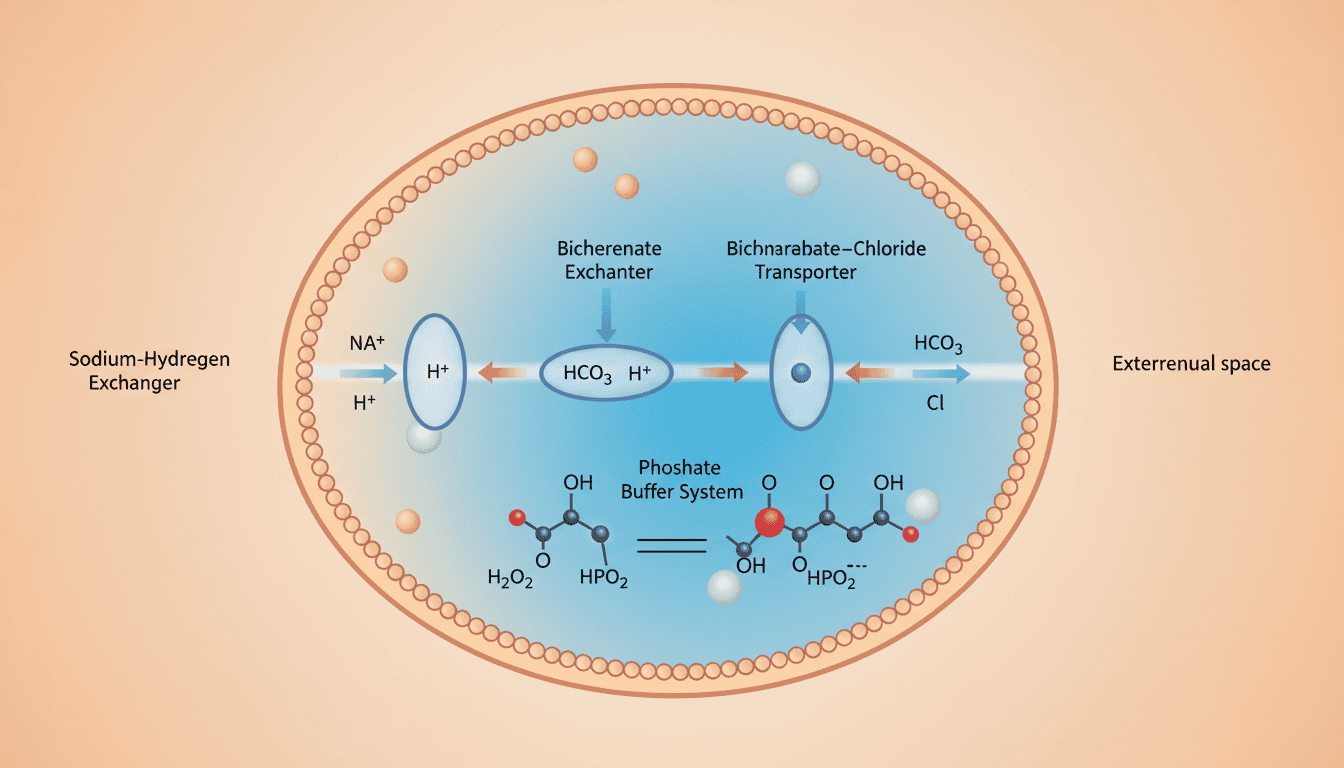
Cells achieve this control through multiple buffering systems working simultaneously. The phosphate buffer system handles most of the heavy lifting inside cells, while bicarbonate buffers dominate in blood and extracellular fluid. These aren’t passive systems either. Cells actively pump hydrogen ions in and out using specialised transport proteins embedded in their membranes.
What the research shows
Scientists have discovered that cells use at least six different mechanisms to control pH, each kicking in under different conditions. When researchers artificially acidify cells in laboratory studies, they observe a coordinated response within minutes.
The sodium-hydrogen exchanger acts like a bouncer at a club, throwing out excess hydrogen ions while letting sodium in. Meanwhile, the bicarbonate-chloride exchanger works in reverse, bringing in bicarbonate ions that can neutralise acid. These two systems often work together, creating what researchers call “pH recovery” after an acid load.
More recent studies have revealed that different cell types have dramatically different buffering capacities. Muscle cells, which produce large amounts of lactic acid during exercise, have particularly robust pH control systems. Brain cells, on the other hand, are more vulnerable to pH changes but rarely face the same acid loads that muscle cells do.
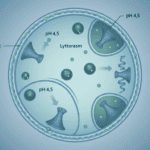
Research has also shown that mitochondria, the cell’s power plants, maintain their own separate pH gradient. They keep their interior more alkaline than the rest of the cell, which is essential for producing ATP, the cellular fuel that powers almost everything your cells do.
Why cells need this
The evolutionary pressure to maintain pH balance stems from the fact that life began in the ocean, where pH was relatively stable. As organisms moved onto land and developed complex metabolisms, they had to recreate that stable chemical environment inside their cells.
Consider what happens during cellular respiration. Every time your cells burn glucose for energy, they produce carbon dioxide as waste. That CO2 combines with water to form carbonic acid, which could quickly acidify cells if not managed. The buffering systems evolved to handle this constant acid production.
pH control is also critical for cellular communication. Many signalling molecules and receptors only work within specific pH ranges. Growth factors, hormones, and neurotransmitters all depend on proteins that change shape with pH fluctuations. Without tight pH control, cells couldn’t respond appropriately to signals from other cells.
The ability to maintain pH balance also allows cells to specialise. Stomach cells can produce hydrochloric acid because they have exceptional buffering systems to protect themselves. Kidney cells can handle the acidic waste they filter because they’ve evolved enhanced pH regulation mechanisms.
What affects cellular pH regulation
Age significantly impacts how well cells maintain pH balance. Studies show that older cells have reduced activity of key pH-regulating enzymes and transport proteins. This decline may contribute to age-related cellular dysfunction, though researchers are still working out the exact mechanisms.
Exercise creates one of the biggest challenges to cellular pH control. During intense physical activity, muscle cells produce lactic acid faster than they can buffer it. Well-trained athletes show improved cellular buffering capacity, suggesting these systems adapt to regular acid loads.
Diet influences cellular pH through several pathways. High-protein diets increase the body’s acid load because breaking down amino acids produces acidic byproducts. The kidneys handle most of this, but cells throughout the body must still cope with subtle pH shifts.
Inflammation also affects pH regulation. When cells are fighting infection or dealing with tissue damage, their pH control systems can become overwhelmed. This creates a feedback loop where pH imbalance makes inflammation worse, and inflammation makes pH harder to control.
Environmental toxins can disrupt pH regulation by interfering with the proteins that transport ions across cell membranes. Heavy metals are particularly problematic because they can bind to these transport proteins and reduce their efficiency.
What remains unknown
Despite decades of research, scientists still don’t fully understand how cells coordinate their various pH control systems. Why does one buffering mechanism activate before another? How do cells decide which system to use when facing different types of acid loads?
The connection between cellular pH and ageing remains particularly murky. Researchers can measure declining pH control with age, but they can’t yet determine whether this decline causes other age-related changes or simply accompanies them.
There’s also the puzzle of individual variation. Some people seem to handle acid loads much better than others, but the genetic and physiological basis for these differences isn’t clear. Understanding this variation could reveal new aspects of how pH regulation works.
Perhaps most intriguingly, recent studies suggest that pH might play a role in gene expression. Slight changes in cellular pH appear to influence which genes get turned on or off, but researchers are only beginning to map these relationships.
The intricate dance of pH regulation reveals something profound about cellular life. Every cell carries within it the chemical wisdom of billions of years of evolution, fine-tuned systems that maintain the precise conditions needed for life to flourish. Understanding these mechanisms brings us closer to grasping how cells create order from chemical chaos, one carefully managed hydrogen ion at a time.

Matt Elliott is the editor of Redox News Today, an independent publication covering peer-reviewed research on cellular health, redox signalling, and related biomedical science.