
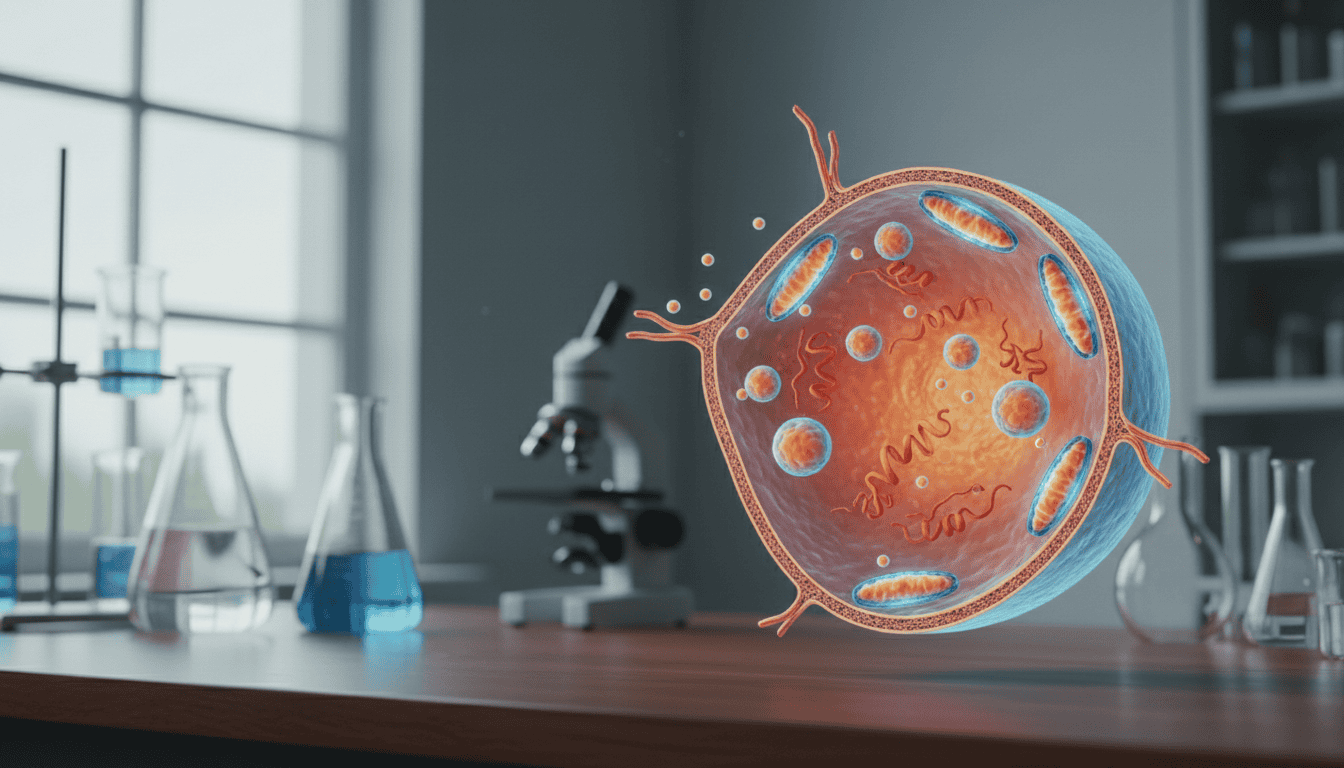
Your body temperature sits at a steady 37 degrees Celsius, but individual cells experience a surprisingly dynamic thermal world. When you step outside on a cold morning, drink hot coffee, or develop a fever, your cells don’t just passively endure these temperature shifts. They actively sense the change and launch sophisticated molecular responses within seconds.
What is cellular thermosensing
Cells detect temperature through specialised proteins that change shape when heated or cooled. These thermosensitive proteins act like molecular thermometers, embedded in cell membranes and other cellular structures. When temperature rises, certain proteins unfold slightly, exposing new binding sites or altering their activity. Cold does the opposite, making proteins more rigid and changing how they interact with other molecules.
The most famous of these thermal sensors are TRP channels. These protein channels normally allow ions to flow in and out of cells, but their sensitivity to temperature makes them cellular early warning systems. TRPV1 channels open when temperatures climb above 43 degrees, while TRPM8 channels respond to cooling. Each channel type has its own thermal threshold, creating a sophisticated temperature detection network.
Beyond these specialised sensors, virtually every protein in your cells responds to temperature to some degree. Enzymes work faster when warm and slower when cold. Cellular membranes become more fluid with heat and stiffer with cold. This means temperature doesn’t just trigger specific pathways but influences the entire cellular machinery.
What the research shows
Scientists have discovered that cells respond to temperature changes with remarkable speed and precision. Within minutes of a temperature shift, cells begin altering gene expression patterns. Heat triggers the production of molecular chaperones called heat shock proteins, which help refold damaged proteins and prevent cellular chaos.
Cold exposure activates different pathways entirely. Researchers have observed that cooling triggers changes in cellular metabolism, shifting energy production and altering how cells process fats and sugars. Brown fat cells, for instance, ramp up heat production through specialised mitochondria when exposed to cold temperatures.
One surprising finding involves circadian rhythms. Body temperature naturally fluctuates throughout the day, and cells use these small thermal cycles as timing cues. Even isolated cells in laboratory dishes can maintain rough daily rhythms when subjected to gentle temperature oscillations that mimic the body’s natural thermal patterns.
Studies on cellular ageing have revealed that temperature stress responses decline with age. Older cells produce fewer heat shock proteins and respond more slowly to thermal challenges. This reduced thermal resilience may contribute to age-related cellular dysfunction, though the exact mechanisms remain under investigation.
Why cells need this
Temperature profoundly affects every aspect of cellular chemistry. Proteins are particularly vulnerable because their three-dimensional shapes determine their function, and heat can cause them to unfold catastrophically. Without rapid detection and response systems, even small temperature increases could trigger widespread protein damage and cell death.
Evolution has preserved these thermal response systems across virtually all life forms, from bacteria to humans. This universality suggests that managing temperature stress has been a fundamental challenge since life began. Even organisms that live in seemingly stable environments face thermal fluctuations from metabolic activity, seasonal changes, or daily temperature cycles.
The ability to sense and respond to temperature also provides survival advantages beyond damage control. Many cellular processes work optimally within specific temperature ranges. By adjusting their internal chemistry based on thermal conditions, cells can maintain function across a broader range of environmental conditions.
Thermal sensing also enables cells to prepare for future challenges. When cells detect rising temperatures, they don’t just repair existing damage but also boost their defences against potential future heat stress. This predictive response helps organisms survive in variable thermal environments.
What affects cellular temperature responses
Age significantly impacts how well cells handle temperature changes. Research shows that heat shock protein production declines with advancing age, making older cells more vulnerable to thermal stress. This age-related decline appears across many species and cell types, suggesting a fundamental aspect of cellular ageing.
Exercise influences cellular temperature responses in complex ways. Regular physical activity appears to maintain or even enhance heat shock protein production, potentially improving cellular thermal resilience. However, intense exercise also generates significant heat stress that cells must manage.
Diet affects cellular temperature responses through multiple pathways. Certain compounds found in foods can influence heat shock protein production or modify membrane composition, altering how cells respond to thermal challenges. Caloric restriction has been shown to enhance stress resistance, including improved responses to temperature extremes.
Chronic exposure to temperature extremes can modify cellular responses over time. People living in very hot or cold climates show cellular adaptations that improve thermal tolerance. These changes can occur at the level of gene expression, protein production, and membrane composition.
What remains unknown
Scientists still don’t fully understand how cells integrate temperature information with other environmental signals. Temperature rarely changes in isolation, yet most research studies thermal responses under controlled laboratory conditions. How cells balance temperature sensing with responses to nutrients, hormones, and other stimuli remains an active area of investigation.
The relationship between cellular temperature responses and human health outcomes needs much more research. While we know that thermal stress responses decline with age and disease, translating this knowledge into practical applications requires deeper understanding of the underlying mechanisms.
Individual variation in thermal responses represents another knowledge gap. People clearly differ in their tolerance for hot and cold environments, but the cellular basis for these differences remains poorly understood. Genetic factors likely play a role, but environmental influences and their interactions with genetics need more study.
Long-term consequences of repeated thermal stress on cellular function represent another frontier. While acute temperature responses are well-studied, the cumulative effects of daily thermal fluctuations over decades remain largely unexplored.
These thermal response systems reveal cells as remarkably sophisticated entities, constantly monitoring and adapting to their environment. Rather than passive victims of temperature change, cells actively manage thermal challenges through intricate molecular machinery honed by billions of years of evolution. Understanding these systems better may unlock new insights into cellular resilience, ageing, and the fundamental principles that allow life to thrive in a thermally variable world.

Matt Elliott is the editor of Redox News Today, an independent publication covering peer-reviewed research on cellular health, redox signalling, and related biomedical science.