
Your blood pH sits at a rock-steady 7.4. Drop it to 7.0 and you’re in a coma. Push it to 7.8 and your muscles start cramping uncontrollably. Yet inside your cells, pH swings wildly from moment to moment. How do individual cells survive these chemical storms that would kill you if they happened in your bloodstream?
What is cellular pH regulation
Every cell in your body runs on chemistry. Enzymes speed up reactions, proteins fold into working shapes, and energy gets transferred through molecular handoffs. All of this depends on pH being just right.
Think of pH as the electrical charge of your cellular environment. Too acidic and proteins unfold like melted plastic. Too basic and chemical reactions grind to a halt. Your cells need to maintain their internal pH around 7.2, even when they’re producing acid as a byproduct of making energy or dealing with toxic loads that could shift their chemistry dramatically.
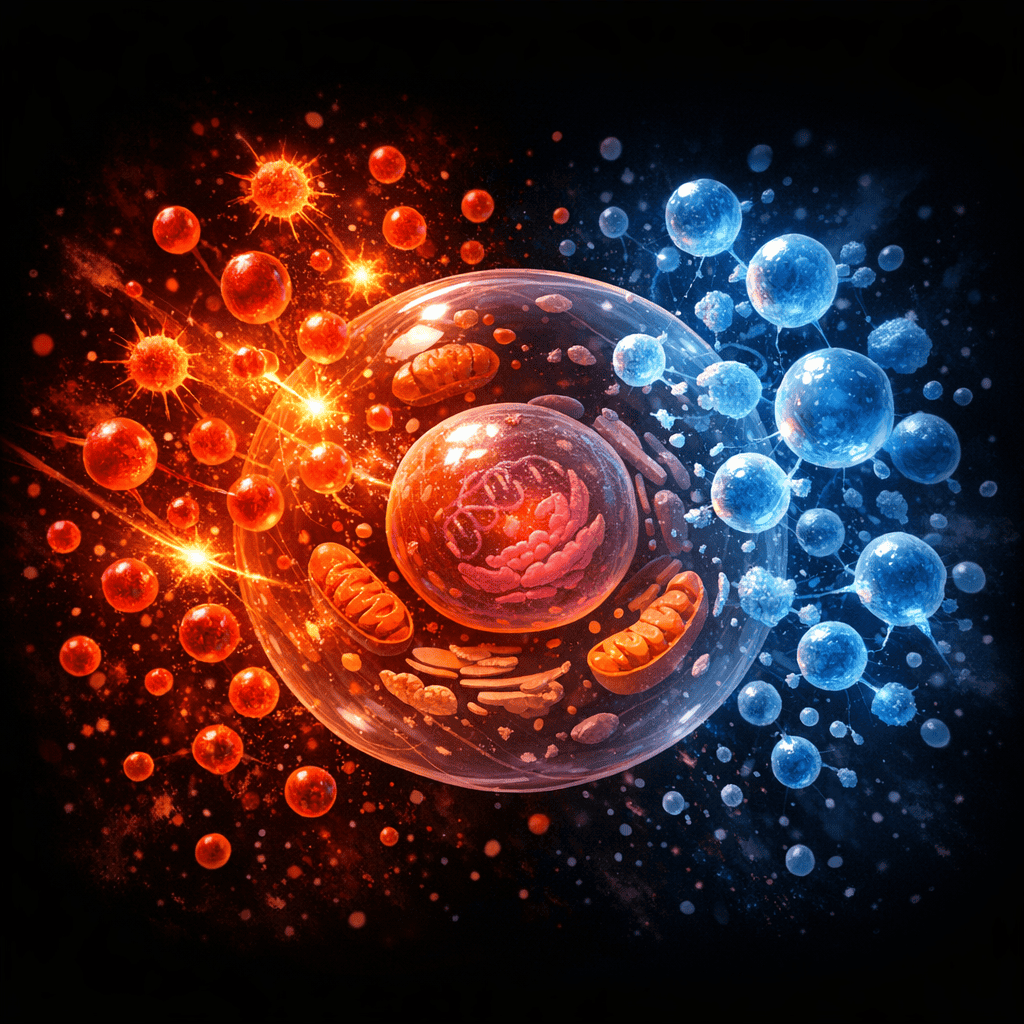
Cells manage this through three main systems. Protein buffers act like chemical sponges, soaking up excess hydrogen ions when things get too acidic. Ion pumps work like molecular bouncers, actively throwing troublesome particles out of the cell. Metabolic adjustments let cells change their internal chemistry when the other systems get overwhelmed.
What the research shows
Scientists have discovered that cells don’t just passively maintain pH. They actively sense chemical changes and respond within seconds.
When researchers artificially acidify cells in laboratory experiments, they observe a coordinated response. Sodium-hydrogen exchangers ramp up their activity, pumping hydrogen ions out while pulling sodium in. Bicarbonate transporters start working overtime, bringing in chemical buffers from outside the cell. Even the cell’s powerhouses, the mitochondria, adjust their activity to produce fewer acidic byproducts.
Different cell types show remarkably different pH management strategies. Muscle cells during intense exercise can handle dramatic acid spikes by temporarily storing hydrogen ions in specialised compartments. Brain cells, by contrast, maintain much tighter pH control because neurons are extremely sensitive to chemical changes.
Cancer cells have taught researchers something unexpected about pH regulation. These cells often maintain a more alkaline internal environment while making their surroundings more acidic. This pH gradient helps them survive in hostile environments and resist certain treatments that would normally kill healthy cells.
Why cells need this system
Evolution preserved cellular pH control because chemistry is unforgiving. Enzymes work within narrow pH ranges, often losing 90% of their activity with just small shifts in acidity.
Consider what happens during energy production. Every time a cell breaks down glucose for fuel, it generates acidic byproducts. Without pH regulation, cells would literally pickle themselves with their own waste. The pH control system lets cells run their energy furnaces at full blast without destroying their own machinery.
pH regulation also enables cellular communication. Many signalling pathways depend on specific chemical conditions to work properly. When cells can’t maintain their internal pH, they lose the ability to respond to hormones, growth factors, and danger signals from other cells.
The system becomes even more critical during stress. When cells face toxins, infections, or oxygen deprivation, their chemistry gets thrown into chaos. The pH regulation machinery often determines whether a cell survives the crisis or dies.
What affects cellular pH control
Age weakens cellular pH regulation across multiple systems. Older cells show reduced activity in their ion pumps and decreased production of key buffer proteins. This decline may explain why ageing cells become more vulnerable to stress and less efficient at basic functions.
Physical exercise creates a natural test of cellular pH control. During intense activity, muscle cells must handle massive acid loads while continuing to function. Regular exercise appears to strengthen these pH management systems, making cells more resilient to chemical stress.
Diet influences cellular pH regulation through multiple pathways. Cells processing high sugar loads face increased acid production. Those dealing with alcohol metabolism must handle acetaldehyde and other pH-disrupting compounds. Even dehydration affects pH control by concentrating cellular contents and straining transport systems.
Environmental toxins can overwhelm cellular pH defences. Heavy metals interfere with key enzymes in the pH control system. Air pollution particles trigger inflammatory responses that acidify cells. Chronic exposure to these stressors can exhaust the cellular machinery responsible for maintaining chemical balance.
What remains unknown
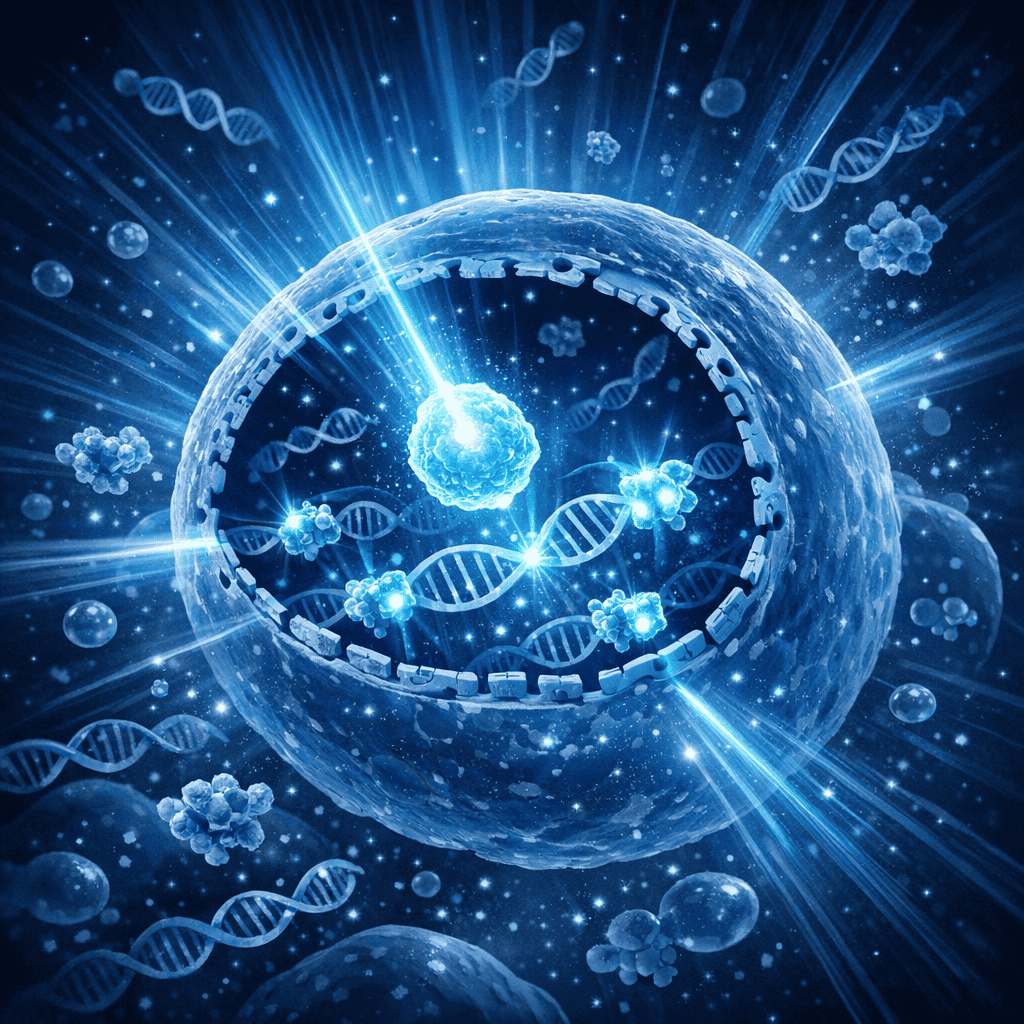
Scientists are still unravelling how different cellular compartments coordinate their pH management. Each organelle maintains its own chemical environment, but researchers don’t fully understand how these systems communicate with each other during stress.
The relationship between cellular pH control and disease remains murky in many areas. While researchers know that pH regulation fails in various conditions, they’re still determining whether this is a cause or consequence of cellular dysfunction.
Individual variation in pH regulation capabilities represents another frontier. Why do some people’s cells handle acid loads better than others? Genetic studies are beginning to identify key variations, but the functional implications remain largely unexplored.
Perhaps most intriguingly, researchers are discovering that cells may use pH changes as a form of internal communication. Small, controlled pH shifts might serve as signals that coordinate cellular activities. This represents a completely new way of thinking about how cells organise their internal operations.
Cellular pH regulation reveals something profound about life itself. Every cell exists as a tiny island of controlled chemistry in an ocean of chemical chaos. The molecular machines that maintain this control operate continuously, making thousands of adjustments every minute to preserve the precise conditions that life requires. Understanding these systems brings us closer to grasping how individual cells create the stable foundation that makes complex life possible.

Matt Elliott is the editor of Redox News Today, an independent publication covering peer-reviewed research on cellular health, redox signalling, and related biomedical science.