Step outside on a winter morning, and within seconds your body launches an invisible defence against the cold. Brown fat cells scattered throughout your torso wake up like dormant furnaces, their mitochondria spinning into overdrive to generate heat. This isn’t the white fat that stores energy around your waist. Brown fat burns calories to keep you warm, and cold exposure is the match that lights the fire.
What is brown fat mitochondrial activation
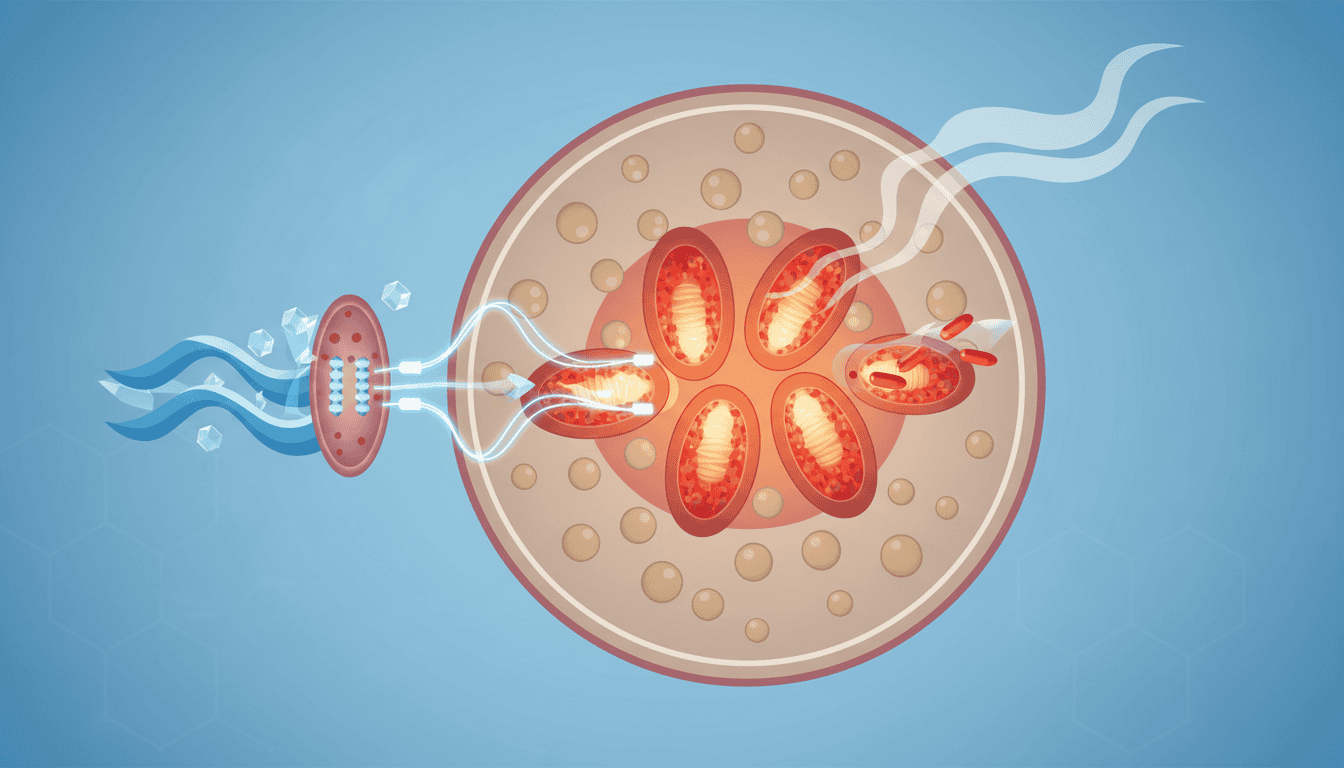
Brown adipose tissue gets its name from the dense network of mitochondria packed inside each cell. These mitochondria contain a unique protein called UCP1 that essentially short-circuits normal energy production. Instead of making ATP, they release energy directly as heat.
When cold receptors in your skin detect dropping temperatures, your sympathetic nervous system releases norepinephrine. This chemical messenger binds to receptors on brown fat cells, triggering a cascade that activates UCP1. The mitochondria start burning stored fat at a furious rate, generating heat that warms your blood before it returns to your core.
Think of regular mitochondria as efficient power plants that convert fuel into usable energy. Brown fat mitochondria are more like controlled bonfires, deliberately wasting energy to produce warmth. A single brown fat cell can contain hundreds of these heat-generating powerhouses.
What the research shows
Scientists have tracked brown fat activation in real time using PET scans and temperature measurements. When researchers expose people to mild cold stress, brown fat regions light up within minutes as glucose uptake increases dramatically. The mitochondria in these cells can increase their metabolic rate by more than 20-fold during peak activation.
Studies using cold water immersion show that regular exposure increases both the number of brown fat cells and the density of mitochondria within each cell. People who work outdoors in cold climates have measurably more active brown fat than those living in consistently warm environments.
Researchers have also discovered that cold exposure triggers the browning of regular white fat cells. These newly converted cells develop more mitochondria and begin expressing UCP1, effectively joining the heat-generation network. The transformation happens over days to weeks, not instantly.
Temperature monitoring reveals that activated brown fat can raise local tissue temperature by several degrees. This warm blood then circulates throughout the body, maintaining core temperature without the energy cost of shivering.
Why cells need this
Brown fat represents an evolutionary solution to a life-or-death problem. Maintaining core body temperature within a narrow range is absolutely critical for enzyme function and cellular survival. Drop too low, and vital chemical reactions slow to dangerous levels.
Shivering burns calories but requires constant muscle contractions that limit other activities. Brown fat activation provides a more efficient alternative, generating heat while leaving your muscles free for other tasks like finding shelter or food.
Newborn mammals, including humans, rely heavily on brown fat because they can’t shiver effectively. The tissue acts as a built-in heating system during the vulnerable early weeks of life. Adult humans retain functional brown fat, though typically less than in infancy.
The system also provides metabolic flexibility. When food is scarce but temperatures are low, brown fat allows the body to burn stored energy for warmth rather than activity, potentially extending survival time during harsh conditions.
What affects brown fat activation
Temperature is the primary trigger, but the response varies significantly between individuals. Age plays a major role. Brown fat activity generally decreases with advancing years, which may partly explain why older adults often feel cold more easily.
Regular cold exposure appears to train the system. People who take cold showers, swim in cold water, or work in cold environments maintain more responsive brown fat throughout adulthood. The mitochondria in their brown fat cells develop greater capacity for heat production.
Exercise influences brown fat through multiple pathways. Physical activity releases hormones that promote browning of white fat cells, while also improving the overall health of mitochondria throughout the body. Time of day matters too, with brown fat showing circadian rhythms that peak during typical waking hours.
Diet affects the system in subtle ways. Certain compounds found in foods can influence mitochondrial function, though the effects on brown fat specifically remain an active area of investigation. Sleep quality and stress levels also appear to modulate brown fat responsiveness through hormonal pathways.
What remains unknown
Scientists are still mapping the precise molecular switches that control brown fat activation. While they understand the basic norepinephrine pathway, dozens of other signalling molecules appear to fine-tune the response. The complete picture of how these signals integrate remains unclear.
The relationship between brown fat and overall metabolic health poses intriguing questions. Some research suggests that people with more active brown fat have better glucose control and insulin sensitivity, but whether this is cause or effect isn’t certain.
Researchers are also investigating why brown fat activity varies so dramatically between individuals of the same age and fitness level. Genetic factors clearly play a role, but environmental influences throughout development may be equally important.
The long-term effects of regular cold exposure protocols remain largely unexplored. While short-term studies show clear activation of brown fat, scientists don’t yet know the optimal duration, intensity, or frequency for maintaining the system throughout life.
Understanding brown fat activation reveals another layer of cellular sophistication that keeps us alive without conscious effort. These specialised mitochondria represent a beautiful example of evolutionary engineering, turning the simple physics of heat generation into a precisely controlled biological system. As research continues, brown fat may offer new insights into how our cells balance energy storage with energy expenditure, and how ancient survival mechanisms still operate in our modern world.

Matt Elliott is the editor of Redox News Today, an independent publication covering peer-reviewed research on cellular health, redox signalling, and related biomedical science.