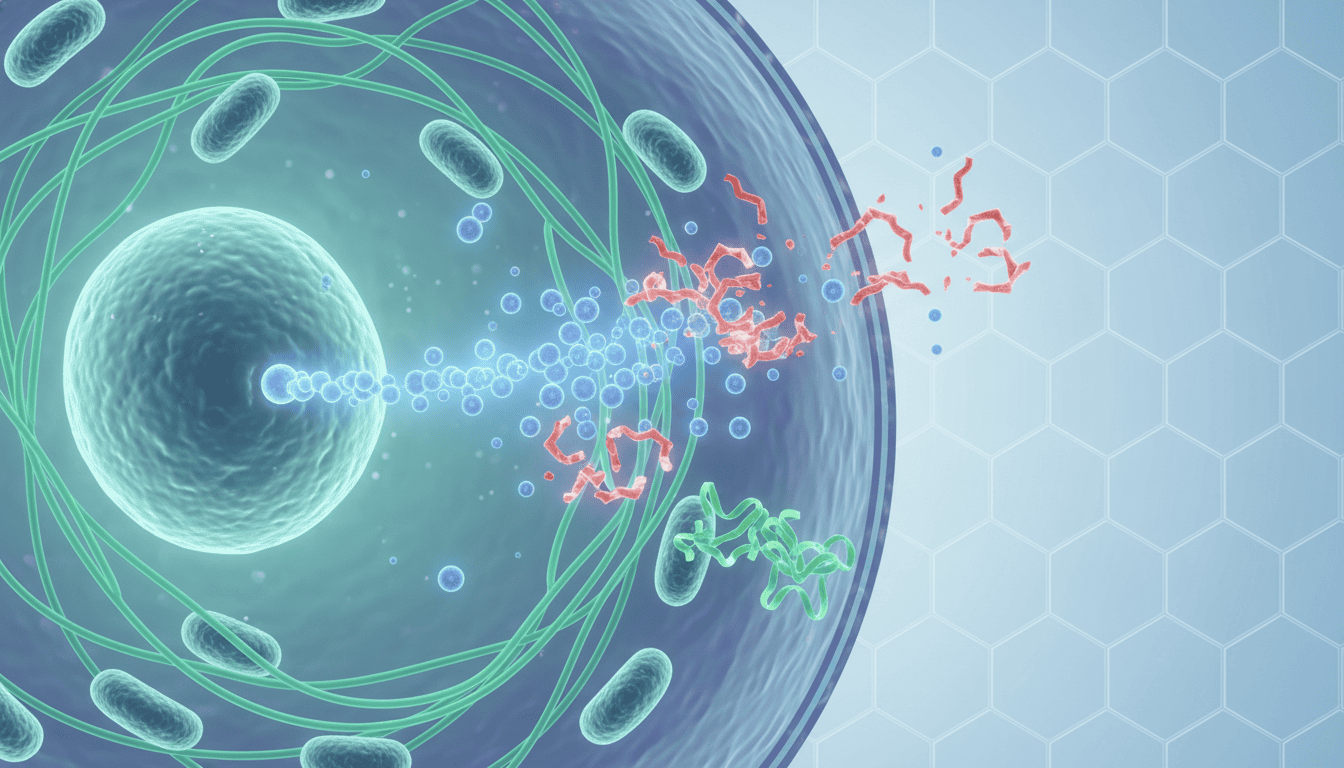

Cancer cells have figured out how to hijack one of biology’s most fundamental energy systems. They gorge themselves on NAD+, a molecule that powers cellular metabolism, to fuel their rapid growth and defend against treatments designed to kill them. This creates a puzzle for the growing number of people taking NAD+ supplements for anti-ageing benefits.
What is NAD+ in cellular energy
NAD+ stands for nicotinamide adenine dinucleotide, though most scientists just call it NAD. Think of it as cellular currency. Every time a cell needs to convert glucose into usable energy, NAD+ facilitates the transaction. Without it, cellular respiration grinds to a halt.
The molecule shuttles electrons around inside cells, particularly in the mitochondria where most energy production happens. It also powers enzymes called sirtuins that help maintain cellular health and respond to stress. As we age, NAD+ levels naturally decline, which is why supplement companies market it as a fountain of youth molecule.
But NAD+ doesn’t discriminate between healthy cells and diseased ones. Cancer cells, with their voracious appetite for energy, consume NAD+ at much higher rates than normal cells. They use it not just for energy production but also to activate DNA repair pathways that help them survive chemotherapy and radiation.
What the research shows
Studies in laboratory settings reveal a troubling pattern. When researchers increase NAD+ availability in cancer cell cultures, many tumour types become more resistant to standard treatments. The cancer cells use the extra NAD+ to supercharge their DNA repair mechanisms and stress response pathways.
Melanoma cells, for instance, ramp up their NAD+ consumption when exposed to chemotherapy drugs. The more NAD+ available, the better they survive the treatment. Similar patterns emerge with breast cancer, lung cancer, and brain tumours. The cells essentially use NAD+ as both fuel and shield.
Animal studies add another layer of complexity. Mice given NAD+ precursors before cancer treatment often show poorer treatment responses compared to control groups. The tumours don’t just survive better, they sometimes grow more aggressively. However, the timing matters enormously. NAD+ depletion strategies, used alongside conventional treatments, can make cancer cells more vulnerable.
Human studies remain limited, but early clinical observations suggest similar patterns may apply to people. Patients with naturally higher NAD+ levels sometimes show greater treatment resistance, though many other factors influence cancer outcomes.
Why cells need this
Evolution built NAD+-dependent pathways as cellular survival mechanisms. When cells face stress, damage, or energy shortages, NAD+ helps coordinate the response. This made perfect sense for most of human history when the biggest cellular threats were infection, physical trauma, and starvation.
Cancer exploits these ancient protective mechanisms. Tumour cells face constant stress from rapid division, DNA mutations, and hostile immune responses. They activate the same NAD+-dependent pathways that normally help healthy cells survive difficult conditions. The difference is that healthy cells use these pathways temporarily during genuine crises, while cancer cells keep them switched on permanently.
The sirtuins that NAD+ powers originally evolved to help cells survive periods of scarcity by improving stress tolerance and DNA repair. Cancer cells hijack these same enzymes to resist treatments that work by damaging cellular components. What was once a survival advantage becomes a treatment obstacle.
What affects NAD+ and treatment resistance
Age significantly influences this equation. Older adults naturally have lower NAD+ levels, which might actually make their cancer cells more vulnerable to treatment in some cases. However, age also brings other complications that affect treatment tolerance and recovery.
Exercise typically boosts NAD+ production, but its effects on cancer treatment remain unclear. Regular physical activity generally improves cancer outcomes through immune system and metabolic benefits, even if it increases NAD+ availability. The overall health benefits may outweigh any potential treatment resistance issues.
Dietary factors that influence NAD+ include foods rich in niacin and tryptophan. Fasting and caloric restriction can temporarily deplete NAD+ while simultaneously improving treatment responses through other mechanisms. The timing and context of NAD+ availability appears more important than absolute levels.
Supplement timing creates the biggest practical concern. Taking NAD+ precursors during active cancer treatment might theoretically reduce treatment effectiveness, though no definitive human studies have confirmed this risk.
What remains unknown
Researchers still don’t know which cancer types are most affected by NAD+ availability or how much supplementation creates clinically meaningful resistance. The laboratory findings don’t necessarily translate directly to human physiology, where many competing factors influence treatment outcomes.
The timing question looms large. Does NAD+ supplementation need to stop weeks before treatment, days before, or only during active therapy? Different cancers likely have different windows of vulnerability. Scientists also don’t understand whether the benefits of NAD+ for healthy tissue recovery might outweigh any resistance effects.
Individual genetic variations probably influence how cells respond to NAD+ availability, but mapping these differences requires much larger studies. Some people might be able to maintain NAD+ supplementation without affecting treatment outcomes, while others might need to avoid it entirely.
The long-term effects remain completely unexplored. Does chronic NAD+ supplementation change baseline cancer risk? Do the anti-ageing benefits justify potential treatment complications for people who develop cancer later?
This research highlights how interconnected cellular systems resist simple interventions. NAD+ supplementation isn’t inherently good or bad, it’s a tool that cancer cells can exploit under certain conditions. Understanding when and how to modulate cellular energy systems represents one of the next frontiers in both cancer treatment and healthy ageing research.

Matt Elliott is the editor of Redox News Today, an independent publication covering peer-reviewed research on cellular health, redox signalling, and related biomedical science.