Inside every cell in your body, a remarkable three-amino acid molecule works around the clock to keep you alive. Glutathione doesn’t get the attention of vitamins or minerals, but without it, your cells would literally poison themselves with their own waste products within hours.
What is glutathione production
Glutathione is your body’s master antioxidant, made from three simple amino acids: cysteine, glutamate, and glycine. Think of it as cellular housekeeping staff. While other antioxidants like vitamin C handle specific jobs, glutathione tackles everything from neutralising free radicals to escorting toxins out of cells.
Your body manufactures glutathione inside cells using a two-step process. First, an enzyme called glutamate-cysteine ligase links glutamate and cysteine together. Then glutathione synthase adds glycine to complete the molecule. The rate-limiting step is usually getting enough cysteine, the sulfur-containing amino acid that gives glutathione its reactive power.
Unlike many antioxidants you consume directly, glutathione works from the inside out. Your digestive system breaks down dietary glutathione before it reaches your cells, so your body relies almost entirely on its own production facilities.
What the research shows
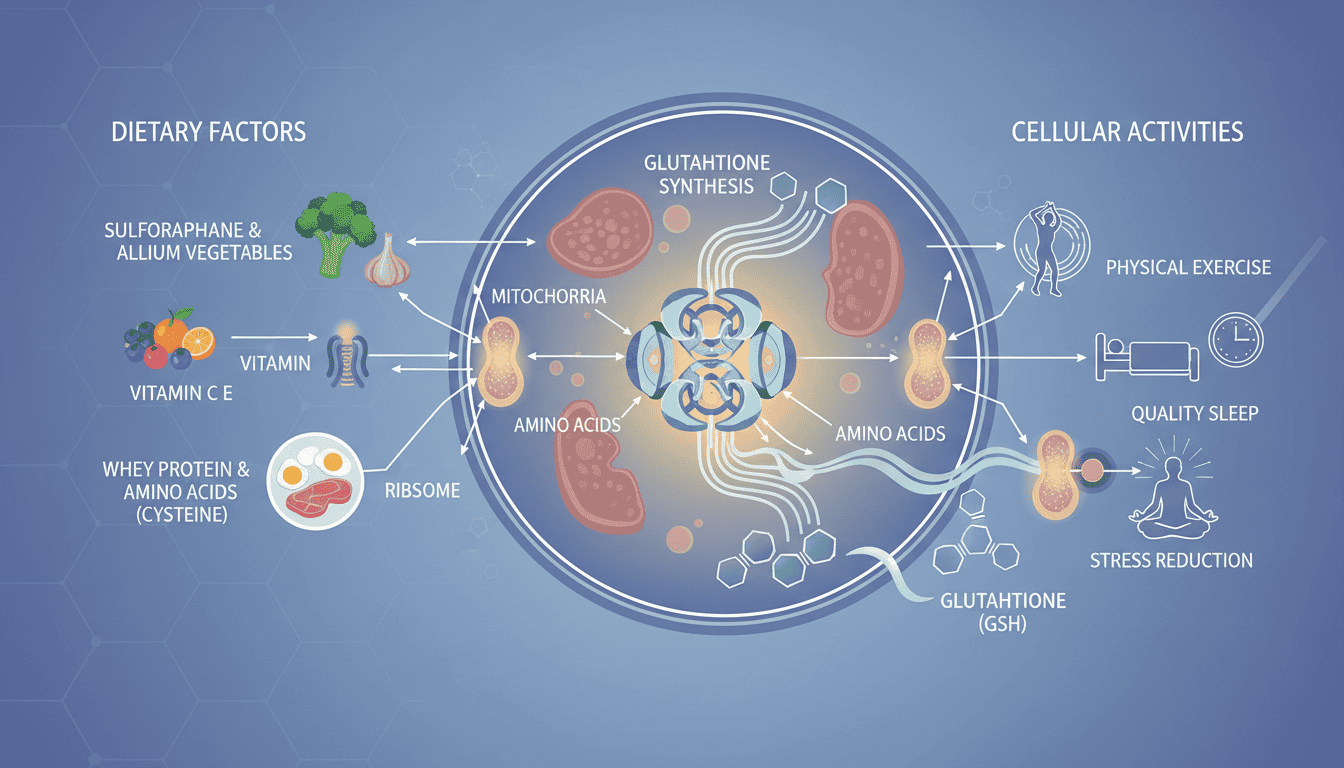
Scientists have identified several factors that demonstrably increase glutathione production in human cells. Sulfur-rich foods top the list because they provide cysteine, the limiting ingredient in glutathione synthesis.
Studies show that consuming cruciferous vegetables like broccoli, Brussels sprouts, and kale boosts glutathione levels within days. These vegetables contain sulfur compounds that your body converts into cysteine. Garlic and onions work through a similar mechanism, providing different sulfur-containing precursors.
Exercise creates a particularly interesting effect. Moderate physical activity initially depletes glutathione as your muscles work harder and generate more free radicals. But this temporary stress triggers your cells to ramp up glutathione production, leading to higher baseline levels over time. Research consistently shows that people who exercise regularly maintain better glutathione status than sedentary individuals.
Sleep affects glutathione in ways researchers are still mapping out. During deep sleep, your brain increases glutathione production while simultaneously using it to clear metabolic waste. Poor sleep disrupts both sides of this equation.
Why cells need this system
Every time your cells produce energy, they generate reactive oxygen species as an unavoidable byproduct. It’s like smoke from a fire. Your mitochondria burn glucose and oxygen to make ATP, but they also create molecules that can damage DNA, proteins, and cell membranes if left unchecked.
Glutathione solves this problem by recycling itself. After neutralising a free radical, oxidised glutathione gets restored to its active form by an enzyme called glutathione reductase. This recycling system means a small amount of glutathione can handle a large oxidative load, provided your cells can maintain the recycling machinery.
Beyond antioxidant defence, glutathione serves as your cellular detoxification system. Your liver uses glutathione to tag toxins for elimination, while your kidneys rely on it to process waste products. Without adequate glutathione, harmful compounds accumulate inside cells.
What affects glutathione production
Age presents the biggest challenge to maintaining glutathione levels. Production naturally declines as we get older, partly because the enzymes that make glutathione become less efficient. By age 60, many people produce 30% less glutathione than they did at 30.
Chronic stress depletes glutathione faster than your body can replenish it. Stress hormones increase oxidative damage throughout your body, forcing glutathione to work overtime. Eventually, this leads to a deficit that takes weeks to restore even after stress levels normalise.
Environmental toxins create additional demand for glutathione. Air pollution, pesticides, and industrial chemicals all require glutathione for detoxification. People living in polluted areas often show lower glutathione levels than those in cleaner environments.
Certain medications interfere with glutathione production or increase its consumption. Paracetamol (acetaminophen) uses large amounts of glutathione for safe metabolism. Some chemotherapy drugs deliberately target glutathione systems in cancer cells but affect healthy cells too.
Alcohol creates a double burden. Your liver needs glutathione to process alcohol safely, but alcohol also damages the liver cells that produce glutathione. Chronic drinking can severely compromise your body’s glutathione capacity.
What remains unknown
Researchers still debate optimal glutathione levels for different life stages and health conditions. Current measurement techniques mostly capture glutathione in blood, but scientists suspect tissue levels tell a different story. Some organs might maintain normal glutathione while others run low.
The relationship between glutathione and ageing remains complex. Does declining glutathione cause age-related damage, or does age-related damage deplete glutathione? Most likely, both processes feed into each other, but untangling cause and effect requires longer-term studies that are difficult to conduct.
Individual variation in glutathione metabolism puzzles scientists. Some people maintain high levels well into old age while others struggle to produce adequate amounts even when young. Genetic differences explain some variation, but environmental factors probably play a larger role than currently recognised.
The optimal balance between different sulfur-containing nutrients for glutathione production needs more research. Cysteine, methionine, and other sulfur compounds compete for cellular uptake, suggesting that timing and ratios matter more than total intake.
Understanding how glutathione production responds to different types of stress could revolutionise approaches to maintaining cellular health. Your body appears to calibrate glutathione production based on perceived threats, but scientists are only beginning to decode these regulatory signals. This research points toward a future where supporting your cellular machinery becomes as routine as eating well and exercising regularly.

Matt Elliott is the editor of Redox News Today, an independent publication covering peer-reviewed research on cellular health, redox signalling, and related biomedical science.