Your lungs process about 11,000 litres of air every day, filtering everything from diesel exhaust to pollen. Each breath brings a cocktail of potential threats that could damage the delicate tissues where oxygen enters your bloodstream. Yet most people breathe effortlessly for decades without thinking about the molecular security system that makes this possible.
What is glutathione’s role in respiratory defence
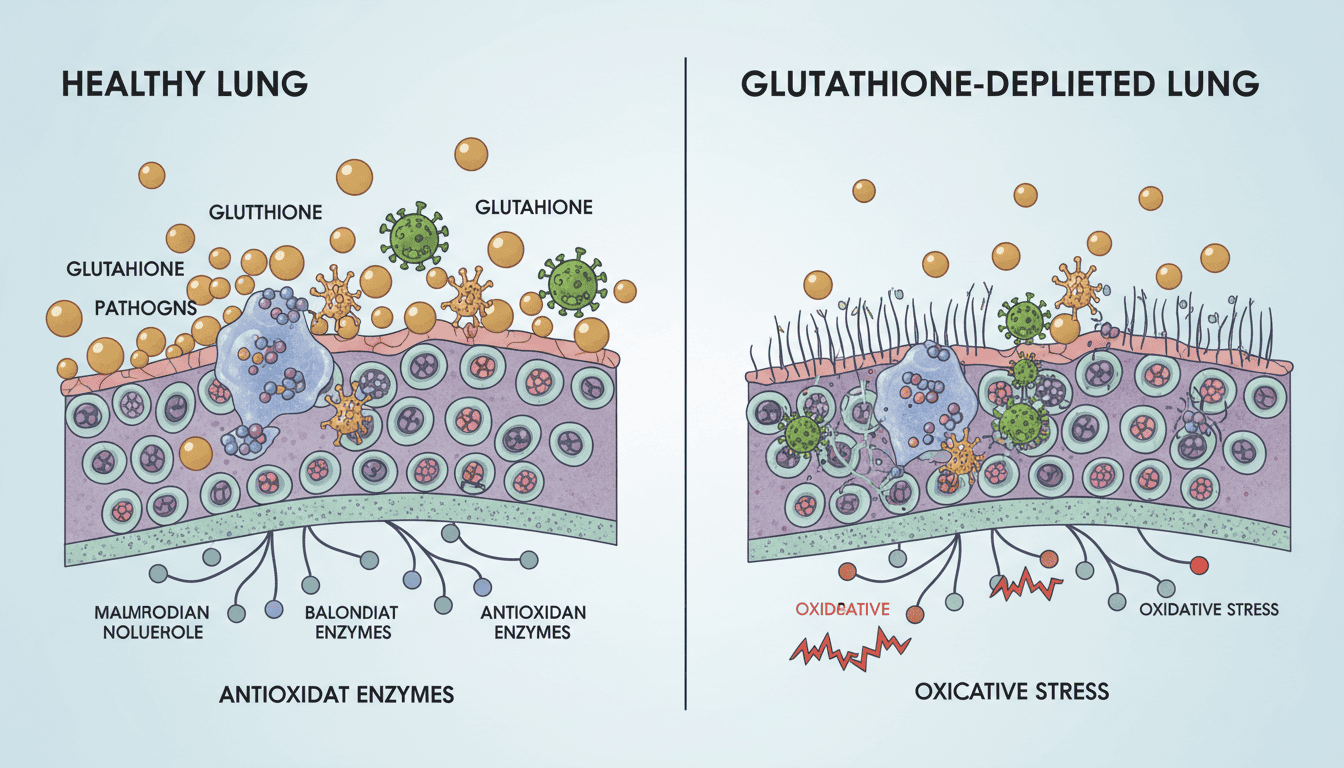
Glutathione acts as the lungs’ primary antioxidant bouncer. This small molecule, made from three amino acids, neutralises harmful compounds before they can damage lung tissue. Your respiratory tract produces glutathione locally, concentrating it in the thin layer of fluid that coats your airways.
Think of glutathione as a molecular sponge that soaks up reactive oxygen species and other toxins. When pollutants enter your lungs, they often create unstable molecules that can tear holes in cell membranes or damage DNA. Glutathione steps in, offering itself as a target instead. It binds to these threats, neutralises them, and then gets recycled by specialised enzymes.
The lungs face a unique challenge compared to other organs. They’re directly exposed to the external environment with every breath. Unlike your liver or kidneys, which process toxins after they’ve been filtered by other systems, your lungs meet pollutants head-on. This makes adequate glutathione levels critical for maintaining healthy respiratory function.
What the research shows
Scientists have measured glutathione levels in respiratory tract samples and found clear patterns. People with healthy lung function typically maintain high concentrations of glutathione in their airway lining fluid. Those with compromised respiratory health often show depleted levels.
Research reveals that glutathione depletion follows a predictable pattern during respiratory stress. When lungs encounter high levels of oxidative damage, glutathione stores drop rapidly. The body tries to compensate by ramping up production of the enzymes that make glutathione, but this process takes time.
Laboratory studies show what happens when researchers artificially deplete glutathione in lung tissue samples. The cells become more vulnerable to damage from hydrogen peroxide, ozone, and other common airborne irritants. Inflammatory responses increase. The usual repair mechanisms slow down.
Population studies have identified environmental factors that correlate with lower respiratory glutathione levels. People living in areas with higher air pollution show measurably reduced glutathione in their airways. Seasonal variations also appear, with levels often dropping during high-pollution periods or wildfire seasons.
Why cells need this defence system
Evolution preserved glutathione-based defence systems because breathing is inherently dangerous. Every oxygen molecule that keeps you alive can potentially become a weapon against your own cells. When oxygen gains or loses electrons, it transforms into reactive species that attack whatever they encounter first.
Your lungs evolved multiple layers of antioxidant protection, but glutathione serves as the primary rapid-response system. It works faster than most other antioxidants and can be quickly regenerated. This speed matters when dealing with sudden bursts of pollution or allergens.
The lungs also use glutathione for detoxification beyond just handling oxygen radicals. Many environmental toxins require glutathione conjugation before the body can eliminate them safely. Without adequate glutathione, these compounds accumulate and cause ongoing cellular stress.
Respiratory epithelial cells, which line your airways, regenerate frequently due to constant exposure to potential damage. This renewal process demands high levels of cellular energy and raw materials. Glutathione helps protect the cellular machinery that drives this constant repair and replacement cycle.
What affects glutathione levels in the lungs
Age significantly impacts respiratory glutathione production. Studies show that glutathione synthesis enzymes become less efficient over time, while the lungs’ antioxidant demands often increase due to accumulated exposure effects.
Smoking creates a massive drain on glutathione reserves. Each cigarette delivers thousands of reactive compounds directly to lung tissue. Research indicates that smokers show chronically depleted glutathione levels in their airways, often accompanied by elevated markers of oxidative damage.
Diet influences glutathione availability through several pathways. The amino acids needed to make glutathione come from protein intake. Certain nutrients, particularly selenium and vitamin C, support the enzymes that recycle glutathione back to its active form. Sulphur-rich foods provide cysteine, often the limiting factor in glutathione production.
Exercise presents an interesting paradox. Intense physical activity temporarily increases oxidative stress in the lungs due to higher oxygen consumption. However, regular moderate exercise appears to upregulate glutathione production systems, providing better long-term protection.
Sleep quality affects glutathione metabolism throughout the body, including in respiratory tissues. Poor sleep patterns correlate with reduced antioxidant enzyme activity and slower glutathione recycling rates.
What remains unknown
Scientists are still working out the precise timing of glutathione depletion and recovery during different types of respiratory challenges. How quickly do levels drop when exposed to wildfire smoke versus urban smog? How long does recovery take after the exposure ends?
The relationship between systemic glutathione levels and local lung concentrations needs more research. Blood glutathione measurements may not accurately reflect what’s happening in respiratory tissues. This complicates efforts to develop reliable biomarkers for assessing respiratory antioxidant status.
Individual genetic variations in glutathione metabolism remain poorly understood in the context of respiratory health. Some people carry genetic variants that affect enzyme efficiency, but researchers haven’t fully mapped how these differences translate to real-world respiratory resilience.
The interaction between glutathione and other antioxidant systems in the lungs presents another puzzle. Vitamin E, vitamin C, and various enzymes all contribute to respiratory defence. Understanding how glutathione depletion affects these other systems could reveal new intervention strategies.
This research illuminates how our cellular defence systems adapt to environmental challenges in real time. Every breath represents a negotiation between our bodies and the world around us, mediated by molecules like glutathione that work tirelessly behind the scenes. As air quality concerns grow globally, understanding these fundamental protective mechanisms becomes more relevant than ever. The lungs’ sophisticated antioxidant networks remind us that staying healthy isn’t passive but requires constant molecular vigilance.

Matt Elliott is the editor of Redox News Today, an independent publication covering peer-reviewed research on cellular health, redox signalling, and related biomedical science.