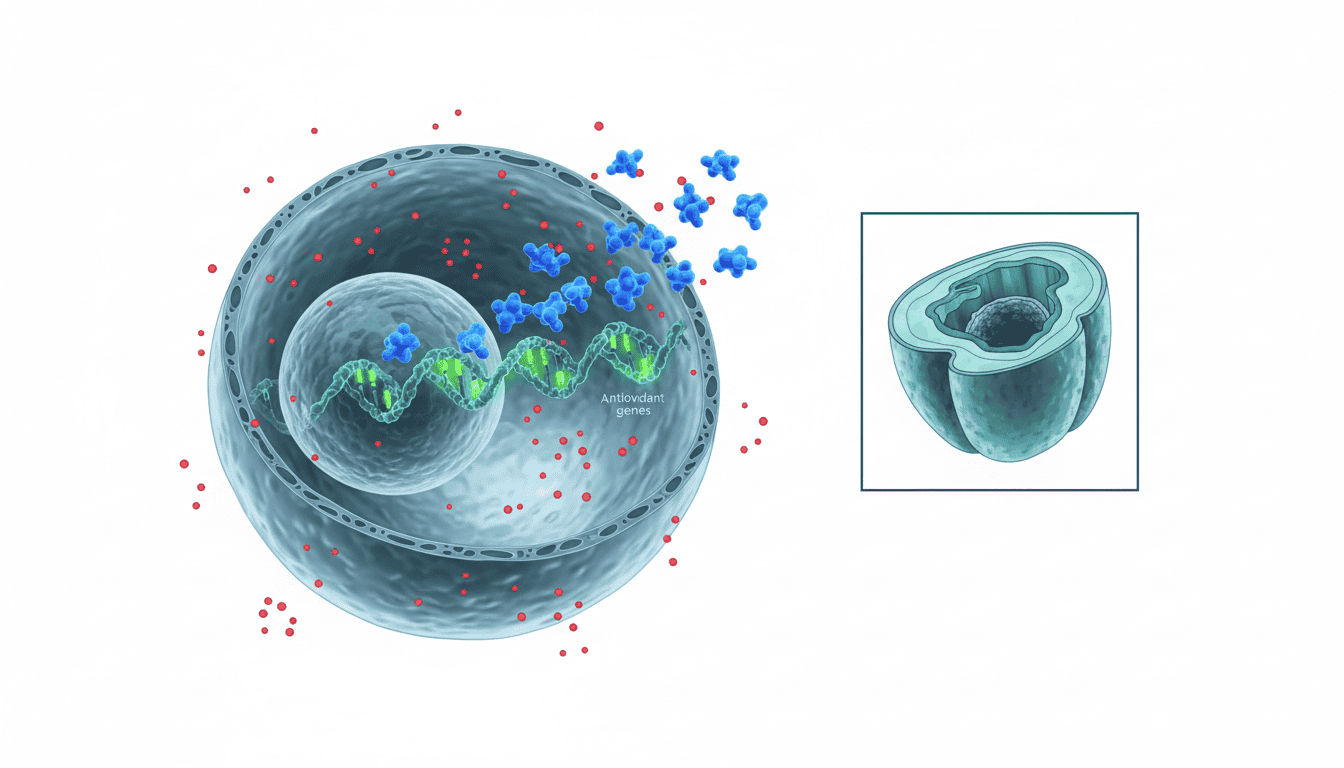
How NRF2 Activation Helps Cells Age Well

Featured image for How NRF2 Activation Helps Cells Age Well

NRF2 acts as your cell’s emergency coordinator, activating over 200 protective genes when oxidative stress strikes. Research shows this master regulator’s activity declines with age, but lifestyle factors like exercise and certain food compounds can help maintain its function.

How NRF2 Shields Cells from Environmental Toxins

Featured image for How NRF2 Shields Cells from Environmental Toxins

Every cell contains NRF2, a protein that acts like a molecular security system detecting environmental toxins and activating protective genes within minutes. This ancient defence mechanism coordinates the production of over 200 different protective molecules when cells encounter threats from air pollution to pesticide residues.

How NRF2 Recognises Different Cellular Threats and Responds

Featured image for How NRF2 Recognises Different Cellular Threats and Responds

The NRF2 pathway doesn’t just detect cellular stress but tailors its response to match specific threats, from toxic chemicals to heavy metals. Different stressors trigger distinct patterns of gene activation, creating a sophisticated defence system that matches cellular responses to the type of damage detected.

When Heavy Metals Hijack Your Cellular Defences

Featured image for When Heavy Metals Hijack Your Cellular Defences

Heavy metals like lead, mercury and cadmium don’t just damage cells directly – they systematically dismantle the antioxidant systems designed to protect against oxidative stress. These toxic elements bind to crucial enzymes, stealing essential cofactors and leaving cells defenceless against free radical damage.

How Brain Cells Handle Oxidative Stress and Mental Health

Featured image for How Brain Cells Handle Oxidative Stress and Mental Health

Brain cells consume oxygen at extraordinary rates, generating reactive molecules that can damage neurons faster than most other cell types can repair themselves. Research reveals consistent patterns linking oxidative stress markers to various mental health conditions, though scientists still debate whether cellular damage causes these problems or results from them.

How Oxidative Stress Triggers Joint Inflammation

Featured image for How Oxidative Stress Triggers Joint Inflammation

Oxidative stress in joint tissues acts as a molecular alarm system that triggers inflammatory responses, creating the pain and swelling we experience after injury or overuse. This ancient defence mechanism becomes problematic when oxidative stress turns chronic, creating ongoing tissue damage.