A single cigarette delivers more than 15 quintillion free radicals directly into your lungs. That’s 15 followed by 18 zeros worth of highly reactive molecules, each one capable of damaging DNA, proteins, and cellular membranes on contact. Within seconds of that first puff, these oxidative species begin a chain reaction that ripples through your entire body.
What is oxidative damage from smoking
Tobacco smoke contains over 4,000 chemical compounds, with at least 60 known carcinogens. When you inhale, your cells face an immediate assault from two types of oxidative stress. Direct oxidants come straight from the smoke itself. Indirect oxidants form when your immune system mobilises to fight the invasion.
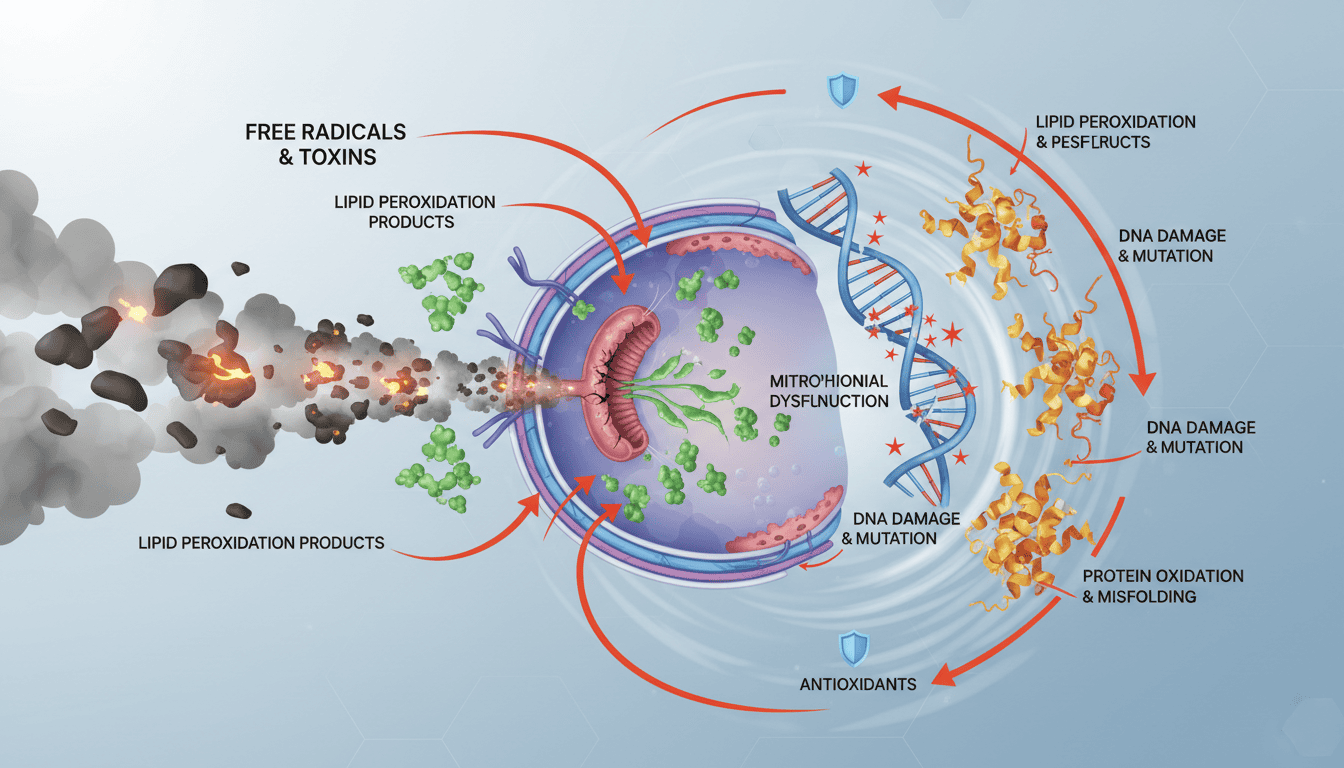
The direct hit comes from compounds like benzopyrene, formaldehyde, and nitrogen oxides. These molecules steal electrons from healthy cellular components, turning them into free radicals too. It’s like a molecular game of tag where being “it” means being damaged.
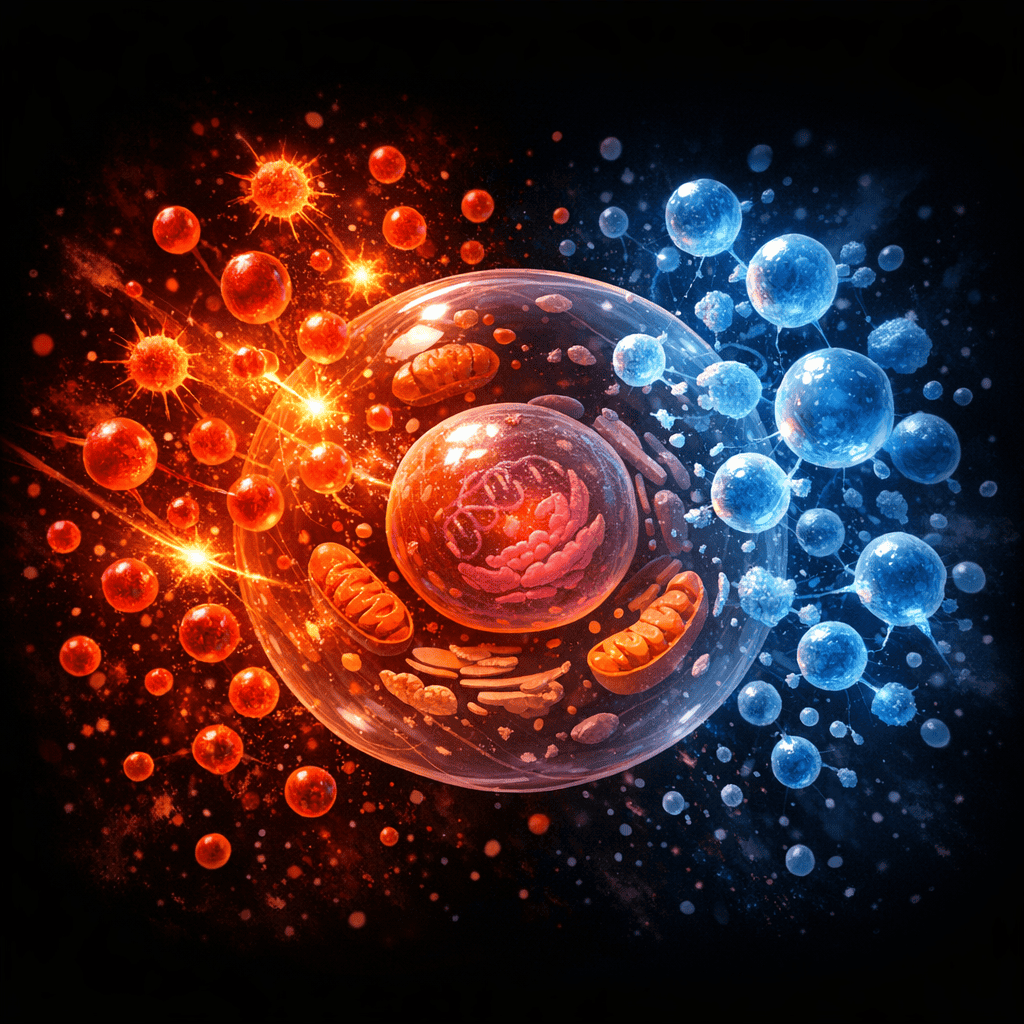
Your immune cells respond by releasing even more reactive oxygen species, thinking they’re helping. Neutrophils flood your airways and pump out superoxide and hydrogen peroxide to neutralise threats. This creates a perfect storm. The cure becomes part of the problem.
Meanwhile, smoking depletes your natural antioxidant reserves. Vitamin C levels plummet as it gets used up trying to neutralise the onslaught. Glutathione, your cell’s master antioxidant, becomes overwhelmed and depleted. Your cellular defence systems go from balanced to completely outgunned.
What the research shows
Studies tracking biomarkers in smokers reveal the scope of this oxidative cascade. Researchers measure compounds like 8-hydroxy-2-deoxyguanosine in urine, a marker that appears when DNA gets oxidised. Smokers show levels 2 to 3 times higher than non-smokers.
Protein damage markers tell a similar story. Advanced glycation end products and protein carbonyls accumulate in smokers’ blood at accelerated rates. These damaged proteins can’t function properly, affecting everything from enzyme activity to structural support in blood vessels.
Lipid peroxidation markers like malondialdehyde spike in smokers too. When cell membranes get oxidised, they lose their integrity. This affects how cells communicate, transport nutrients, and maintain their shape.
The damage doesn’t stay localised to the lungs. Oxidative stress markers appear elevated throughout the body within hours of smoking. Your cardiovascular system, liver, kidneys, and brain all show signs of increased free radical activity.
Even more telling, studies show this damage accumulates over time. Long-term smokers don’t just have more oxidative damage, they have exponentially more. The cellular repair systems become so overwhelmed they start falling behind.
Why cells need protection from oxidative damage
Every cell in your body runs on controlled chemical reactions. These reactions naturally produce some free radicals as byproducts, like sparks from a campfire. Under normal conditions, your antioxidant systems easily handle this baseline level of oxidative stress.
Free radicals even serve useful purposes in small amounts. They help kill invading bacteria and play roles in cell signalling. The problem arises when production overwhelms your defences.
DNA particularly needs protection because damage here can be permanent. When free radicals hit DNA, they can cause breaks in the double helix or change the chemical structure of bases. If these changes aren’t repaired correctly, they become mutations that get passed on when cells divide.
Proteins need protection because they’re workhorses of cellular function. Every enzyme, every structural component, every signalling molecule is a protein. Oxidative damage changes their three-dimensional shape, and shape determines function. A damaged protein often becomes a useless protein.
Cell membranes require protection because they control what enters and exits cells. Oxidative damage makes membranes leaky and unstable. Cells lose their ability to maintain proper internal conditions when their boundaries fail.
What affects oxidative damage from smoking
The number of cigarettes smoked directly correlates with oxidative damage levels, but the relationship isn’t perfectly linear. Research shows that even light smoking creates disproportionate oxidative stress because your antioxidant systems get depleted quickly.
The type of tobacco and how it’s processed matters too. Cigarettes with higher tar and nicotine content generate more free radicals. Additives and preservatives contribute additional oxidative compounds. Even the paper and filters add their own chemical load.
Individual genetic variations influence how much damage occurs. Some people have more efficient versions of antioxidant enzymes like superoxide dismutase or catalase. Others metabolise toxins more effectively through robust liver detoxification pathways.
Age plays a role because your antioxidant systems naturally decline over time. Young smokers often show less immediate oxidative damage than older smokers exposed to the same amount of smoke. But this doesn’t mean they’re protected, just that the damage hasn’t accumulated enough to be easily measurable yet.
Diet and lifestyle factors can influence the extent of damage. Antioxidant-rich foods provide some protection, though they can’t completely offset smoking’s effects. Exercise creates its own oxidative stress, which might seem counterproductive but actually strengthens antioxidant systems when combined with smoking cessation.
What remains unknown
Scientists still debate whether certain components of tobacco smoke cause more oxidative damage than others. Isolating the effects of individual compounds proves challenging when smoke contains thousands of different chemicals that interact in complex ways.
The timeline of cellular recovery after quitting remains incompletely mapped. While some oxidative markers improve within days of stopping smoking, researchers don’t fully understand how long it takes for all cellular repair systems to return to baseline function.
Individual variation in response puzzles researchers too. Why do some people seem more susceptible to oxidative damage from smoking while others show remarkable resilience? Genetic factors explain part of this variation, but environmental and epigenetic influences likely play roles that aren’t yet fully understood.
The interaction between smoking and other sources of oxidative stress needs more research. How does air pollution amplify smoking’s effects? What about psychological stress or poor sleep? These factors probably don’t just add together, they likely multiply each other’s impact.
Researchers also want to understand why some antioxidant interventions help while others don’t. Simple antioxidant supplements often fail to provide the protection you’d expect based on their laboratory performance.
The cellular damage from smoking represents one of the clearest examples of how external toxins can overwhelm your body’s natural defence systems. Understanding this cascade helps explain why smoking affects so many different organs and why the damage persists long after quitting. Every puff represents millions of molecular collisions, each one potentially changing the course of cellular function. The remarkable thing isn’t that smoking causes so much damage, but that our cells manage to survive the assault as well as they do.

Matt Elliott is the editor of Redox News Today, an independent publication covering peer-reviewed research on cellular health, redox signalling, and related biomedical science.