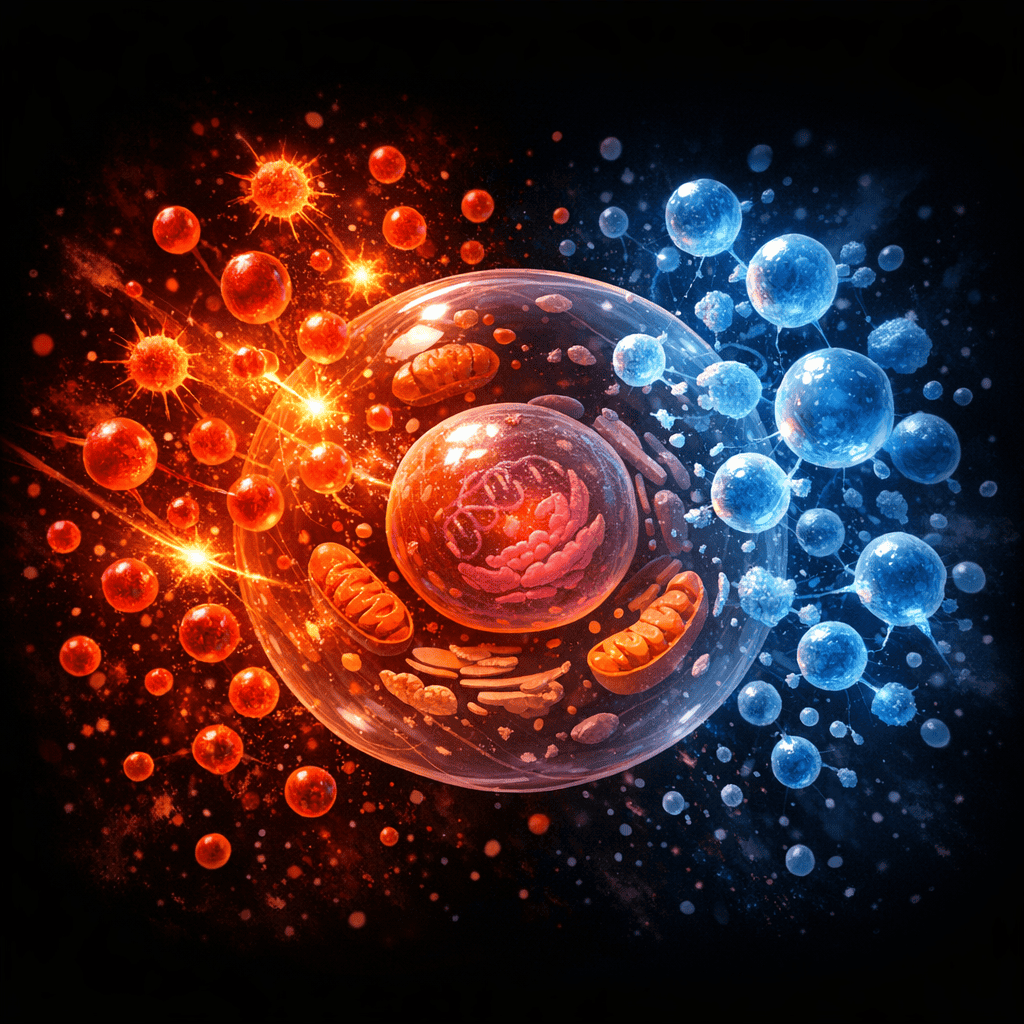
Your cells produce roughly 20 billion molecules of superoxide every day. That’s just one type of reactive oxygen species wreaking havoc inside you right now. Scientists can’t peer directly into your mitochondria to watch this molecular chaos unfold, so they’ve developed clever ways to measure the aftermath.
What are oxidative stress biomarkers
Oxidative stress biomarkers are the molecular fingerprints left behind when free radicals attack cellular components. Think of them as forensic evidence at a crime scene.
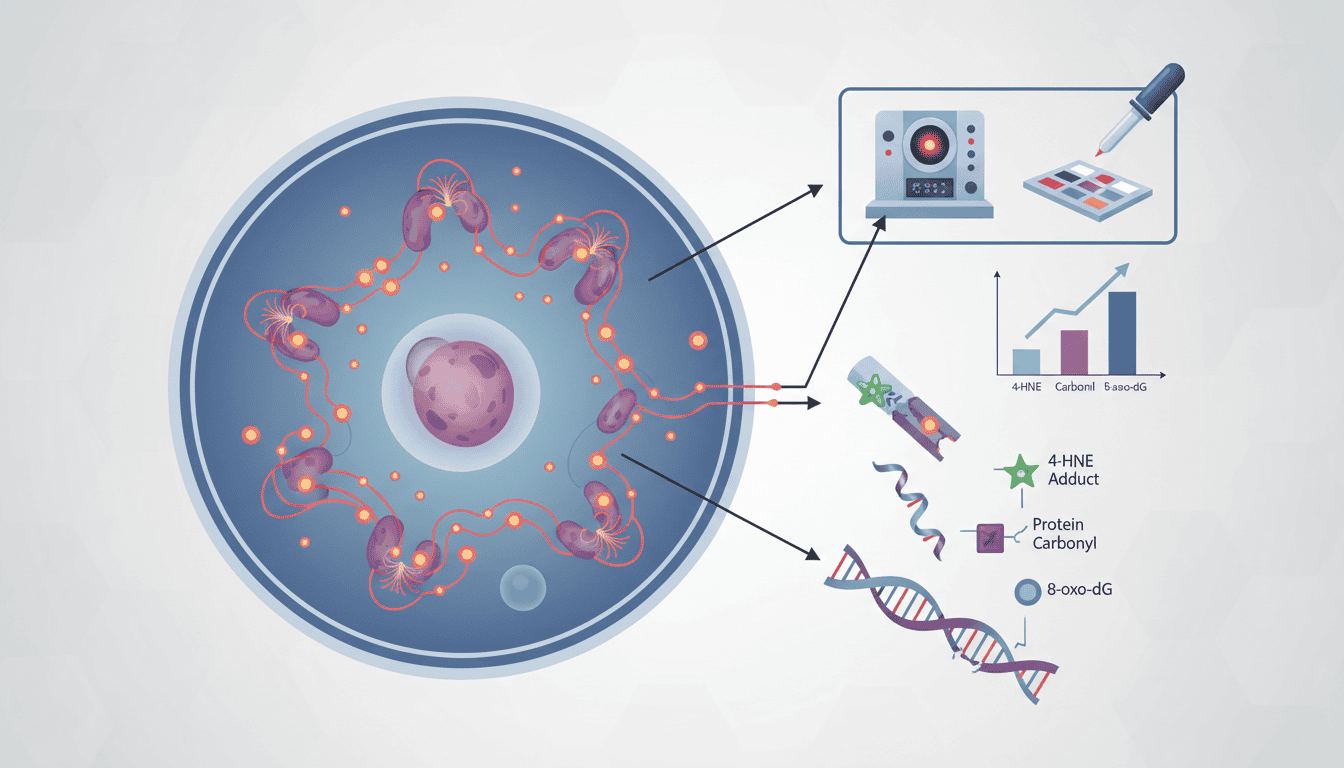
When reactive oxygen species overwhelm your cellular defences, they don’t just vanish. They leave behind damaged proteins, lipids, and DNA that scientists can detect and measure. These damaged molecules accumulate in blood, urine, and tissues, creating a readable record of oxidative damage.
The measurement process works in three main categories. Direct markers show the actual free radicals or their immediate products. Indirect markers reveal damage to cellular components like proteins and fats. Antioxidant markers indicate how well your defence systems are coping with the assault.
Each biomarker tells part of the story. Malondialdehyde reveals lipid damage. 8-hydroxy-2′-deoxyguanosine shows DNA destruction. Protein carbonyls indicate oxidised proteins. Together, they create a picture of cellular stress levels.
What the research shows
Scientists have identified dozens of reliable oxidative stress markers through decades of research. The most robust ones consistently appear across different studies and populations.
Lipid peroxidation markers like malondialdehyde and F2-isoprostanes show up reliably in blood and urine when cellular membranes take a beating. Researchers can measure these compounds using techniques like mass spectrometry, getting precise readings of membrane damage.
DNA damage markers provide another clear signal. When hydroxyl radicals attack DNA, they create specific breakdown products that appear in urine within hours. The most studied marker, 8-oxo-dG, correlates strongly with overall oxidative stress levels across age groups and disease states.
Protein oxidation markers tell yet another part of the story. Advanced oxidation protein products and protein carbonyls accumulate in blood when antioxidant systems fall behind. These markers often spike before visible symptoms of oxidative damage appear.
Antioxidant enzyme activity provides the flip side of the equation. Glutathione peroxidase, superoxide dismutase, and catalase levels reveal how hard cellular defence systems are working. When these enzymes become depleted or overwhelmed, other damage markers typically rise.
Why cells need this signalling system
Oxidative stress markers aren’t just damage byproducts. They serve as an early warning system that alerts cells to mounting threats.
Evolution preserved this system because it provides crucial information about cellular health status. When damage markers accumulate, they trigger protective responses like increased antioxidant production and cellular repair mechanisms. Without these signals, cells would have no way to know when their defences are failing.
The measurement of these markers also reveals something profound about cellular biology. Cells constantly balance energy production with damage control. The markers show this balance in real time, reflecting everything from metabolic rate to environmental exposures.
Some oxidative damage markers even function as signalling molecules themselves. They don’t just indicate problems; they help coordinate cellular responses to stress. This dual function makes them particularly valuable for understanding cellular health.
What affects oxidative stress markers
Age consistently drives marker levels upward. Cellular antioxidant systems weaken over time while mitochondrial free radical production increases. Studies show steady rises in most oxidative damage markers starting around age 40.
Exercise creates a complex pattern. Intense physical activity temporarily spikes markers as muscles consume more oxygen and generate more free radicals. However, regular moderate exercise actually lowers baseline marker levels by strengthening antioxidant systems.
Diet significantly influences marker profiles. Diets rich in antioxidants like vitamin C, vitamin E, and polyphenols consistently correlate with lower damage markers. Processed foods high in oxidised fats tend to drive markers upward.
Environmental factors leave clear signatures in biomarker patterns. Air pollution, cigarette smoke, and UV radiation all increase specific markers in predictable ways. Urban populations typically show higher levels than rural ones.
Sleep patterns affect marker levels more than researchers initially expected. Sleep deprivation consistently elevates oxidative stress markers, while adequate sleep helps maintain lower baseline levels.
What remains unknown
Scientists still debate which markers provide the most accurate picture of overall oxidative stress. Different markers sometimes tell conflicting stories, and researchers haven’t established which ones to prioritise.
The relationship between marker levels and actual health outcomes remains murky. High markers clearly indicate cellular stress, but scientists don’t know exactly which levels predict future problems or how quickly interventions can lower them.
Individual variation in marker levels puzzles researchers. Some people show consistently high levels despite healthy lifestyles, while others maintain low levels despite obvious risk factors. Genetic factors likely play a role, but the mechanisms aren’t clear.
The timing of measurements creates another puzzle. Marker levels fluctuate throughout the day and vary with meals, exercise, and stress. Researchers are still working out optimal sampling protocols for different markers.
Reference ranges for healthy populations remain poorly defined for many markers. What constitutes normal versus elevated levels varies between studies and populations, making interpretation challenging.
These molecular snapshots of cellular damage offer a window into one of biology’s most fundamental processes. As measurement techniques improve and reference ranges become clearer, oxidative stress biomarkers may become routine tools for understanding cellular health. They remind us that our cells wage a constant battle against molecular chaos, leaving behind a precise record of every skirmish.

Matt Elliott is the editor of Redox News Today, an independent publication covering peer-reviewed research on cellular health, redox signalling, and related biomedical science.