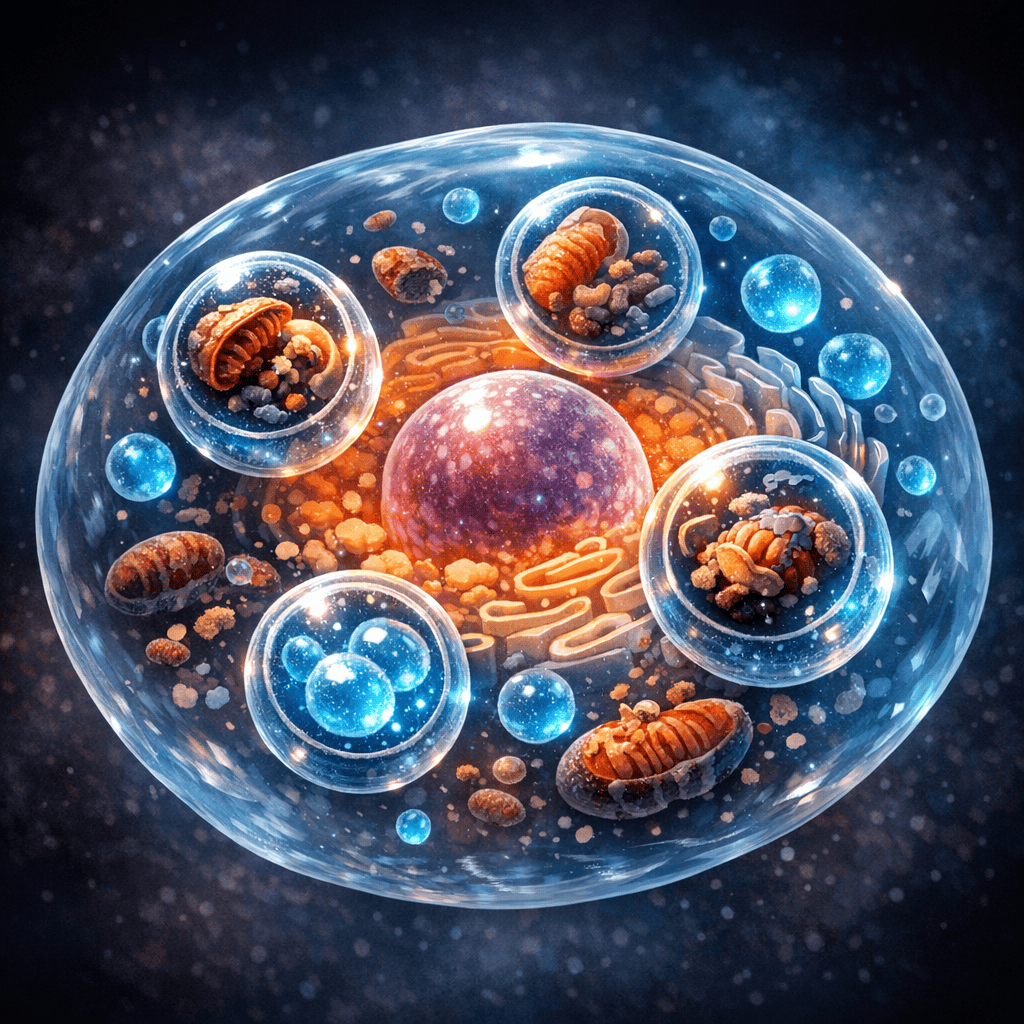
Every cell in your body has a built in cleanup system. When cellular components become damaged, misfolded or worn out, they do not simply accumulate indefinitely. A process called autophagy identifies them, breaks them down and recycles the raw materials into new, functional components. And one of the most powerful triggers for this cleanup process is something remarkably simple: not eating for a while.
What Autophagy Actually Is
The word autophagy comes from the Greek “auto” (self) and “phagein” (to eat). It literally means self eating. But the process is more accurately described as cellular housekeeping. When autophagy is activated, your cells form specialised structures called autophagosomes, double membraned vesicles that engulf damaged organelles, misfolded proteins, aggregated waste and even intracellular pathogens.
The autophagosome then fuses with a lysosome, an organelle containing digestive enzymes, which breaks down the contents into amino acids, fatty acids and nucleotides. These building blocks are then released back into the cell to be reused in the construction of new proteins, membranes and organelles.
This recycling system is not just waste disposal. It is a quality control mechanism that maintains the functional integrity of your cells by continuously replacing damaged components with fresh ones.
Why Fasting Triggers Autophagy
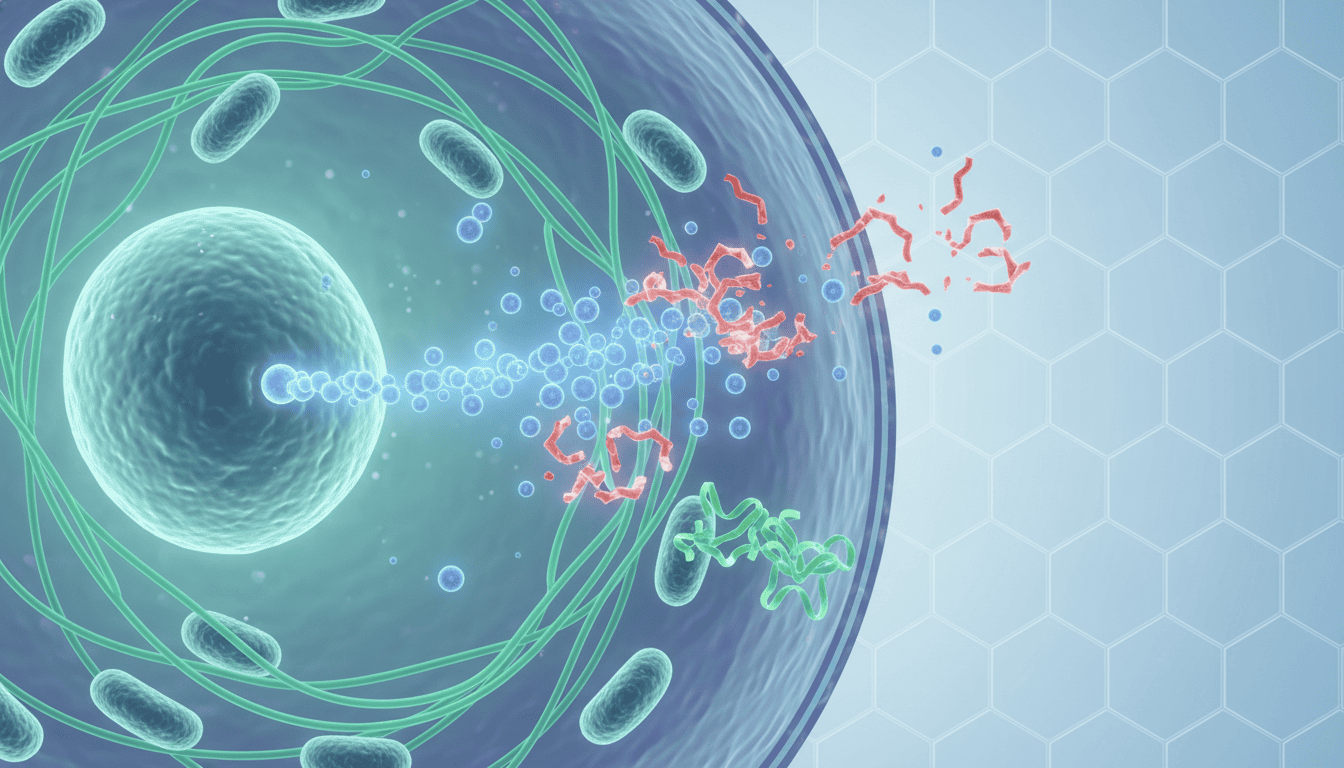
Autophagy is regulated primarily by a nutrient sensing system centred on two opposing pathways: mTOR (mechanistic target of rapamycin) and AMPK (AMP-activated protein kinase).
When nutrients are abundant, particularly amino acids and glucose, mTOR is active. mTOR promotes growth and protein synthesis while suppressing autophagy. This makes biological sense: when building materials are plentiful, the priority is construction, not recycling.
When nutrient availability drops, as it does during fasting, mTOR activity decreases and AMPK is activated. AMPK signals that the cell is in an energy deficit and needs to conserve resources. One of its primary actions is to activate autophagy, triggering the cleanup and recycling of damaged components to generate raw materials and energy.
This is why continuous eating suppresses autophagy. If you eat frequently throughout the day, mTOR remains active and the cleanup system barely gets a chance to operate. Fasting creates the metabolic conditions that allow autophagy to proceed.
The Connection to Mitochondrial Health
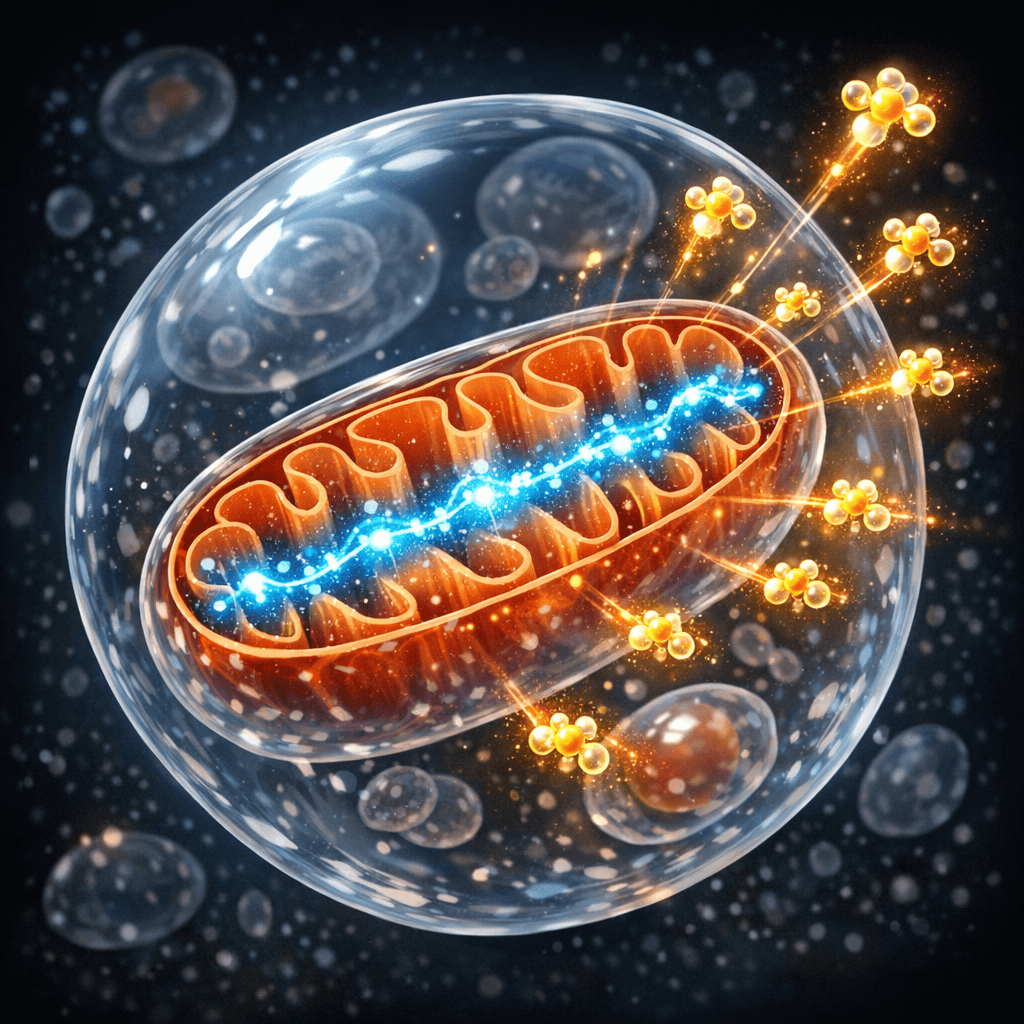
A specialised form of autophagy called mitophagy targets damaged mitochondria specifically. As discussed in our articles on the cellular cost of poor sleep and sleep and cellular repair, mitophagy is one of the most important maintenance processes your cells perform.
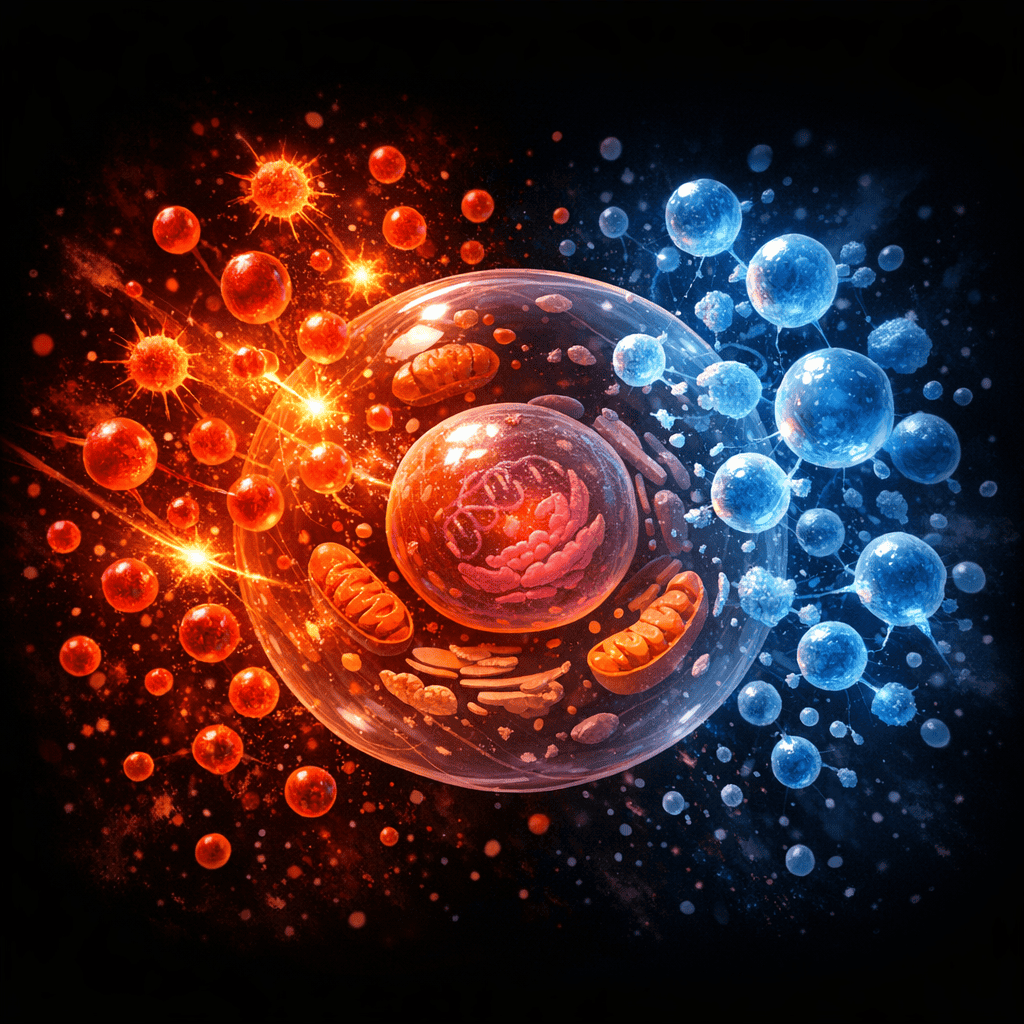
Damaged mitochondria that are not cleared through mitophagy continue to produce ATP inefficiently while generating excess reactive oxygen species. They become sources of oxidative stress rather than clean energy. Fasting induced autophagy helps maintain a healthy population of efficient mitochondria by selectively removing the damaged ones.
The Redox Connection
Autophagy and redox signalling are deeply interconnected. The reactive oxygen species produced by damaged mitochondria are among the signals that mark those mitochondria for mitophagy. The NRF2 pathway, activated by redox signals, upregulates genes involved in both autophagy and antioxidant defence simultaneously.
Fasting activates NRF2 through the mild oxidative stress created by the metabolic shift from fed to fasted states. This is another example of hormesis: the controlled stress of fasting activates protective and repair mechanisms that leave cells in better condition than before.
What the Research Shows
Research on intermittent fasting in humans has documented multiple cellular benefits. Studies have shown reductions in markers of oxidative stress, improvements in insulin sensitivity, decreases in inflammatory markers and evidence of enhanced autophagy activation.
The most studied intermittent fasting protocols include time restricted eating (typically a 16 hour fast with an 8 hour eating window), alternate day fasting and periodic 24 hour fasts. Each produces metabolic conditions that activate AMPK and suppress mTOR, though the duration and intensity of autophagy activation vary.
Research suggests that significant autophagy activation begins after approximately 12 to 16 hours of fasting, with the intensity increasing the longer the fast continues. This is consistent with the evolutionary context: our ancestors regularly experienced periods without food, and the autophagy response evolved to maintain cellular health during those periods.
The Practical Balance
Intermittent fasting is not appropriate for everyone. People with certain medical conditions, those who are pregnant or breastfeeding, individuals with a history of disordered eating and those taking medications that require food should consult a healthcare professional before fasting.
For those who can practice it safely, intermittent fasting represents a way to activate one of your cells’ most important maintenance programmes through a simple behavioural change. Combined with regular exercise (which also activates autophagy), nutrient dense whole foods during eating windows and quality sleep, periodic fasting supports the cellular cleanup that keeps your glutathione systems, mitochondria and redox signalling networks functioning at their best.
Your cells already have the machinery. Fasting simply gives them the opportunity to use it.

Matt Elliott is the editor of Redox News Today, an independent publication covering peer-reviewed research on cellular health, redox signalling, and related biomedical science.