
Modern life involves a historically unprecedented amount of sitting. Office workers, drivers, students and anyone who spends hours at a desk or on a screen accumulate sitting time that would have been unimaginable to our ancestors. The health consequences of prolonged sedentary behaviour have been studied extensively, and the cellular mechanisms behind those consequences paint a concerning picture.
What Sitting Does to Your Mitochondria
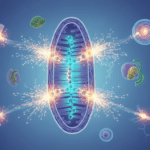
Physical inactivity directly impairs mitochondrial function. When muscles are not being used, the metabolic demand for ATP drops. Mitochondria respond to this reduced demand by becoming less efficient over time. The principle of “use it or lose it” applies at the organelle level: mitochondria that are not regularly challenged by energy demand gradually decline in number and function.
Research has shown that prolonged sitting reduces mitochondrial content in skeletal muscle. The process of mitochondrial biogenesis, which produces new, efficient mitochondria in response to energy demand, slows when that demand is chronically low. The result is fewer mitochondria producing less ATP with more electron leakage, which increases the production of unregulated reactive oxygen species.
Reduced NRF2 Activation
The NRF2 pathway depends on stimulation to remain responsive. Exercise provides one of the strongest NRF2 activation signals through the controlled burst of oxidative stress that physical activity generates. Without this regular stimulus, NRF2 pathway responsiveness declines.
When NRF2 is less active, the downstream production of protective enzymes decreases. Glutathione synthesis slows. Superoxide dismutase and catalase production drops. The glutathione recycling system becomes less efficient. The entire internal antioxidant defence network weakens simply because it is not being regularly challenged.
Blood Flow and Endothelial Function
Prolonged sitting reduces blood flow to the lower extremities. Within 30 minutes of uninterrupted sitting, blood flow in the legs begins to decline measurably. This reduced flow has consequences for the endothelial cells that line blood vessels.
Endothelial cells produce nitric oxide, one of the two types of redox signalling molecules your cells make, which maintains vascular tone and regulates blood pressure. When blood flow is reduced by sitting, shear stress on the endothelial walls decreases, and nitric oxide production drops. This contributes to endothelial dysfunction, increased arterial stiffness and elevated blood pressure.
The Inflammation Connection
Sedentary behaviour is associated with elevated markers of chronic low grade inflammation. Research has documented increased levels of C reactive protein, IL-6 and TNF-alpha in people who sit for extended periods, independent of whether they meet exercise guidelines at other times.
This is a critical finding. It suggests that the damage from prolonged sitting is not fully offset by a workout at the beginning or end of the day. The inflammatory and oxidative stress effects of sitting accumulate during the hours of inactivity, even if you exercise regularly. The pattern matters as much as the total volume.
Metabolic Consequences
Sitting for extended periods impairs glucose metabolism. Within hours of sustained sitting, insulin sensitivity decreases in skeletal muscle. The muscle cells that would normally be absorbing glucose from the bloodstream become less responsive to insulin’s signal, leading to elevated blood glucose and increased insulin demand.
This metabolic disruption increases oxidative stress through a mechanism called glucose auto-oxidation. When blood glucose remains elevated, glucose molecules spontaneously react with proteins and lipids, generating reactive species as byproducts. This adds to the oxidative burden that the already weakened antioxidant systems must manage.
The Movement Prescription
The research points to a clear intervention: break up sitting time with regular movement. Studies have shown that standing or walking for as little as two to three minutes every 30 minutes significantly attenuates the negative metabolic and vascular effects of sitting.
These movement breaks do not need to be intense. Standing, walking to another room, performing gentle stretches or climbing a flight of stairs all restore blood flow, reactivate muscle metabolism and provide modest hormetic signals that keep the NRF2 pathway engaged. The most important factor is frequency, not intensity.
Regular structured exercise remains essential for building mitochondrial capacity, strengthening antioxidant systems and maintaining long term cellular resilience. But it works best when combined with a pattern of regular movement throughout the day. The human body was not designed for sustained stillness, and the cellular evidence makes clear that even small amounts of movement make a measurable difference.

Matt Elliott is the editor of Redox News Today, an independent publication covering peer-reviewed research on cellular health, redox signalling, and related biomedical science.