Of all the dietary compounds studied for their ability to activate the NRF2 pathway, those found in cruciferous vegetables have the deepest and most consistent evidence base. Broccoli, Brussels sprouts, cabbage, cauliflower, kale and watercress belong to the Brassicaceae family, and they share a unique chemistry that has made them one of the most studied food groups in nutritional science.
The Glucosinolate System
Cruciferous vegetables contain compounds called glucosinolates. These are sulphur containing molecules that serve as part of the plant’s defence system against insects and pathogens. On their own, glucosinolates are biologically inactive in your body. They become active through a conversion process that depends on an enzyme called myrosinase.
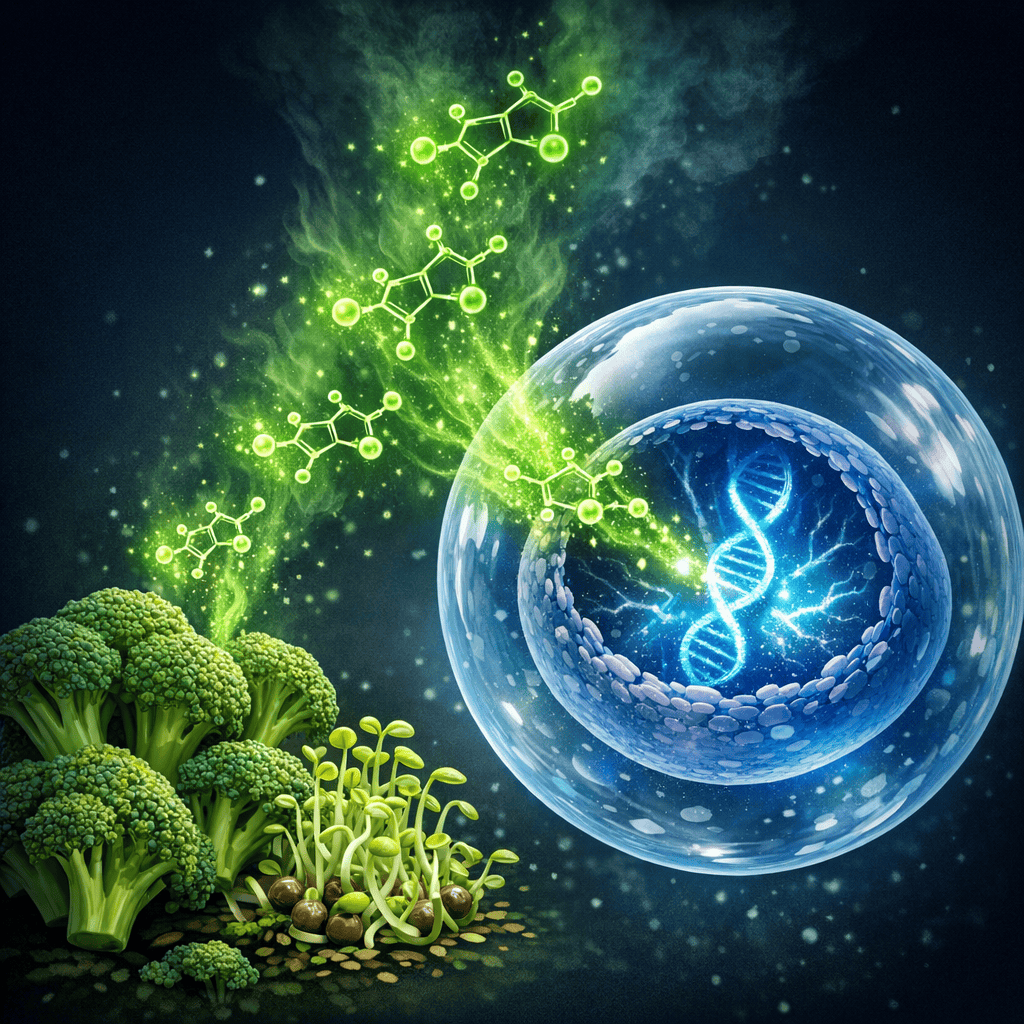
Myrosinase is stored in a separate compartment within the plant cells. When the plant tissue is damaged, through chopping, chewing or light crushing, myrosinase comes into contact with glucosinolates and converts them into isothiocyanates. The most studied of these is sulforaphane, produced from glucoraphanin, which is found in particularly high concentrations in broccoli sprouts.
This activation mechanism is elegant from an evolutionary perspective. The plant produces its defence compounds only when its cells are physically damaged, conserving energy until a threat is actually present.
How Sulforaphane Activates NRF2
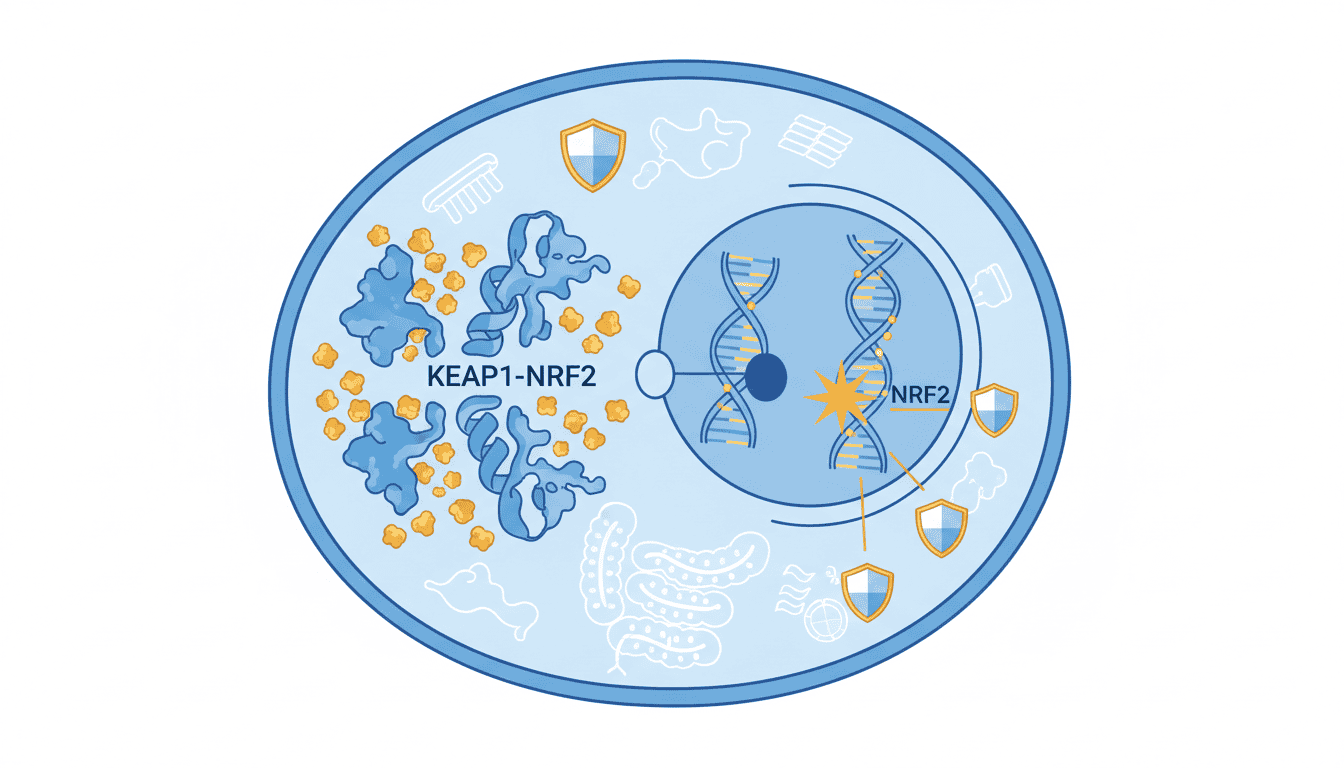
Sulforaphane activates NRF2 by directly modifying the cysteine residues on the KEAP1 protein. As explored in our article on foods that naturally activate NRF2, KEAP1 normally keeps NRF2 locked in the cytoplasm. When sulforaphane reacts with specific cysteine residues on KEAP1, the protein’s grip on NRF2 loosens, allowing the transcription factor to enter the nucleus and activate protective genes.
These genes include those responsible for glutathione synthesis, detoxification enzymes (including glutathione S-transferases and NAD(P)H quinone oxidoreductase), and anti inflammatory regulators. The result is a coordinated upregulation of your cells’ internal defence systems.
This is a hormetic response. Sulforaphane is, at the molecular level, a mild stressor. It does not directly neutralise reactive oxygen species. Instead, it triggers your cells to strengthen their own defences. The distinction matters because it means the benefits are amplified and sustained, rather than consumed in a single chemical reaction.
What the Research Shows
The research on sulforaphane and NRF2 is extensive. Human clinical trials have demonstrated measurable increases in detoxification enzyme activity, glutathione levels and antioxidant capacity following sulforaphane consumption.
One of the most cited findings comes from research where participants consumed broccoli sprout beverages over several weeks. Biomarkers of air pollution metabolism increased significantly, suggesting enhanced detoxification capacity. Other studies have documented reduced markers of oxidative stress and inflammation in subjects consuming cruciferous vegetables regularly.
Broccoli sprouts contain 20 to 100 times more glucoraphanin than mature broccoli, making them the most concentrated dietary source of sulforaphane precursors. This has led to significant research interest in sprout consumption as a practical NRF2 activation strategy.
Cooking and Preparation Matter
How you prepare cruciferous vegetables directly affects their NRF2 activating potential. Myrosinase, the enzyme required to convert glucosinolates into sulforaphane, is heat sensitive. Heavy cooking, particularly boiling and microwaving at high power, destroys myrosinase before it can produce sulforaphane.
Research has identified several strategies to maximise sulforaphane production. Light steaming for three to four minutes preserves enough myrosinase activity while making the vegetables easier to digest. Chopping raw vegetables and allowing them to sit for 10 minutes before cooking gives myrosinase time to produce sulforaphane before heat deactivates the enzyme. Adding a small amount of raw cruciferous vegetable (such as mustard powder, which contains myrosinase) to cooked vegetables can restore the conversion process.
Beyond Broccoli
While broccoli and broccoli sprouts receive the most research attention, other cruciferous vegetables contain their own glucosinolate profiles. Watercress contains phenethyl isothiocyanate. Brussels sprouts are rich in sinigrin and glucoraphanin. Cabbage provides indole-3-carbinol. Red cabbage offers anthocyanins alongside its glucosinolates.
Each of these compounds interacts with cellular defence pathways, though the specific mechanisms and potencies vary. Dietary variety across the cruciferous family provides a broader spectrum of NRF2 activating compounds than any single vegetable can offer.
A Foundation, Not a Supplement
The cruciferous vegetable research reinforces a consistent theme in cellular health science. The most effective support for your internal defence systems comes not from isolated supplements but from whole foods consumed as part of a varied diet. The complex matrix of compounds in cruciferous vegetables, including fibre, vitamins, minerals and multiple classes of phytochemicals, works together in ways that isolated sulforaphane supplements cannot fully replicate.
Regular consumption of cruciferous vegetables is one of the most well supported dietary strategies for maintaining glutathione production, NRF2 pathway health and long term cellular resilience. The science is not ambiguous on this point.

Matt Elliott is the editor of Redox News Today, an independent publication covering peer-reviewed research on cellular health, redox signalling, and related biomedical science.