
Your cells are running a continuous recycling operation. Right now, inside almost every cell in your body, damaged proteins are being tagged, broken down, and dismantled for parts. Most of the time, this process runs at a baseline hum. But when you stop eating, something shifts. The recycling intensifies dramatically. This acceleration is autophagy, and it’s one of the most studied cellular responses to fasting.
What is autophagy
Autophagy literally means “self-eating”. It’s not as grim as it sounds. When cells face nutrient scarcity, they activate a cleanup mechanism that digests their own internal components. Think of it as a controlled demolition project inside the cell.
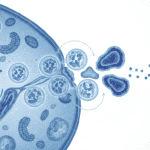
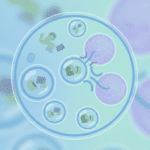
Here’s how it works: a cellular membrane wraps around damaged organelles, misfolded proteins, or even invading bacteria. This membrane-bound package, called an autophagosome, then fuses with a lysosome, the cell’s digestive compartment. Enzymes break down the contents into amino acids and fatty acids. The cell then recycles these building blocks for energy or rebuilds them into new proteins.
This isn’t some exotic process that only happens under extreme conditions. Your cells are doing autophagy right now, constantly. But the rate and intensity of autophagy changes based on nutrient availability. When nutrients are scarce, the cell recognises that feeding time is over and recycling time begins. That recognition is the trigger for fasting-induced autophagy.
What the research shows
Scientists studying fasting have observed something consistent: autophagy increases when cells are deprived of nutrients for extended periods. In animal models, even modest fasting triggers measurable increases in autophagy within 24 to 48 hours. The longer the fasting window, generally the more pronounced the effect.
One key finding involves a protein called mTOR. This is a master sensor of nutrient availability. When amino acids and glucose are abundant, mTOR stays active and tells cells to grow and divide. mTOR also suppresses autophagy. When fasting begins, mTOR activity drops. This is like flipping a switch. With mTOR quietened, another protein called AMPK activates. AMPK is essentially the cell’s energy stress detector. It says: nutrients are low, activate cleanup and energy conservation.
Researchers observing cells under fasting conditions see lysosomes becoming more active, autophagosomes accumulating, and damaged organelles being cleared away. In organisms from yeast to mice, fasting consistently increases autophagy markers. The mechanism appears conserved across species, suggesting this is a fundamental cellular response to nutrient scarcity.
What’s particularly interesting is the selectivity. Cells don’t just demolish anything randomly. They target damaged mitochondria, accumulations of misfolded proteins, and cellular debris preferentially. This selectivity matters. It means autophagy isn’t indiscriminate destruction. It’s maintenance with precision.
Why cells need this
Evolution didn’t preserve autophagy for luxury. This mechanism solved a critical survival problem for organisms facing unpredictable food availability. When food arrives sporadically, cells must be able to extract maximum value from internal resources during lean periods.
Damaged proteins accumulate constantly. A cell making thousands of new proteins daily inevitably makes mistakes. Misfolded proteins clump together and become toxic if left unchecked. Organelles age and lose function. Without a way to remove this junk, cells would accumulate damage and die prematurely. Autophagy prevents this decay. During fasting, when new nutrients aren’t arriving, autophagy provides a second source of building blocks and energy.
This is survival engineering. Organisms that could recycle internal resources during famine survived. Organisms that couldn’t didn’t. The genes encoding autophagy machinery became standard cellular equipment across the tree of life.
What affects autophagy
Fasting duration matters. Research shows that the intensity of autophagy generally increases with fasting length, though the relationship isn’t linear. A 24-hour fast triggers more autophagy than a 12-hour fast, but the difference between a 72-hour and 96-hour fast is smaller.
Age influences autophagy capacity. Older cells show reduced autophagy in baseline conditions. Their mTOR pathway becomes less responsive to nutrient signals. This is one reason why many researchers find ageing so closely tied to failing cellular maintenance.
Exercise amplifies fasting-induced autophagy. Physical activity and nutrient restriction work synergistically to activate this mechanism. Muscle cells in particular show robust autophagy responses to combined fasting and exercise.
Genetics and metabolic history matter too. Some individuals show more pronounced autophagy responses to identical fasting protocols. Metabolic flexibility, the ability to shift between glucose and fat metabolism, appears to correlate with stronger autophagy signalling. Diet composition before fasting affects how quickly the switch occurs. Someone eating high-carbohydrate diets may require longer fasting periods to trigger the same autophagy intensity as someone adapted to fat metabolism.
What remains unknown
Scientists are still figuring out the optimal fasting protocol for autophagy induction. Does a 16-hour daily fast produce the same cellular effects as a 48-hour weekly fast? The literature doesn’t yet show a clear answer. Autophagy intensity changes across the fasting window, peaking at different times in different cell types.
The long-term consequences of sustained elevated autophagy remain somewhat unclear. Most research focuses on acute fasting periods. What happens to autophagy after months or years of regular intermittent fasting? Does the system adapt? Do the benefits persist or diminish?
There’s also genuine uncertainty about which tissues benefit most from fasting-induced autophagy and which might be harmed by excessive autophagy. Some cells depend on constant growth and renewal. Too much self-digestion in those tissues might be counterproductive.
And translation to humans remains incomplete. Much of the strong autophagy data comes from animal models and cell culture. Human fasting studies show changes in autophagy markers, but directly observing autophagy at scale in living humans is technically difficult. We infer it’s happening based on indirect measurements.
The cellular perspective on fasting
Autophagy reveals something important about how cells think about survival. They don’t experience hunger the way organisms do. But they sense nutrient scarcity and respond by switching modes. From growth and expansion to maintenance and repair. From feeding to recycling. This flexibility kept organisms alive through unpredictable food scarcity. It’s baked into cellular logic at a fundamental level.
Understanding autophagy matters because it highlights how tightly linked nutrient availability is to cellular decision making. The pathways that sense starvation also control aging, infection resistance, and protein quality control. When researchers study fasting, they’re observing a central hub in cellular health that evolution refined over billions of years. That’s what makes this particular cellular mechanism worth studying seriously.

Matt Elliott is the editor of Redox News Today, an independent publication covering peer-reviewed research on cellular health, redox signalling, and related biomedical science.