
Your muscles are constantly breaking down old proteins and reassembling new ones. When a muscle cell stops doing this properly, proteins pile up like rubbish that never gets collected. This cellular housekeeping failure is now recognised as a key reason why people with certain genetic disorders experience progressive muscle weakness. Understanding this process is shifting how researchers think about muscle disease.
What is cellular recycling
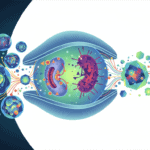
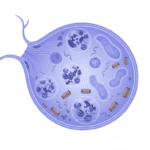
Cells have a dedicated waste management system called autophagy. The name literally means “self-eating”. Here’s how it works: when a cell detects damaged or excess proteins, it wraps them in a membrane to form a structure called an autophagosome. This package then fuses with a lysosome, which is essentially the cell’s recycling plant, filled with powerful enzymes that break proteins down into their building blocks. These components get reused to make new proteins or generate energy.
The system runs continuously but revs up during stress, starvation, or when proteins accumulate. Muscle cells rely on this process heavily because they’re metabolically active and constantly remodelling their protein architecture. Without efficient autophagy, muscles become choked with aggregated proteins that can’t function properly.
Genetic disorders that affect autophagy components create a bottleneck in this recycling pipeline. The cell keeps trying to discard waste, but the waste accumulates anyway.
What the research shows
Scientists studying muscle biopsies from people with certain genetic myopathies have found characteristic protein accumulations inside muscle fibres. These aren’t random clumps. They’re autophagosomes and abnormal lysosomes that have stalled in the recycling process, stuffed with undigested material.
Researchers working with animal models of these disorders have demonstrated that when key autophagy genes are knocked out specifically in muscle tissue, animals develop progressive weakness despite having normal muscle structure initially. The decline happens because proteins can’t be efficiently cleared. Over time, this triggers cell death pathways, and muscle fibres start to degenerate.
One particularly revealing finding: muscle weakness correlates directly with the degree of protein accumulation. Tissues with more autophagy dysfunction show earlier onset weakness and faster progression. When researchers artificially boost autophagy in these models, they observe partial recovery of muscle function and reduced protein aggregation.
The pattern appears consistent across several genetic disorders, suggesting this isn’t an incidental finding but a core mechanism driving muscle pathology.
Why cells need this
Muscles are expensive. They require constant protein synthesis and turnover because they’re under mechanical stress, exposed to oxidative damage, and need to respond dynamically to use patterns. A muscle fibre that can’t recycle its proteins efficiently runs into trouble fast.
Evolution preserved autophagy because cells that can’t remove damaged proteins don’t survive long enough to reproduce. Damaged proteins misfold and stick together, creating toxic aggregates that jam up cellular machinery. They also trigger inflammatory cascades. A cell drowning in undigested waste eventually dies.
Muscle cells face an additional challenge. They’re post-mitotic, meaning mature muscle fibres don’t divide. Once formed, a muscle fibre exists for years or decades. It can’t simply die and be replaced like skin cells do. Instead, it must manage its interior environment meticulously. Autophagy becomes almost a survival requirement.
This is why genetic mutations affecting recycling hit muscles particularly hard. The damage accumulates within cells that have nowhere to go and no ability to divide away from the problem.
What affects cellular recycling
The most obvious factor is genetics. Mutations in genes encoding autophagy components or lysosomal proteins directly impair the system. But research shows that other variables influence recycling capacity too.
Age matters. Autophagy efficiency declines naturally as organisms grow older. In healthy people this happens gradually, but in someone carrying a genetic autophagy defect, this age-related decline can push an already marginal system into failure. This explains why some genetic muscle disorders show late-onset weakness.
Exercise influences autophagy activity. Physical activity triggers cellular stress signals that upregulate the recycling machinery. Conversely, prolonged inactivity reduces autophagy signalling. This creates a vicious cycle in genetic disorders: weakness makes activity harder, reduced activity suppresses autophagy, recycling capacity drops further, weakness accelerates.
Nutritional factors appear relevant too. Cells coordinate autophagy with amino acid availability. Protein deficiency suppresses autophagy, potentially worsening protein accumulation paradoxically. Temperature and metabolic state also modulate the system, though these effects remain poorly understood in human muscle.
What remains unknown
Scientists still haven’t mapped precisely which autophagy components matter most in different genetic disorders. Some mutations affect cargo recognition, others affect lysosomal function, still others affect autophagosome formation. The pathway has dozens of moving parts, and we don’t fully understand how defects in different components produce similar muscle weakness.
The relationship between autophagy dysfunction and other cellular pathways in muscle disease remains murky. Protein aggregates trigger inflammation and oxidative stress independently. Do these secondary effects dominate the muscle damage, or does the recycling failure itself drive everything? Probably both, but the balance varies.
We also lack detailed understanding of why some muscles are affected more than others. Different muscle groups have different metabolic demands and fibre type compositions. Is autophagy capacity different across muscle types? Do genetic defects affect them equally? Current research hasn’t answered this clearly.
Translating findings from animal models to humans has proven tricky too. Approaches that improve autophagy in mice don’t always transfer to human biology. The species differences in how cells respond to autophagy stimulation remain frustratingly poorly understood.
The bigger picture
The emerging view of muscle genetic disorders includes autophagy failure as a central mechanism rather than a side effect. This shifts research priorities toward understanding and potentially modulating cellular recycling. It also highlights how muscle isn’t simply a mechanical system but a highly orchestrated cellular environment where waste management directly affects health.
This work connects to broader questions in cellular biology: what happens when any highly metabolic cell loses its ability to recycle proteins? Why do some tissues tolerate autophagy defects better than others? These questions point toward fundamental principles of cell biology that extend far beyond muscle disease into understanding ageing, neurodegeneration, and cancer. Cells that recycle efficiently seem to stay healthier longer. Those that can’t face accumulation, dysfunction, and death. Understanding this balance is central to cellular medicine.

Matt Elliott is the editor of Redox News Today, an independent publication covering peer-reviewed research on cellular health, redox signalling, and related biomedical science.