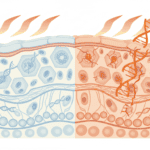

Your blood vessels don’t just wear out like old rubber hoses. They age at the cellular level, and when they do, your risk of heart disease climbs. But here’s what makes this interesting: the same ageing mechanisms that cause wrinkles on your skin are also silently stiffening your arteries. Understanding how cells age offers a window into why cardiovascular disease remains the leading cause of death worldwide.
What is cellular ageing
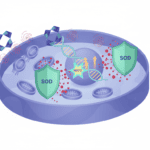
Cellular ageing isn’t a single process but a collection of changes that accumulate over time. Think of it as a cascade of molecular damage that cells can’t fully repair or clear away. Telomeres, the protective caps on DNA, shorten with each cell division until they become so short the cell stops dividing altogether. Mitochondria, the powerhouses inside cells, gradually lose efficiency and leak damaging molecules called free radicals. DNA accumulates mutations and epigenetic changes that alter how genes are expressed without changing the DNA sequence itself.
Cells also lose their ability to maintain protein quality. Misfolded proteins pile up inside cells, triggering inflammation. The cellular machinery that usually cleans up these damaged proteins slows down. This is called senescence when a cell stops dividing but remains metabolically active, churning out inflammatory compounds. It’s as though the cell is stuck, unable to divide yet unable to die gracefully, becoming a source of molecular irritation to surrounding tissues.
What the research shows
Scientists examining the hearts and blood vessels of older individuals consistently find cells displaying these hallmarks of ageing. The endothelium, the thin layer of cells lining blood vessels, becomes increasingly senescent with age. These senescent endothelial cells produce more inflammatory molecules and fewer protective compounds like nitric oxide, which normally helps vessels relax and maintain healthy blood flow.
Research on cardiovascular tissue reveals that telomere length in blood vessel cells correlates with cardiovascular risk. People with shorter telomeres in their white blood cells tend to have earlier heart disease. Vascular smooth muscle cells, which give arteries their elasticity, accumulate mutations and lose their responsiveness to signalling molecules that normally prevent them from proliferating excessively. The result is arterial stiffening and plaque formation.
Mitochondrial dysfunction appears particularly damaging in heart muscle cells. As mitochondria age and produce more oxidative stress, cardiomyocytes struggle to generate enough energy for the constant contractions the heart demands. Studies comparing young and old hearts show a clear decline in mitochondrial efficiency and increased markers of cellular stress in older tissue. The inflammation triggered by senescent cells and dysfunctional mitochondria then spreads, accelerating atherosclerotic changes throughout the vascular system.
Why cells need this mechanism
This seems backwards at first. Why would evolution preserve a process that leads to ageing and disease? The answer is that these same mechanisms exist to prevent cancer. When a cell detects serious DNA damage, it often triggers senescence as a safety switch. The cell stops dividing, preventing damaged DNA from being passed to daughter cells. This is protective in the short term, especially early in life when cancer risk matters most.
Telomere shortening limits how many times a cell can divide, which prevents endless replication that could lead to malignant transformation. Mitochondrial quality control systems that produce some oxidative stress as a byproduct also signal cells when something is wrong, triggering apoptosis or repair responses. These are elegant biological solutions to immediate threats. The problem emerges over decades when senescent cells accumulate and chronically inflamed tissue starts to malfunction.
Natural selection optimised our bodies for reproduction and survival through our reproductive years, not for living past 80. The cardiovascular consequences of cellular ageing reveal that trade off clearly. Defence mechanisms that protected us from cancer at 30 become liabilities at 70.
What affects cellular ageing
Cellular ageing rates vary considerably between individuals, and research has identified multiple factors that speed it up or slow it down. Oxidative stress accelerates telomere shortening and mitochondrial damage. Chronic inflammation, whether from infections, poor diet, obesity, or smoking, drives senescence in vascular cells. Physical inactivity appears particularly damaging to cardiovascular cells specifically, while regular exercise slows the accumulation of senescent cells in heart tissue.
Metabolic factors matter enormously. High blood glucose and insulin resistance accelerate cellular ageing through a process called glycation, where sugar molecules bind to proteins and cross-link them, damaging cellular structures. Sleep deprivation impairs cellular repair mechanisms. Psychological stress and social isolation both increase circulating inflammatory markers and accelerate vascular ageing. Conversely, caloric restriction and intermittent fasting appear to slow cellular ageing by enhancing mitochondrial quality control and reducing oxidative stress.
Genetics set your baseline, but lifestyle factors often override genetic predisposition. Some individuals with genetic risk factors for early cardiovascular disease show slower vascular cell ageing because of consistent exercise and good metabolic health. Others with protective genetics age their blood vessels prematurely through smoking, poor diet, and chronic stress.
What remains unknown
Scientists still debate which ageing mechanism matters most for cardiovascular disease. Is it telomere shortening, mitochondrial dysfunction, protein aggregation, or senescent cell accumulation? Likely it’s all of them interacting, but the relative contribution remains unclear. We don’t yet have reliable biomarkers that predict which individuals will experience accelerated vascular ageing and develop disease.
The therapeutic question looms large. Several drug candidates can eliminate senescent cells in laboratory conditions, but we don’t know if removing these cells from human blood vessels would actually prevent heart disease or if it might have unintended consequences. Trials are underway but results remain preliminary. We also don’t fully understand why some tissues age faster than others, or why the cardiovascular system seems particularly vulnerable to the effects of cellular ageing compared to other organ systems.
The biggest unknown is whether we can safely intervene. Targeting mitochondrial dysfunction or enhancing cellular repair looks promising in animal models, but human translation has proven challenging. We’re still in the phase of understanding the basic mechanisms well enough to ask the right therapeutic questions.
What emerges from cellular ageing research is a more precise picture of why cardiovascular disease develops. It’s not simply cholesterol or high blood pressure, though those matter. It’s the accumulation of cellular damage over time, the loss of cellular maintenance and renewal capacity, and the chronic inflammation that results. Understanding these mechanisms at the cellular level opens pathways to earlier detection, better risk stratification, and eventually, interventions that could slow the ageing process itself in the tissues that matter most for keeping us alive.

Matt Elliott is the editor of Redox News Today, an independent publication covering peer-reviewed research on cellular health, redox signalling, and related biomedical science.