Your blood vessels expand and contract thousands of times each day, responding to everything from your morning coffee to a sudden sprint up the stairs. This seemingly simple process depends on a delicate balance of cellular chemistry that most people never think about. When that chemistry goes wrong, blood vessels become stiff, less responsive, and prone to damage.
What is NAC and glutathione’s role in blood vessels
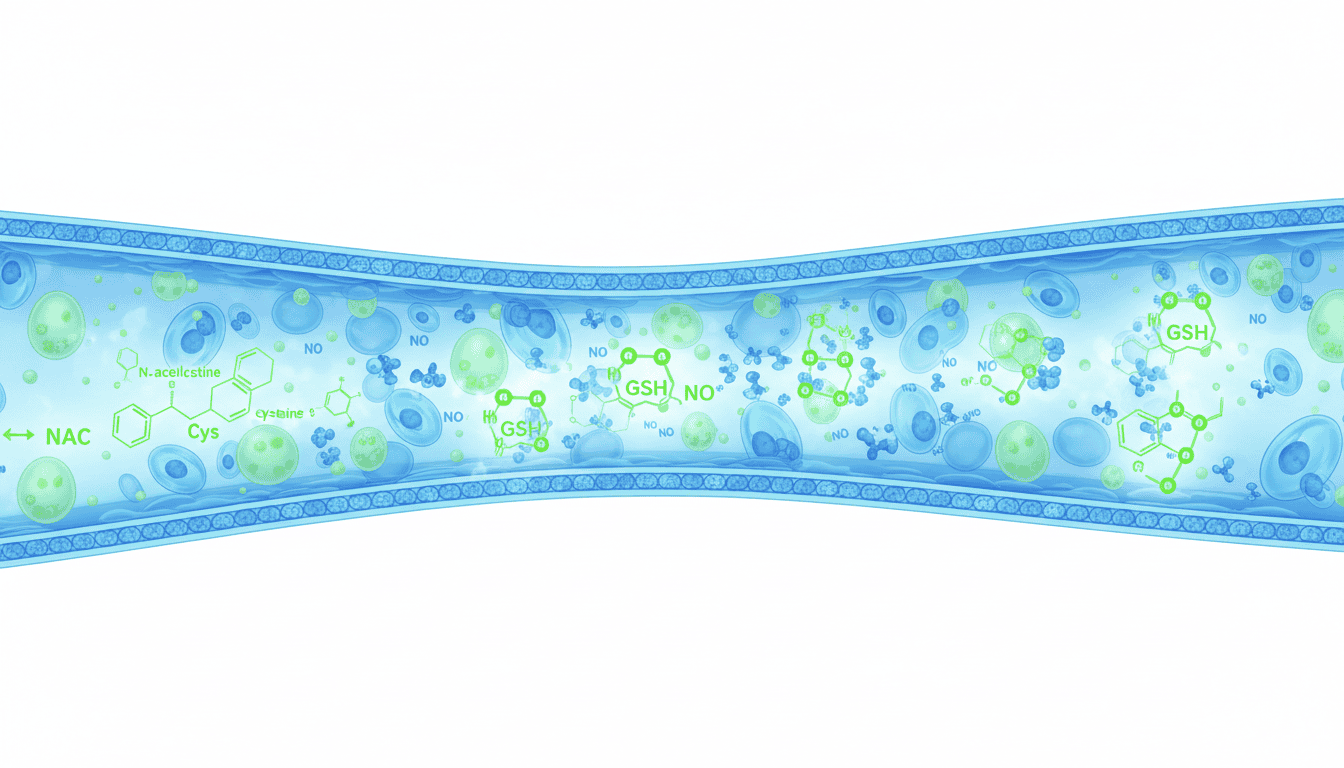
N-acetylcysteine, or NAC, is a precursor to glutathione, one of the cell’s most powerful antioxidant molecules. Think of glutathione as a cellular cleanup crew that neutralises harmful reactive oxygen species before they can damage important structures. Blood vessels need this protection more than almost any other tissue because they face constant oxidative stress from blood flow, pressure changes, and metabolic byproducts.
The endothelium, a single layer of cells lining the inside of blood vessels, acts like a sophisticated control centre. These cells produce nitric oxide, a signalling molecule that tells smooth muscle cells in vessel walls to relax, allowing blood to flow more freely. But nitric oxide is fragile. Oxidative stress can destroy it before it reaches its target, leaving vessels unable to dilate properly.
When cells have adequate glutathione levels, they can protect nitric oxide from oxidative damage. NAC helps maintain these glutathione stores by providing cysteine, the rate-limiting amino acid needed for glutathione synthesis. Without enough cysteine, cells struggle to produce sufficient glutathione, leaving the vascular system vulnerable to oxidative damage.
What the research shows
Studies examining NAC’s effects on blood vessels consistently find improvements in endothelial function. Researchers measure this using flow-mediated dilation, a technique that assesses how well arteries can expand in response to increased blood flow. People given NAC supplements typically show better arterial flexibility compared to those receiving placebo treatments.
The timeline matters. Short-term studies show that NAC can improve vascular function within hours of administration, suggesting it works quickly to restore the redox balance in endothelial cells. Longer studies reveal that sustained NAC use helps maintain these improvements over weeks or months.
Laboratory research provides insight into the underlying mechanisms. When researchers expose endothelial cells to oxidative stress in petri dishes, those pretreated with NAC maintain better nitric oxide production and show less cellular damage. The protective effect disappears when researchers block glutathione synthesis, confirming that NAC works primarily through its role in glutathione production.
Animal studies paint a similar picture. Mice with induced vascular dysfunction show restored endothelial function after NAC treatment. Their blood vessels regain the ability to dilate properly, and markers of oxidative damage decrease throughout the cardiovascular system.
Why cells need this protection
Blood vessels operate in a uniquely challenging environment. They must remain flexible enough to accommodate pressure changes while staying strong enough to contain blood flow. This requires a careful balance between structural integrity and functional flexibility that oxidative stress constantly threatens to disrupt.
Endothelial cells face particular challenges because they sit at the interface between blood and vessel walls. They encounter high oxygen concentrations, mechanical stress from blood flow, and various metabolic byproducts circulating in the bloodstream. These factors generate reactive oxygen species faster than many other cell types experience.
Evolution preserved the glutathione system precisely because cells need robust antioxidant defences to survive these conditions. The system works on multiple levels, directly neutralising harmful molecules while also regenerating other antioxidants like vitamin C and vitamin E. When glutathione levels drop, the entire antioxidant network becomes less effective.
The vascular system also serves as a communication network, with endothelial cells constantly signalling to surrounding tissues about oxygen levels, nutrient availability, and metabolic demands. Oxidative stress interferes with this signalling, disrupting the coordinated responses that keep circulation functioning smoothly.
What affects NAC and glutathione levels
Age significantly impacts glutathione synthesis. Older adults typically have lower baseline glutathione levels, making their blood vessels more vulnerable to oxidative damage. This partly explains why vascular function tends to decline with age, even in otherwise healthy individuals.
Physical activity influences this system in complex ways. Moderate exercise actually increases antioxidant capacity over time by stimulating cellular adaptations that boost glutathione production. However, intense or prolonged exercise can temporarily deplete glutathione stores, potentially affecting vascular function in the short term.
Diet plays a supporting role. While few foods contain significant amounts of NAC directly, adequate protein intake ensures cells have access to cysteine and other amino acids needed for glutathione synthesis. Selenium and other trace minerals also influence glutathione-related enzymes.
Environmental factors create additional demands on the glutathione system. Air pollution, cigarette smoke, and other toxins force cells to use more glutathione for detoxification, potentially leaving less available for protecting vascular function. Chronic inflammation from any source also depletes glutathione stores more rapidly.
What remains unknown
Scientists still debate the optimal dosing and timing for NAC supplementation. While studies show benefits across a range of doses, researchers haven’t established whether higher amounts provide proportionally greater vascular protection or if there’s a plateau effect beyond which additional NAC offers no advantage.
The interaction between NAC and other antioxidants requires more investigation. Some research suggests that combining NAC with other compounds might enhance its vascular benefits, but the specific combinations and ratios that work best remain unclear. The timing of when different antioxidants are taken might also matter more than previously recognised.
Individual variation poses another puzzle. Some people seem to respond more dramatically to NAC supplementation than others, suggesting genetic or metabolic differences in how the compound is processed or utilised. Identifying these factors could help predict who might benefit most from NAC supplementation.
Long-term safety questions also persist. While NAC appears safe in studies lasting several months, researchers have limited data on what happens with years of continuous use. Understanding any potential adaptive responses that might reduce NAC’s effectiveness over time would inform optimal supplementation strategies.
The relationship between NAC, glutathione, and vascular health illustrates how cellular chemistry directly impacts organ function. As researchers continue mapping these connections, they’re building a clearer picture of how maintaining proper redox balance supports the cardiovascular system’s remarkable ability to adapt and respond to our daily demands.

Matt Elliott is the editor of Redox News Today, an independent publication covering peer-reviewed research on cellular health, redox signalling, and related biomedical science.