Your immune system’s sentries need a constant power supply to do their job properly. Dendritic cells patrol your tissues like vigilant guards, sampling everything they encounter and deciding what deserves an immune response. But these cellular watchmen have an unusual energy requirement. Unlike other immune cells that can switch to sugar-burning mode during activation, dendritic cells depend heavily on their mitochondria’s electron transport chain to maintain their surveillance capabilities.
What is mitochondrial electron flow
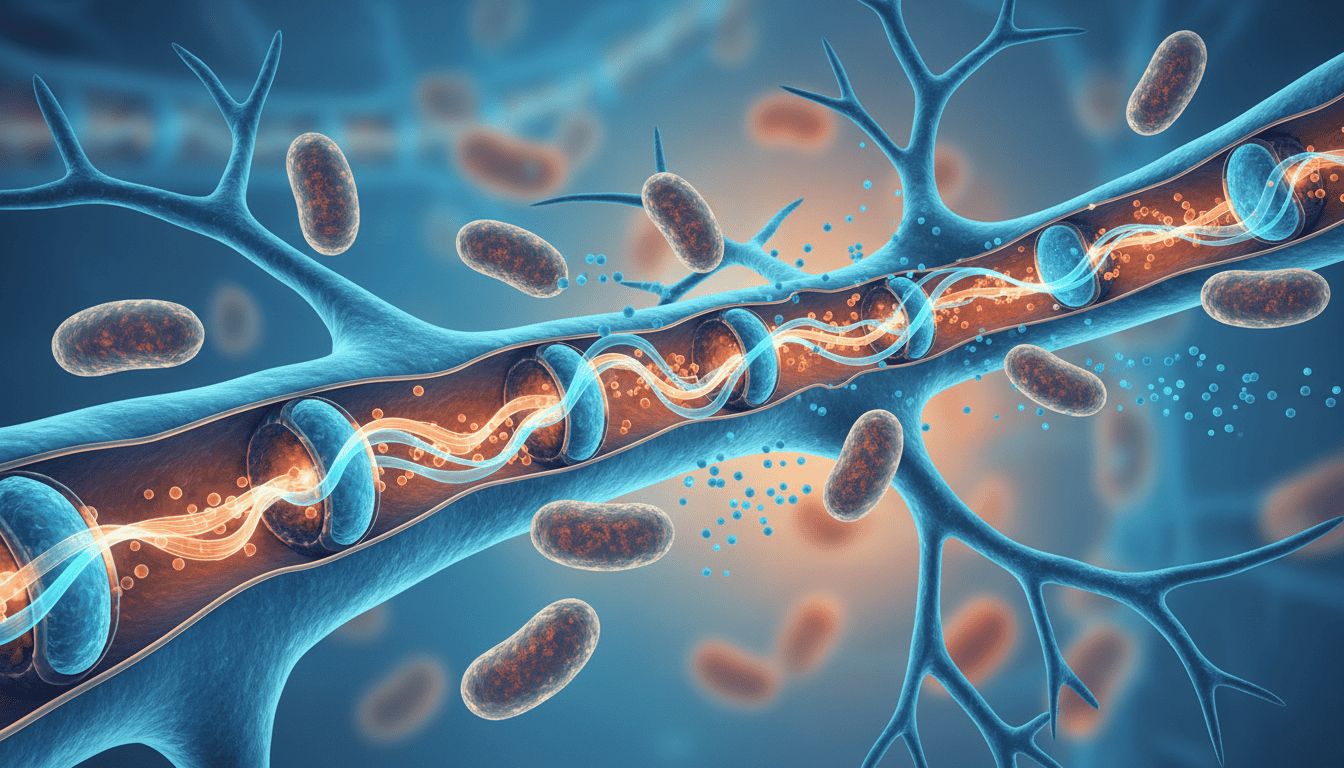
Inside every mitochondrion, electrons flow through a series of protein complexes embedded in the inner membrane. This electron transport chain works like a hydroelectric dam. As electrons cascade from one complex to the next, they release energy that pumps protons across the membrane, creating an electrical gradient. This stored energy drives ATP synthesis, but that’s not the only thing happening.
The electron flow also generates small amounts of reactive oxygen species as a normal byproduct. These molecules act as signalling agents, influencing everything from gene expression to protein modifications. For most cells, this is just cellular housekeeping. For dendritic cells, it’s essential communication.
Complex I, III, and IV of the electron transport chain don’t just make energy. They create a dynamic environment where electron flow rates can shift based on the cell’s needs, adjusting both power output and signalling molecule production in real time.
What the research shows
Scientists have discovered that dendritic cells with impaired electron transport lose their ability to present antigens effectively. When researchers disrupted Complex I function in laboratory studies, the cells could still survive but became dramatically less responsive to immune threats. They stopped producing the right combination of surface proteins needed to activate T cells.
The electron flow affects more than just energy production. Research shows that healthy electron transport maintains the cellular machinery dendritic cells use to process and display foreign proteins. When electron flow slows or becomes disrupted, these cells lose their ability to reshape captured antigens into the precise fragments that trigger adaptive immunity.
Studies tracking dendritic cell behaviour reveal that cells with robust electron transport chains migrate more effectively to lymph nodes and interact more successfully with T cells. The mitochondrial activity appears to influence the cell’s entire activation program, not just its energy levels.
Why cells need this
Dendritic cells face a unique challenge in immune biology. They must remain in a state of constant readiness while avoiding false alarms. This requires precise metabolic control that other immune cell types don’t need.
Most immune cells can rapidly switch to glycolysis during activation, burning glucose for quick energy bursts. Dendritic cells can’t afford this luxury. They need sustained, steady power to maintain their complex antigen processing machinery and their ability to migrate long distances through tissues.
The electron transport chain provides this steady power while simultaneously generating the signalling molecules that keep dendritic cells in their surveillance state. Evolution appears to have wired these cells to depend on mitochondrial respiration because it offers both reliability and regulatory control that glycolysis cannot match.
This metabolic setup also helps dendritic cells avoid premature activation. The controlled electron flow maintains cellular functions without triggering the dramatic metabolic shifts that would signal danger inappropriately.
What affects electron flow in dendritic cells
Age significantly impacts mitochondrial function in dendritic cells. Older individuals show reduced electron transport efficiency in these immune sentries, which may contribute to declining vaccine responses and increased susceptibility to infections.
Environmental factors also matter. Exposure to certain pollutants and toxins can disrupt mitochondrial electron flow, potentially compromising dendritic cell function. Research suggests that chronic inflammation from various sources can interfere with the electron transport chain’s normal operation.
Nutrient availability affects electron flow efficiency. Iron deficiency impairs Complex I and III function, while certain vitamins serve as cofactors for electron transport proteins. The cells’ local environment, including oxygen levels and pH, influences how smoothly electrons move through the transport chain.
Viral infections can specifically target mitochondrial function in immune cells. Some pathogens have evolved mechanisms to disrupt electron transport as a way of evading immune detection, creating a metabolic battleground within infected dendritic cells.
What remains unknown
Researchers still don’t fully understand how dendritic cells balance their electron transport activity during different phases of immune responses. The precise signalling mechanisms that connect electron flow to antigen presentation remain partially mysterious.
Scientists are investigating whether different dendritic cell subtypes rely on electron transport to varying degrees. Some evidence suggests that tissue-resident dendritic cells may have different metabolic requirements than their circulating counterparts, but the details remain unclear.
The relationship between electron transport chain function and dendritic cell memory is another open question. These cells appear to retain information about previous encounters with pathogens, but researchers don’t know if mitochondrial metabolism contributes to this cellular memory.
How electron flow coordinates with other metabolic pathways in dendritic cells also needs more investigation. The interplay between mitochondrial respiration, glycolysis, and fatty acid metabolism likely creates a complex regulatory network that scientists are just beginning to map.
Understanding how dendritic cells maintain their metabolic requirements opens new perspectives on immune system function. These cellular sentries remind us that immunity isn’t just about recognising threats and mounting responses. It’s about maintaining the right metabolic state to stay alert, process information accurately, and communicate effectively with other immune cells. The steady flow of electrons through mitochondrial complexes represents one of biology’s quieter but more essential processes, keeping our immune surveillance system powered and ready.

Matt Elliott is the editor of Redox News Today, an independent publication covering peer-reviewed research on cellular health, redox signalling, and related biomedical science.