Imagine being able to replace the power plants in your cells the same way you’d swap out a car battery. Scientists have developed technology that can extract healthy mitochondria from donor cells and deliver them precisely to cells that need them most. It’s like giving dying cells a new lease on life by restoring their ability to make energy.
What is targeted mitochondrial delivery
Mitochondria are the tiny powerhouses inside every cell that convert nutrients into usable energy. When they malfunction, cells struggle to survive. Traditional treatments focus on protecting existing mitochondria or boosting their function, but this new approach takes a different route entirely.
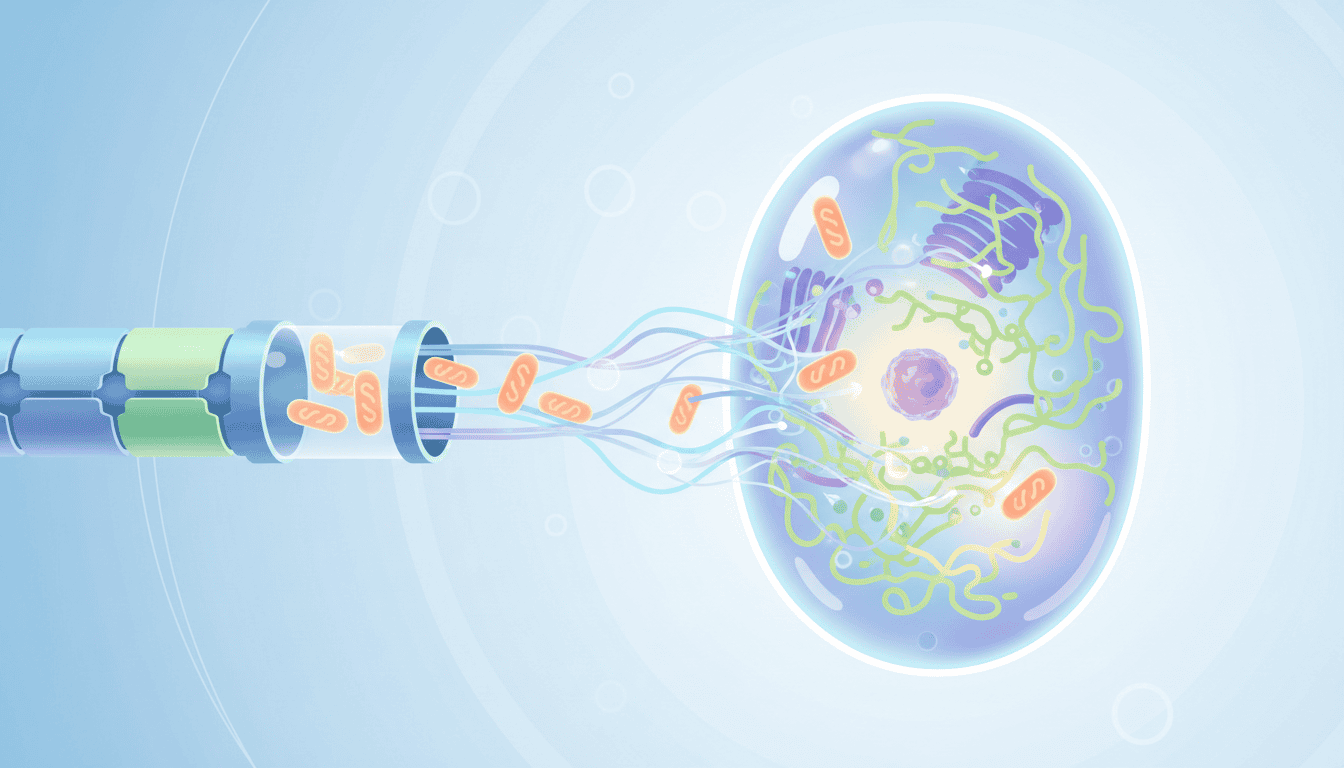
The technology works by isolating functional mitochondria from healthy donor cells and packaging them for delivery. Scientists use various transport methods including modified viruses, lipid nanoparticles, or even direct injection to get these replacement power plants where they need to go. Once inside the target cells, the donor mitochondria can integrate with existing cellular machinery and begin producing energy.
The delivery systems are designed to target specific cell types or tissues. This precision matters because different organs have vastly different energy demands and mitochondrial requirements.
What the research shows
Laboratory studies demonstrate that transplanted mitochondria can restore cellular function in several disease models. Researchers have successfully delivered healthy mitochondria to neurons affected by stroke, showing improved cell survival and reduced tissue damage. Heart cells damaged by ischemia have also responded well to mitochondrial transplantation.
The transplanted mitochondria don’t just sit passively in their new cellular homes. They actively participate in energy production, often within hours of delivery. Some studies show that recipient cells can maintain improved function for weeks after a single treatment.
Perhaps most importantly, the delivered mitochondria appear to integrate with the cell’s existing energy networks. They connect to the cellular scaffolding and begin coordinating with native mitochondria to restore normal energy production patterns.
Early research also suggests that healthy mitochondria might influence the behaviour of damaged ones nearby, potentially triggering broader cellular repair processes.
Why cells need this
Cells are remarkably energy hungry. Your brain alone consumes about 20% of your body’s total energy despite representing only 2% of your weight. When mitochondria fail, cells face an energy crisis that can trigger a cascade of problems including inflammation, oxidative stress, and ultimately cell death.
Unlike most cellular components, mitochondria have their own DNA and reproduce independently. This makes them particularly vulnerable to damage over time. Their DNA repair mechanisms are less sophisticated than those protecting nuclear DNA, so mutations accumulate more readily.
Mitochondrial dysfunction doesn’t just affect energy production. These organelles play crucial roles in calcium regulation, cell signalling, and determining when cells should undergo programmed death. When mitochondria malfunction, all these processes can go awry.
The cell’s quality control systems normally remove damaged mitochondria through a process called mitophagy. But in many diseases, this cleanup mechanism becomes overwhelmed or stops working properly, allowing dysfunctional mitochondria to accumulate.
What affects mitochondrial delivery
The success of mitochondrial transplantation depends heavily on the delivery method and target tissue. Some organs, like the brain, present particular challenges because of protective barriers that limit what can pass through. Researchers are developing specialised delivery systems for different tissue types.
The quality and compatibility of donor mitochondria also matter. Mitochondria from younger, healthier cells generally perform better than those from aged or stressed cells. Some research suggests that mitochondria from the same species work more effectively than those from different organisms.
Timing appears critical too. Delivering mitochondria soon after cellular damage often produces better results than waiting until cells are severely compromised. The receiving cell’s existing mitochondrial population can influence how well new ones integrate.
Environmental factors like temperature, pH, and oxygen levels during the isolation and delivery process affect mitochondrial viability. Scientists are refining storage and transport conditions to maximise the chances of successful transplantation.
What remains unknown
Scientists still don’t fully understand how long transplanted mitochondria survive in their new cellular environments. Do they eventually get replaced by the cell’s native mitochondria, or do they establish permanent populations? The long term fate of donor mitochondria remains unclear.
The interaction between transplanted and existing mitochondria needs more investigation. While early evidence suggests beneficial effects, researchers want to understand the precise molecular mechanisms that allow integration and coordination between old and new organelles.
Questions also remain about optimal delivery timing and dosing. How many mitochondria does a cell need to restore function? Is one treatment enough, or would repeated deliveries work better? Different diseases and cell types likely have different requirements.
The potential for immune reactions to foreign mitochondria isn’t fully characterised either. While mitochondria lack some of the surface markers that typically trigger immune responses, they still carry their own genetic material that might be recognised as foreign.
This technology represents a new frontier in cellular repair, moving beyond simply protecting existing cellular machinery to actually replacing broken components. The ability to restore cellular energy production could open entirely new approaches to treating diseases that have resisted conventional therapies. As researchers refine these delivery methods, we’re getting closer to truly repairing cells from the inside out.

Matt Elliott is the editor of Redox News Today, an independent publication covering peer-reviewed research on cellular health, redox signalling, and related biomedical science.