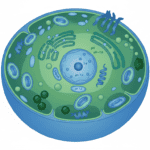
Your cells are messy. Every second, they accumulate damaged proteins, worn-out organelles, and cellular debris that would be toxic if left to pile up. Yet somehow, healthy cells stay remarkably clean. The secret lies in autophagy, a sophisticated recycling system that literally means “self-eating” in Greek.
What is autophagy
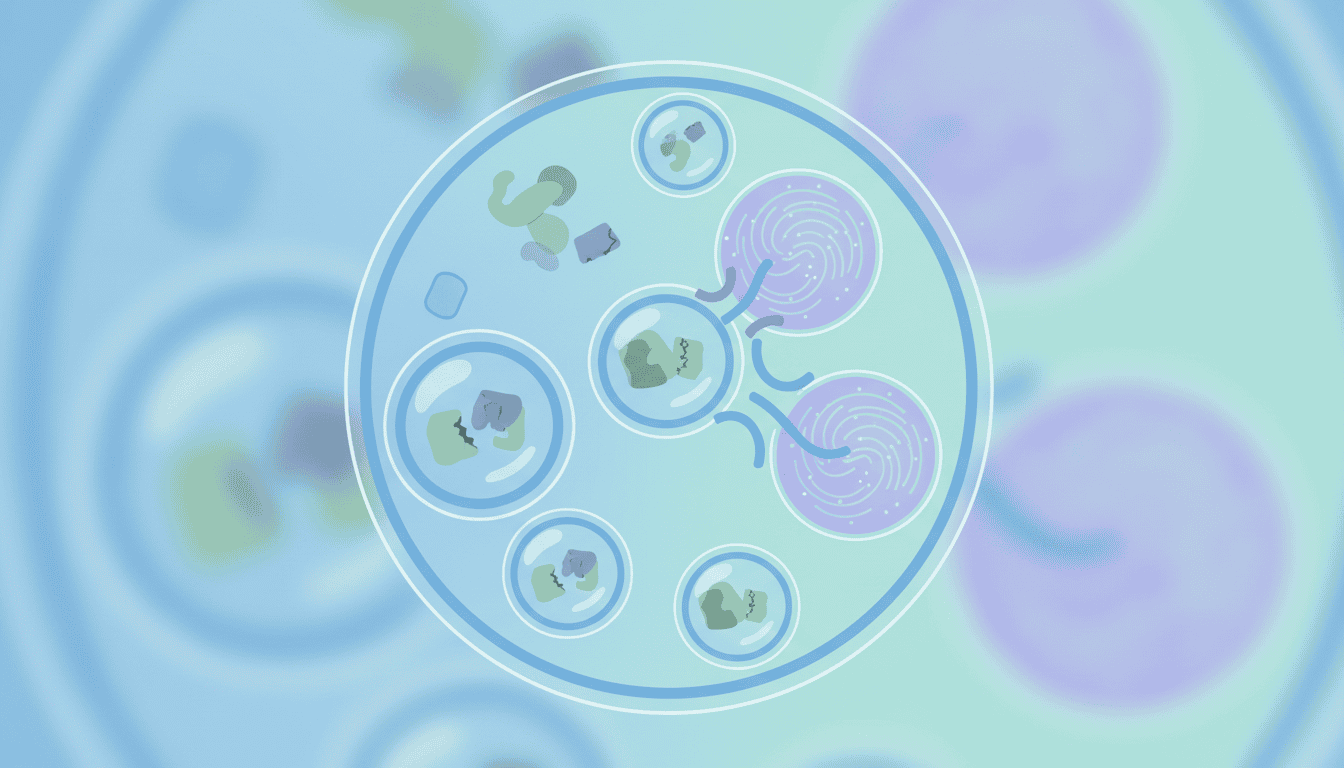
Autophagy is your cell’s waste management system. When cellular components become damaged or unnecessary, the cell doesn’t just let them accumulate. Instead, it wraps them in a double membrane structure called an autophagosome, creating a kind of cellular garbage bag.
This autophagosome then fuses with a lysosome, an organelle packed with digestive enzymes. The enzymes break down the contents into basic building blocks like amino acids, fatty acids, and sugars. The cell can then reuse these materials to build new proteins and structures.
Think of it as the ultimate recycling programme. Nothing goes to waste. A damaged mitochondrion becomes raw materials for a new one. Misfolded proteins get broken down into amino acids that form properly functioning replacements. This process runs continuously in healthy cells, but it can ramp up dramatically when cells face stress, starvation, or damage.
What the research shows
Scientists have identified several distinct types of autophagy. Macroautophagy engulfs large cellular structures and organelles. Microautophagy directly captures small portions of cytoplasm. Chaperone-mediated autophagy selectively targets specific proteins marked with particular sequences.
Research reveals that autophagy rates change dramatically based on cellular conditions. When cells are well-fed and unstressed, autophagy ticks along at a baseline level, performing routine maintenance. But when nutrients become scarce or cells face oxidative stress, autophagy activity can increase by several fold within hours.
Studies using fluorescent markers show that autophagy isn’t random. Cells preferentially target damaged organelles first. Mitochondria that have lost their membrane potential get tagged for removal before healthy ones. Protein aggregates that could interfere with cellular function become priority targets.
The process also follows circadian rhythms. Autophagy activity peaks during certain times of day, particularly during fasting periods when cells need to generate energy from internal sources rather than external nutrients.
Why cells need this
Autophagy solves several critical problems that cells face. Without it, damaged proteins would accumulate and form toxic aggregates. Worn-out mitochondria would produce excessive reactive oxygen species, damaging other cellular components. Cells would have no way to adapt to nutrient scarcity.
Evolution preserved this system because it provides both quality control and resource management. Quality control removes potentially harmful cellular debris before it can cause problems. Resource management allows cells to survive lean times by recycling their own components for energy and raw materials.
The system also helps cells respond to stress. When cells detect damage from radiation, toxins, or other threats, increased autophagy removes the most vulnerable components first. This prevents small problems from cascading into cell death.
Perhaps most cleverly, autophagy allows cells to remodel themselves. During development, cells can rapidly change their protein composition and organelle content by selectively degrading some components while building others. This flexibility proved essential for complex multicellular life.
What affects autophagy
Nutrient availability strongly influences autophagy rates. When amino acids and glucose are abundant, a protein called mTOR suppresses autophagy signalling. When nutrients become scarce, mTOR activity drops and autophagy increases. This makes biological sense because cells need to conserve resources when food is limited.
Age significantly impacts autophagy efficiency. Studies show that autophagy rates decline with ageing in many tissues. The cellular machinery responsible for forming autophagosomes becomes less efficient. Lysosomes may not digest captured materials as effectively. This contributes to the accumulation of cellular damage over time.
Physical stress can stimulate autophagy. Exercise triggers increased autophagy in muscle cells, potentially explaining some of the protective effects of regular physical activity. Heat shock, oxidative stress, and other challenges also activate autophagy pathways.
Sleep patterns affect autophagy through circadian rhythm pathways. Disrupted sleep schedules can interfere with the normal cycling of autophagy activity, potentially reducing the efficiency of cellular maintenance.
Certain compounds can modulate autophagy. Caloric restriction activates autophagy pathways. Some natural compounds found in foods can influence autophagy signalling, though the practical significance of these effects remains under investigation.
What remains unknown
Scientists are still working out how cells decide what to target for autophagy. While they understand some of the tagging mechanisms, the complete decision-making process remains unclear. How do cells balance the need to remove damaged components against the risk of eliminating something still useful?
The relationship between autophagy and ageing presents many unanswered questions. Does declining autophagy cause ageing, or does ageing cause autophagy to decline? The causation could run in both directions, creating a complex feedback loop that researchers are still untangling.
Regional differences in autophagy also puzzle scientists. Different tissues and even different parts of the same cell show varying autophagy activity. Brain cells seem to rely more heavily on autophagy than some other cell types, but the reasons for these differences aren’t fully understood.
The optimal level of autophagy remains a major question. Too little autophagy allows damage to accumulate. But excessive autophagy could potentially remove functional cellular components. How cells calibrate this balance, and whether it can be optimised, represents an active area of research.
Understanding autophagy has transformed how scientists think about cellular maintenance and adaptation. Rather than viewing cells as static factories, autophagy reveals them as dynamic systems constantly rebuilding themselves. This ongoing cellular renovation helps explain how life maintains itself despite the constant accumulation of molecular damage. The process represents one of biology’s most elegant solutions to the fundamental challenge of maintaining order in a chaotic molecular world.

Matt Elliott is the editor of Redox News Today, an independent publication covering peer-reviewed research on cellular health, redox signalling, and related biomedical science.