Your muscle cells burn through more energy than almost any other tissue in your body. Every time you climb stairs or lift a grocery bag, thousands of mitochondria inside your muscle fibres are churning out ATP at breakneck speed. But here’s what researchers have discovered: as we age, a protein called ATF5 becomes the difference between muscles that maintain their power plants and those that slowly lose their energy edge.
What is ATF5
ATF5 stands for Activating Transcription Factor 5, and it works like a cellular foreman overseeing mitochondrial construction and repair. This protein belongs to a family of transcription factors that read DNA and decide which genes get switched on or off.
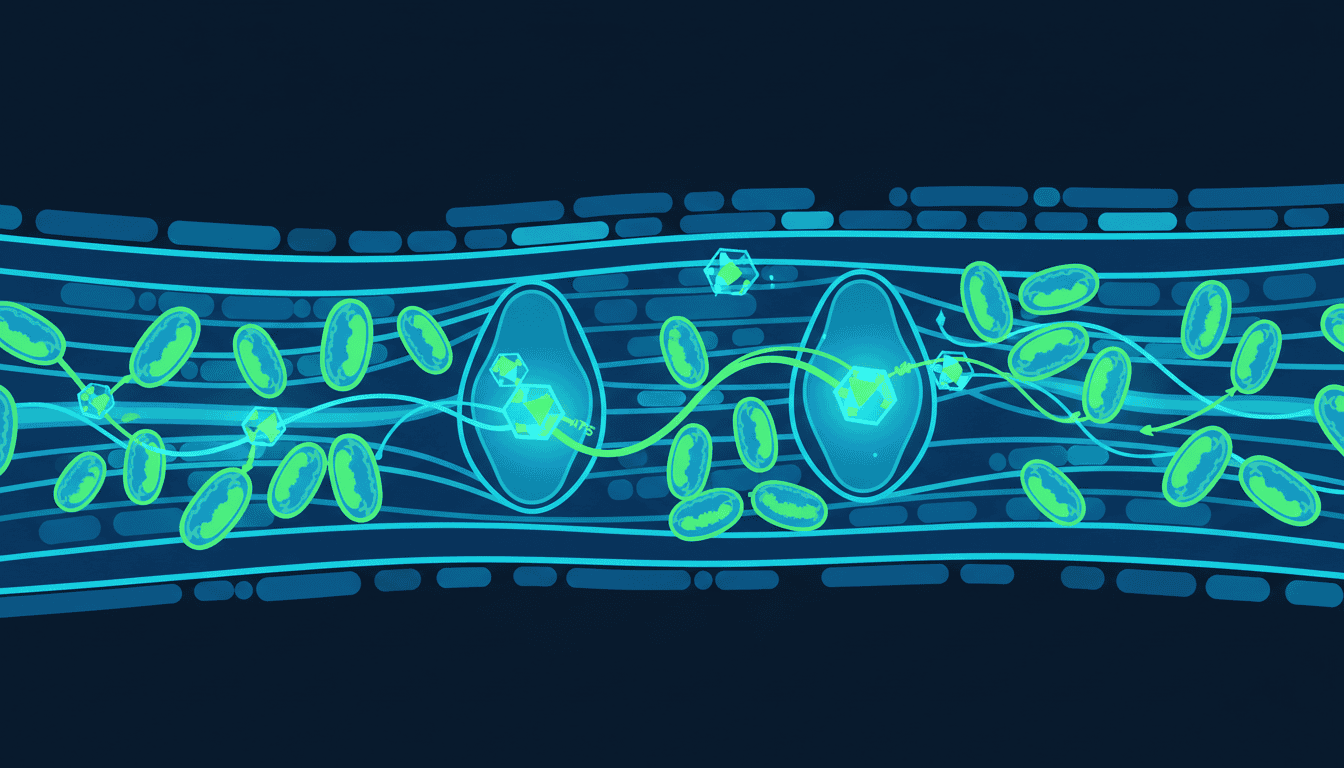
When ATF5 detects that muscle cells need more mitochondrial support, it travels to the nucleus and activates specific genes. Think of it as a quality control manager that monitors the health of your cellular power plants. It doesn’t just turn genes on randomly. ATF5 specifically targets genes involved in mitochondrial biogenesis, the process by which cells build new mitochondria from scratch.
The protein also coordinates with other cellular signalling pathways, particularly those involving energy sensing and stress response. When muscle cells experience metabolic stress or increased energy demands, ATF5 helps orchestrate the response that keeps mitochondria functioning properly.
What the research shows
Scientists studying ageing muscle tissue have found that ATF5 levels decline significantly as we get older. In young muscle, ATF5 is highly active, constantly monitoring and maintaining mitochondrial health. But in aged skeletal muscle, this surveillance system starts to break down.
Laboratory studies reveal that when researchers artificially reduce ATF5 levels in young muscle cells, the mitochondria begin showing signs of dysfunction. They produce less ATP, generate more harmful reactive oxygen species, and struggle to maintain their internal structure. The muscle fibres themselves become weaker and more prone to fatigue.
Conversely, when scientists boost ATF5 activity in aged muscle cells, mitochondrial function improves markedly. The organelles become more efficient at producing energy and better at clearing out damaged components. This suggests ATF5 doesn’t just correlate with healthy ageing muscle but actively drives mitochondrial maintenance.
Research also shows that ATF5 works in concert with other important cellular regulators like PGC-1α, a master regulator of mitochondrial biogenesis. When both proteins are functioning well, muscle cells can adapt to increased energy demands by building more mitochondria. When either falters, the whole system becomes less responsive.
Why cells need this
Skeletal muscle faces a unique challenge in the body. Unlike organs that maintain steady energy demands, muscles must rapidly scale their energy production up or down depending on activity levels.
When you sprint for a bus, your muscle cells might need to increase ATP production by 50 times or more within seconds. This places enormous stress on mitochondria, which must work harder and faster than normal. Without proper oversight, this kind of metabolic stress would quickly damage the cellular machinery.
ATF5 evolved as part of the solution to this problem. It acts like an early warning system, detecting when mitochondria are under strain and triggering protective responses before serious damage occurs. The protein helps cells maintain what scientists call metabolic flexibility, the ability to switch between different fuel sources and energy production modes as needed.
From an evolutionary perspective, maintaining muscle function throughout life would have been essential for survival. Humans who could keep their muscles strong and efficient as they aged would have been better at hunting, gathering, and avoiding predators. ATF5 represents part of the cellular machinery that made this possible.
What affects ATF5
Exercise has the most dramatic effect on ATF5 activity in muscle cells. Both resistance training and aerobic exercise increase ATF5 levels, though resistance training appears particularly effective at boosting the protein’s activity. The mechanical stress of muscle contraction seems to signal cells that they need better mitochondrial oversight.
Age is the biggest factor working against ATF5 function. Research shows that ATF5 levels and activity decline progressively after middle age, contributing to the mitochondrial dysfunction commonly seen in ageing muscle. This decline appears to happen regardless of physical activity levels, though exercise can slow the process.
Nutrition also plays a role. Caloric restriction, which extends lifespan in many species, tends to increase ATF5 activity in muscle cells. Conversely, high-fat diets and metabolic dysfunction can suppress ATF5, creating a cycle where poor mitochondrial function leads to further metabolic problems.
Chronic inflammation, common in ageing and various diseases, interferes with ATF5 signalling. Inflammatory molecules can disrupt the protein’s ability to activate target genes, contributing to the mitochondrial decline seen in age-related muscle wasting.
What remains unknown
Scientists are still working out exactly how ATF5 decides when to activate which genes. The protein clearly responds to cellular stress signals, but researchers don’t fully understand the molecular switches that control its activity. Different types of stress might trigger different ATF5 responses, but mapping these pathways remains challenging.
The relationship between ATF5 and other transcription factors involved in muscle ageing also needs clarification. Multiple proteins regulate mitochondrial function, and how they coordinate their activities isn’t always clear. Sometimes these factors work together, sometimes they compete for the same cellular resources.
Perhaps most intriguingly, researchers don’t know why ATF5 levels decline with age in the first place. Is this an inevitable consequence of cellular ageing, or could it be prevented? Understanding the root cause of ATF5 decline might open new approaches to maintaining muscle function throughout life.
There’s also the question of tissue specificity. ATF5 functions in many cell types, but its role in muscle appears unique. Scientists are still exploring what makes muscle cells so dependent on this particular transcription factor.
This research into ATF5 and muscle ageing illustrates how cellular health depends on intricate networks of molecular communication. Every time you use your muscles, you’re activating ancient cellular programs that coordinate energy production with energy demand. Understanding these systems better doesn’t just satisfy scientific curiosity. It reveals the elegant molecular choreography that keeps our bodies moving through decades of life.

Matt Elliott is the editor of Redox News Today, an independent publication covering peer-reviewed research on cellular health, redox signalling, and related biomedical science.