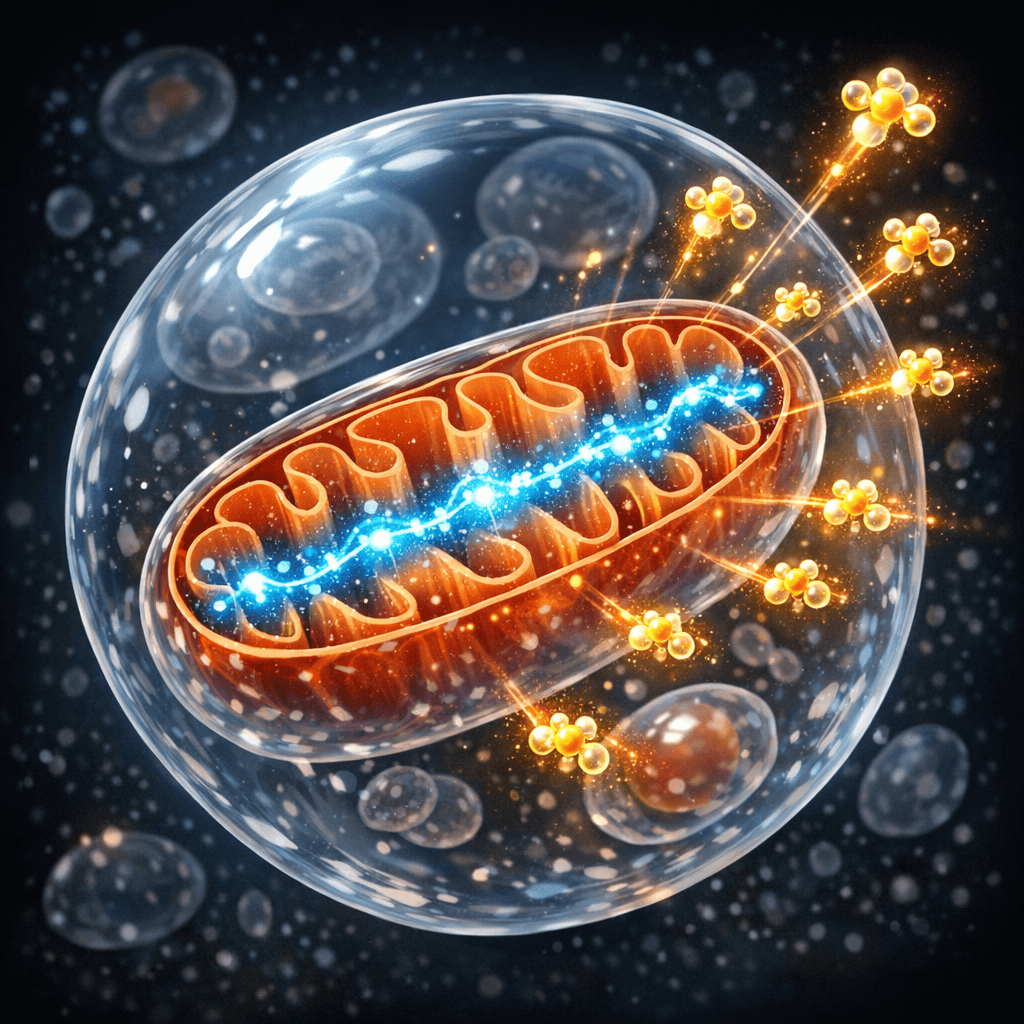

Your cells are burning through a molecule called NAD+ right now. Every time you think, move, digest food, or repair damaged tissue, your mitochondria are consuming it like a power plant burning fuel. The problem: NAD+ levels drop as you age, and your cells can’t easily make more from scratch. This is where NAD+ precursors like nicotinamide riboside enter the picture. They’re essentially shortcuts that let cells rebuild their energy reserves using a different metabolic pathway.
What is NAD+ and why does metabolism depend on it?
NAD+ stands for nicotinamide adenine dinucleotide. Think of it as a molecular shuttle bus. In your mitochondria, NAD+ doesn’t sit in one place. It constantly cycles between two forms: NAD+ (oxidised) and NADH (reduced). As electrons move through the electron transport chain, NAD+ picks up electrons and becomes NADH. Then it dumps those electrons and transforms back into NAD+. This cycling happens thousands of times per second in active cells.
Without enough NAD+, this cycle slows down. Your mitochondria can’t generate ATP (the actual energy currency) efficiently. Cells start rationing energy. They stop repairing proteins. They don’t clear out damaged components as aggressively. The whole operation becomes sluggish.
Here’s where precursors matter. NAD+ precursors are smaller molecules that cells can convert into NAD+ through well-defined biochemical pathways. Nicotinamide riboside is one such precursor. Others include nicotinamide mononucleotide and nicotinamide itself. These precursors bypass some of the metabolic steps required to synthesise NAD+ from scratch, making it easier for cells to replenish their NAD+ reserves.
What the research shows
In cell culture studies, researchers have observed that when they add NAD+ precursors to cells, NAD+ levels inside mitochondria increase measurably. This translates to more efficient ATP production. The electron transport chain runs faster. Mitochondrial oxygen consumption increases. In organisms ranging from yeast to mice, supplementing with NAD+ precursors has consistently raised cellular NAD+ levels.
The metabolic consequences are real but modest. Muscle cells treated with nicotinamide riboside show improved energy metabolism under stress. They recover faster from exhaustion. In ageing animal models, NAD+ precursor supplementation has been associated with improved mitochondrial function and reduced markers of cellular damage. Some research suggests improved oxygen utilisation during physical activity, though the effects vary depending on the tissue and the organism’s starting condition.
What’s striking is that NAD+ precursors don’t just boost energy production. They also enhance the activity of NAD+-dependent enzymes called sirtuins. Sirtuins are like cellular managers that sense energy status and adjust metabolism accordingly. They help coordinate responses to stress, inflammation, and ageing. When NAD+ levels climb, sirtuins become more active, triggering cascades of protective signalling throughout the cell.
Why cells need this mechanism
Evolution preserved NAD+ cycling because it’s extraordinarily efficient. The molecule isn’t consumed like glucose is. It’s recycled. One molecule of NAD+ can facilitate the transfer of millions of electron pairs before it’s broken down. But this recycling requires energy, and it requires the right precursors.
The NAD+ precursor pathway exists because cells sometimes face bottlenecks in de novo synthesis. Making NAD+ from tryptophan amino acids takes multiple enzymatic steps. It’s metabolically expensive. When cells are under stress, when they’re dividing rapidly, or when they’re ageing, these synthetic pathways can’t keep up with demand. Having an alternative route using simpler precursors provides metabolic flexibility. It’s a backup fuel line.
From an evolutionary perspective, this makes sense. Organisms that could maintain energy production during periods of nutrient scarcity or high metabolic demand would survive better. NAD+ precursor metabolism is one way cells solve that problem. It allows rapid NAD+ replenishment when circumstances demand it.
What affects NAD+ precursor metabolism
Age matters significantly. NAD+ levels naturally decline as organisms grow older. This isn’t mysterious. Cells gradually become less efficient at NAD+ synthesis, and certain NAD+-consuming enzymes become hyperactive. In older mice, the same dose of NAD+ precursor produces a more dramatic increase in cellular NAD+ than in younger animals, probably because older cells have more room to improve.
Physical activity influences NAD+ metabolism. Exercise stimulates demand for ATP, which in turn stimulates NAD+ recycling. Over time, regularly active individuals tend to maintain higher baseline NAD+ levels. Training also enhances the cells’ ability to uptake and utilise NAD+ precursors.
Diet plays a role. Some foods contain small amounts of NAD+ precursors. Mushrooms, chicken, and certain fermented foods contain nicotinamide riboside or related compounds in trace amounts. These contributions are minor compared to de novo synthesis, but they’re not zero. Caloric restriction has been shown to trigger compensatory increases in NAD+ synthesis, possibly as part of metabolic adaptation.
Mitochondrial function itself influences how efficiently precursors are converted into NAD+. Cells with damaged mitochondria can’t utilise precursors as effectively. The conversion enzymes require cofactors that depend on overall metabolic health. It’s a system where everything connects.
What remains unknown
Whether boosting NAD+ with precursors actually changes long-term health outcomes in humans remains an open question. Animal studies show promise, but translating this to human lifespan and disease prevention requires evidence we don’t yet have. Most human trials are small, short-term, or looking at specific tissues rather than whole-organism effects.
We also don’t fully understand tissue-specific responses. NAD+ precursors affect different cell types differently. Brain cells respond differently from muscle cells, which respond differently from liver cells. The reasons involve different metabolic demands, different enzyme expression patterns, and different NAD+ consumption rates. Mapping this landscape remains a work in progress.
The optimal dose, timing, and duration of NAD+ precursor exposure aren’t clearly defined. What’s enough to shift metabolism measurably? Is more always better, or is there a ceiling effect? Does taking precursors continuously work better than cycling on and off? These practical questions lack clear answers.
Finally, we’re still learning how NAD+ metabolism links to specific diseases and ageing processes. Correlation between NAD+ levels and healthy ageing exists, but causation remains murky. Does low NAD+ cause dysfunction, or does dysfunction lower NAD+? Often it’s both, creating feedback loops that are hard to untangle.
Understanding NAD+ precursor metabolism opens a window onto how cells regulate energy production in response to demand and stress. It’s not about miracle molecules. It’s about recognising that cellular energy systems have multiple pathways and that evolution built in redundancy and flexibility. As research continues, these insights will shape how we understand mitochondrial health, metabolic ageing, and the relationship between cellular energy and longer-term wellbeing.

Matt Elliott is the editor of Redox News Today, an independent publication covering peer-reviewed research on cellular health, redox signalling, and related biomedical science.