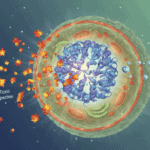

Your cells are constantly exposed to reactive oxygen species, the toxic byproducts of normal metabolism. When things go wrong, glutathione, the cell’s primary antioxidant defence molecule, gets oxidised in the process of neutralising these threats. But here’s the problem: oxidised glutathione accumulates like spent ammunition in the wrong compartment, and cells need to move it out quickly. That’s where SLC33A1 comes in, a transporter protein that acts like a cellular waste management system for oxidative debris.
What is SLC33A1
SLC33A1 belongs to a family of solute carriers, proteins embedded in cell membranes that ferry molecules across compartmental barriers. Think of it as a gatekeeper deciding what can move between the cytoplasm and the mitochondria, or between the endoplasmic reticulum and other cellular spaces. SLC33A1 specifically recognises and transports oxidised glutathione, known as GSSG, which is the spent form of the antioxidant glutathione after it’s donned its molecular armour and neutralised a free radical.
The transporter works bidirectionally depending on cellular conditions and energy gradients. This means it can move GSSG out of compartments where it’s accumulating or, in some contexts, direct it to specific locations where cells need to process or recycle it. The ability to shuttle GSSG between cellular spaces is essential because glutathione doesn’t freely cross membranes on its own. Without active transport, oxidised glutathione would get stuck in the wrong place, overwhelming local defences and triggering cellular stress signals.
What the research shows
When researchers examine cells lacking functional SLC33A1, they observe a striking accumulation of oxidised glutathione in mitochondria and endoplasmic reticulum compartments. Cells compensate poorly. The redox state of these compartments deteriorates, meaning the balance between reduced and oxidised glutathione tips dangerously toward the oxidised form. This imbalance triggers endoplasmic reticulum stress responses and mitochondrial dysfunction.
Studies using cell culture systems show that SLC33A1 activity increases when cells face oxidative challenge. The transporter upregulates at both the protein expression level and the functional level, suggesting cells recognise the need to evacuate GSSG more aggressively when oxidative stress peaks. Genetic manipulation that reduces SLC33A1 function makes cells more vulnerable to oxidative insult, while overexpression provides a degree of protection. In tissue models, SLC33A1 expression correlates with the ability to maintain glutathione homoeostasis across cellular compartments.
The transporter also links to broader cellular redox signalling. When oxidised glutathione accumulates unopposed, cells detect this state and activate stress response pathways. Proper SLC33A1 function keeps these alarm systems from firing constantly, allowing cells to maintain normal signalling and gene expression patterns.
Why cells need this
Compartmentalised antioxidant defence is why this matters. Mitochondria generate their own reactive oxygen species during energy production, so they maintain their own glutathione pools. The endoplasmic reticulum, where proteins fold and post-translational modifications occur, also needs local redox control. But these compartments can’t handle oxidised glutathione buildup on their own. They need to export the spent antioxidant to sites where cells can either reduce it back to active form or degrade it entirely.
Evolution preserved this transport system because compartmental oxidative stress creates a different problem than cytoplasmic oxidative stress. A mitochondrion drowning in GSSG can’t simply rely on cytoplasmic glutathione reductase enzymes to restore it. The mitochondrial membrane is impermeable to glutathione, oxidised or not. Cells needed a dedicated mechanism to manage GSSG traffic between these spaces, and SLC33A1 fills that role across multiple cell types.
The system also connects to cellular ageing and metabolic stress. As cells accumulate oxidative damage with age, their capacity to regenerate reduced glutathione diminishes. Transport systems like SLC33A1 become even more critical for preventing toxic accumulation of oxidised forms. This is why organisms that maintain better redox homeostasis, and therefore better SLC33A1 function, tend to show better stress resilience.
What affects SLC33A1
Oxidative stress itself is the primary driver of SLC33A1 upregulation. Cells responding to radiation, toxins, or metabolic overload increase transporter expression. Age influences function too. Older cells show altered SLC33A1 expression and activity, contributing to age-related redox imbalance. Whether this is cause or consequence remains debated, but the correlation is clear.
Nutritional status matters. Selenium, necessary for glutathione peroxidase synthesis, indirectly affects how much GSSG cells generate. Zinc supports multiple antioxidant enzymes. The availability of these micronutrients influences the workload on SLC33A1. Chronic inflammatory states, obesity, and metabolic disease all increase cellular oxidative burden, driving sustained elevation of GSSG export demands.
Cellular energy status also regulates the transporter. SLC33A1 may require or be inhibited by certain metabolic states. Cells in energy deficit may reallocate resources away from aggressive GSSG export. Exercise, fasting protocols, and metabolic switching all influence the cellular redox environment and therefore the pressure on glutathione transport systems. Some medications and environmental toxins can directly impair transporter function, creating secondary redox dysfunction independent of oxidative stress itself.
What remains unknown
The precise molecular mechanisms controlling SLC33A1 activity need more investigation. Researchers know stress increases expression, but the detailed signalling pathways sensing oxidative load and triggering transporter upregulation remain partially mapped. How different cells types regulate this transporter differently is another open question. A liver cell facing constant xenobiotic stress may deploy SLC33A1 differently than a neuron or immune cell.
The energetic cost of running this transporter system isn’t well characterised. Moving GSSG across membranes requires energy, either directly or through driving gradients. How much cellular ATP budget does this consume under different stress conditions? What happens to overall cellular efficiency when transport demands spike? These practical questions remain largely unaddressed.
The relationship between SLC33A1 function and disease outcomes is also incomplete. While researchers see associations between transporter dysfunction and various pathologies, cause and effect aren’t always clear. Does impaired SLC33A1 function contribute to disease, or does disease impair the transporter? Likely both, but separating these requires more targeted research. The role of this transporter in specific tissue contexts, particularly in the nervous system where redox balance is extremely tight, deserves more attention.
Understanding how cells move oxidised glutathione between compartments reveals something deeper about cellular organisation. Cells aren’t homogeneous chemical reactors; they’re compartmentalised systems where different regions maintain distinct redox environments. Transport proteins like SLC33A1 are the infrastructure maintaining these differences, solving problems that would be trivial in a test tube but essential in a living cell. As we map these transport systems in finer detail, we get closer to understanding how cells stay healthy under the constant bombardment of oxidative stress that comes with being alive.

Matt Elliott is the editor of Redox News Today, an independent publication covering peer-reviewed research on cellular health, redox signalling, and related biomedical science.