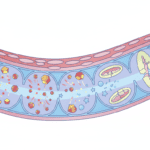

Your blood vessels are lined with a single layer of cells called endothelial cells. These cells sit at the boundary between your bloodstream and tissue, detecting chemical signals constantly. When you consume sucralose, a synthetic sweetener found in thousands of processed foods and drinks, those endothelial cells respond as if they’re under attack. They mount oxidative stress responses typically reserved for genuine threats like cigarette smoke or pollution.
This isn’t about sweeteners being “toxic” in the dramatic sense. It’s about something more subtle: how a molecule your body doesn’t naturally encounter triggers defence mechanisms that, if activated repeatedly, might have consequences worth understanding.
What is oxidative stress in blood vessel cells
Oxidative stress happens when cells generate more reactive oxygen species (ROS) than they can neutralise. Think of ROS as highly reactive molecules that will damage almost anything they touch: proteins, DNA, fats in cell membranes. Cells normally produce ROS as a byproduct of energy metabolism. They also deliberately generate ROS as part of their immune defence. But when production exceeds the cell’s ability to neutralise these molecules, damage accumulates.
Endothelial cells have particularly good reason to keep ROS under control. Oxidative stress in blood vessel cells is linked to inflammation, reduced ability to produce nitric oxide (a critical vasodilator), and increased permeability. When endothelial cells are stressed, the blood vessel wall becomes leakier. Blood pressure regulation gets compromised. The whole vascular system becomes more inflamed.
Your cells deploy antioxidant defences against ROS: enzymes like superoxide dismutase and catalase, and molecules like glutathione. When ROS levels spike, cells activate stress response pathways that ramp up production of these defences. It’s a managed crisis response, but it requires energy and resources.
What the research shows
Studies examining sucralose’s effects on cultured endothelial cells consistently show the same pattern. When researchers expose these cells to sucralose at concentrations comparable to what a frequent consumer might experience, the cells detect a threat and activate oxidative stress response pathways. ROS levels increase. Antioxidant enzyme activity rises. Markers of cellular stress appear.
What makes this interesting is the specificity. Sucralose doesn’t just damage cells randomly. It triggers signalling cascades that cells recognise as oxidative insults. The cells respond with targeted defences. This is different from a direct toxic assault. It’s more like pressing an alarm button repeatedly, and the building’s emergency systems responding every time.
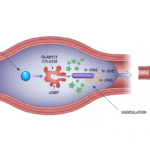
The stress responses observed include activation of NADPH oxidase, an enzyme that deliberately generates ROS as part of cell signalling. Researchers also observe increased expression of antioxidant genes, indicating the cells are trying to mount a defence. In some studies, endothelial cells exposed to sucralose show reduced capacity to produce nitric oxide, suggesting functional impairment even when cells survive the exposure.
Not all sweeteners trigger these responses equally. Glucose and fructose, though they present their own challenges to cellular metabolism, don’t activate the same oxidative stress pathways in endothelial cells that sucralose does. This suggests something specific about sucralose’s chemical structure triggers this particular danger signal.
Why cells need this stress response
The ability to detect oxidative stress and mount a defence response exists because cells face genuine threats. Pathogens, pollutants, and metabolic byproducts all generate ROS. Cells that can detect this and respond survive. Cells that can’t get damaged and die. Evolution preserved this signalling system across billions of years because it works.
But the system assumes threats are occasional. A cell under brief oxidative stress uses this response to shore up defences, repair damage, and return to baseline. The problem arises when the signal keeps arriving. Chronic activation of stress responses exhausts cellular resources. Inflammation becomes persistent. The normal shutdown mechanisms that end a stress response get overwhelmed.
Endothelial cells especially can’t afford chronic stress. They’re thin, specialised, and dependent on tight metabolic control. A blood vessel lining constantly deploying emergency defences is a blood vessel that functions poorly.
What affects how strongly cells respond
The concentration matters enormously. In laboratory studies, cells exposed to high concentrations of sucralose show more dramatic stress responses than those exposed to lower concentrations. But “high” is relative. Some studies show detectable responses at concentrations that frequent consumers might achieve.
Baseline antioxidant status in the cell makes a difference. Cells with robust antioxidant defences can handle more ROS before stress responses become overwhelmed. Cells from older organisms often have reduced antioxidant capacity. Similarly, cells from individuals with existing oxidative stress (from smoking, poor diet, or high activity levels) start from a compromised position.
Frequency and duration of exposure matter. A single exposure triggers a response, but cells can recover. Repeated exposures, especially if they don’t allow full recovery between incidents, can shift cells toward a chronically stressed state. Someone drinking sucralose daily faces a different cellular scenario than someone consuming it occasionally.
The presence of other stressors amplifies effects. A cell already dealing with oxidative stress from exercise or inflammation will respond more dramatically to sucralose exposure than a cell in a quiescent state. This is why effects might vary based on someone’s overall health and lifestyle.
What remains unknown
Laboratory studies of cultured cells are revealing, but they’re not people. Researchers still don’t know how sucralose exposure affects living organisms at typical consumption levels over time. Animal studies exist, but translating those to human consumption and timescales remains difficult. We don’t know whether the stress responses observed in cell culture actually occur in intact blood vessels in living people.
The mechanism isn’t fully mapped. Scientists recognise that sucralose triggers oxidative stress signalling in endothelial cells, but the initial step, the actual molecular interaction that sets everything off, remains unclear. Does sucralose interfere with mitochondrial function? Does it interact with specific receptors? These details matter for understanding whether the effect is specific to sucralose or shared by other sweeteners.
Long-term consequences remain speculative. If blood vessel cells are chronically stressed, does this contribute to endothelial dysfunction that accumulates over years? Does it increase cardiovascular risk? Laboratory work suggests plausibility, but human studies examining this directly don’t yet exist. Researchers also don’t know whether individual variation in cellular stress response capacity predicts who might be more affected by sweetener consumption.
What about other artificial sweeteners
Sucralose is one sweetener among several. Aspartame, saccharin, and stevia each have different chemical structures. Early evidence suggests they may not all trigger identical stress responses in endothelial cells, though research is limited. This matters because blanket recommendations about artificial sweeteners miss important specificity. The cellular effects of one sweetener don’t necessarily apply to another.
Understanding how cells respond to novel chemical exposures points to something broader in cellular biology: the recognition that your cells evolved to handle natural molecules. When you introduce synthetic molecules at scale and frequency that never existed in human evolution, you’re asking cells to process something their signalling systems may not recognise as safe. Sometimes cells respond with appropriate alarm. Understanding when and why that happens is what research like this reveals.

Matt Elliott is the editor of Redox News Today, an independent publication covering peer-reviewed research on cellular health, redox signalling, and related biomedical science.