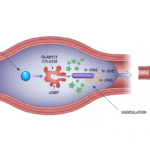

Your brain’s blood vessels handle millions of molecules every second, deciding what gets through the blood-brain barrier and what stays out. Among these molecules, erythritol has caught researchers’ attention for an unexpected reason: this popular sugar substitute doesn’t just pass through these vessels harmlessly. It appears to trigger specific oxidative stress responses in the endothelial cells that line brain blood vessels.
What is erythritol’s effect on brain vascular cells
Erythritol belongs to a family of sugar alcohols called polyols. Unlike regular sugar, it provides almost no calories because human cells can’t break it down efficiently. But this inability to metabolise erythritol doesn’t mean cells ignore it entirely.
When erythritol encounters the endothelial cells that form the inner lining of brain blood vessels, something interesting happens. These cells detect the molecule and respond by altering their oxidative stress pathways. The endothelium acts like a selective gatekeeper, controlling what enters brain tissue from the bloodstream, and erythritol seems to influence how well this system functions.
Brain endothelial cells maintain tight junctions between themselves, creating the blood-brain barrier. This barrier relies on precise cellular signalling to function properly. When erythritol interacts with these cells, it can shift the balance between reactive oxygen species production and the cellular antioxidant defence systems.
What the research shows
Laboratory studies reveal that erythritol exposure increases reactive oxygen species production in cultured brain endothelial cells. Researchers observe higher levels of superoxide and hydrogen peroxide within hours of erythritol treatment. This isn’t necessarily damage, but rather a cellular response.
The cells don’t remain passive. They activate several antioxidant pathways in response, including increased activity of catalase and superoxide dismutase enzymes. Scientists have measured changes in gene expression for proteins involved in oxidative stress defence, suggesting the cells are mounting an organised response rather than simply being overwhelmed.
Concentrations matter significantly. At levels that might occur after consuming erythritol-sweetened products, the oxidative changes are measurable but moderate. Higher concentrations produce more pronounced effects, indicating a dose-dependent relationship between erythritol exposure and cellular oxidative stress responses.
The timing of these changes also tells a story. Peak reactive oxygen species production occurs within the first few hours, followed by upregulation of antioxidant defences. This suggests brain endothelial cells can adapt to erythritol presence, though the long-term implications remain unclear.
Why cells need this response system
Endothelial cells evolved sophisticated oxidative stress responses because they face constant challenges. Blood carries everything from nutrients to toxins, and brain blood vessels must maintain their protective function while allowing necessary molecules through.
Reactive oxygen species aren’t always harmful. At moderate levels, they serve as signalling molecules that help cells communicate and adapt to changing conditions. When brain endothelial cells encounter unfamiliar molecules like erythritol, generating controlled amounts of reactive oxygen species might help them assess and respond to the new chemical environment.
The blood-brain barrier’s tight regulation requires cells to constantly monitor their surroundings. Oxidative stress pathways provide one mechanism for detecting changes and adjusting cellular behaviour accordingly. This system allows endothelial cells to maintain barrier integrity while remaining flexible enough to respond to different molecular challenges.
Evolution preserved these oxidative stress response systems because they help cells survive in dynamic environments. Brain blood vessels, in particular, need robust defence mechanisms to protect neural tissue from potentially harmful substances while ensuring adequate nutrient delivery.
What affects erythritol’s cellular impact
The concentration of erythritol reaching brain blood vessels depends on consumption patterns. Eating erythritol-sweetened foods produces different blood levels than consuming pure erythritol powder. Food matrix effects can slow absorption and reduce peak concentrations.
Individual metabolism varies considerably. Some people process sugar alcohols more efficiently than others, leading to different circulating levels after consumption. Genetic variations in transport proteins and metabolic enzymes contribute to this individual variability.
Age appears to influence how endothelial cells respond to erythritol. Older endothelial cells often have less robust antioxidant defence systems, potentially making them more sensitive to oxidative stress triggers. Research suggests that cellular age affects both the magnitude and duration of erythritol-induced oxidative responses.
Existing oxidative stress levels matter too. Cells already dealing with high oxidative loads might respond differently to erythritol than healthy, unstressed cells. Factors like diet, exercise, sleep quality, and environmental exposures all influence baseline oxidative stress in vascular cells.
What remains unknown
Researchers still puzzle over whether erythritol’s effects on brain endothelial oxidative stress pathways represent adaptation or stress. The cellular responses observed in laboratory studies might be protective adjustments rather than signs of harm, but distinguishing between these possibilities requires more investigation.
Long-term consequences remain largely unexplored. Most studies examine acute effects over hours or days, leaving questions about what happens with regular, repeated erythritol exposure over months or years. Do cells develop tolerance, or do the oxidative stress responses accumulate over time?
The relationship between laboratory findings and real-world consumption patterns needs clarification. Cell culture studies use controlled conditions that don’t perfectly replicate the complex environment of living brain blood vessels. How erythritol behaves in the presence of other dietary compounds, medications, and physiological variables remains uncertain.
Individual variation in response appears substantial, but researchers haven’t identified all the factors that determine sensitivity to erythritol’s oxidative effects. Understanding these differences could help explain why some people seem to tolerate sugar alcohols better than others.
The specific mechanisms by which erythritol triggers oxidative stress responses in brain endothelial cells aren’t fully mapped. Scientists know the outcomes but are still working out the detailed molecular pathways involved.
This research opens a window into how modern food ingredients interact with our most protected biological barriers. As we consume more novel compounds that didn’t exist in human diets historically, understanding their cellular effects becomes increasingly relevant. The brain’s blood vessels, with their critical protective role and sophisticated response systems, serve as sensitive indicators of how our cells adapt to the chemical complexity of contemporary nutrition.

Matt Elliott is the editor of Redox News Today, an independent publication covering peer-reviewed research on cellular health, redox signalling, and related biomedical science.