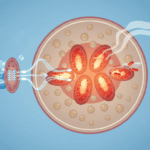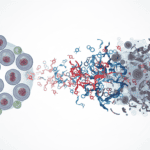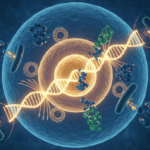

A 25-year-old heals from a cut in days. A 75-year-old takes weeks, sometimes months. The difference isn’t just skin deep. Deep inside bone marrow, muscle tissue, and fat deposits, stem cells are ageing faster than the organs they’re meant to regenerate. These cells gradually lose their vigour, dividing less often and making fewer replacement cells. Understanding why this happens might seem like esoteric biology. It’s actually the foundation of why our bodies simply can’t bounce back the way they used to.
What is stem cell ageing
Stem cells are the body’s repair crew. They sit in tissues waiting for a signal that something needs fixing, then they spring into action: dividing rapidly, differentiating into specialised cells, and replacing whatever got damaged. A young person’s stem cells do this efficiently. They divide without much hesitation and produce functional daughter cells that integrate into the tissue and work properly.
But stem cells age. As they do, several things happen simultaneously. They divide less frequently, entering a state researchers call quiescence where they just sit around rather than respond to repair signals. The cells that do divide produce weaker, more error-prone copies. And the stem cells themselves accumulate damage at the molecular level: mutations in their DNA, degraded proteins, malfunctioning mitochondria. The overall result is the same in every tissue: slower healing, weaker regeneration, reduced capacity to replace lost cells.
This isn’t about stem cells becoming bad at their job. It’s about the cellular machinery that runs them gradually breaking down under decades of use.
What the research shows
Scientists studying ageing stem cells have mapped out several key mechanisms that drive this decline. One of the most consistent findings involves mitochondrial dysfunction. Young stem cells maintain healthy mitochondria that produce energy efficiently. As cells age, these mitochondria accumulate mutations and produce less ATP (the cell’s energy currency) while generating more reactive oxygen species, which are cellular waste products that cause damage. Starved of energy, stem cells can’t sustain the high metabolic demand of frequent division.
Another major mechanism involves changes to how genes are controlled. Stem cells use epigenetic signalling (chemical tags on DNA that don’t alter the genetic code itself) to switch genes on and off. In young cells, this system works like a finely tuned orchestra. With age, these signalling pathways deteriorate. Genes that should stay active get silenced. Genes that should stay quiet get activated. The result is a stem cell that’s confused about what it’s supposed to do.
A third factor is senescence, where stem cells enter a permanent state of growth arrest. Rather than dying outright, these cells linger, consuming resources and secreting inflammatory molecules that damage nearby healthy cells. The immune system’s ability to clear out these senescent cells also declines with age, so they accumulate over time.
Research on old versus young stem cells reveals something telling: when scientists take stem cells from a young animal and place them in an old animal’s environment, they age prematurely. When old stem cells are placed in a young animal’s environment, they partially recover their function. This tells us the surrounding tissue environment matters enormously, not just the stem cells themselves.
Why cells need this mechanism
This seems backwards at first. Why would evolution allow stem cells to deteriorate? The answer lies in understanding what those cells are actually doing over a lifetime.
Stem cells that divide constantly accumulate mutations. This is essentially inevitable. Each time DNA replicates, errors slip in. A young person can tolerate this because they have decades before those mutations cause problems. But a stem cell that kept dividing at high capacity for 50 years straight would accumulate so many mutations it would likely become cancerous. So the body has built-in brakes. Stem cells slow down with age. They divide less. They’re more cautious about proliferation.
This is actually a defence mechanism against cancer, not a design flaw. The cost of that protection is slower regeneration. Your body has made a trade-off: accept slower healing in exchange for not filling your tissues with mutant cells. From an evolutionary perspective, this makes sense. Cancer is an immediate death threat. Poor wound healing at age 70 is annoying but not fatal to reproduction.
The mitochondrial decline serves a similar purpose. Mitochondria with mutations that reduce ATP production also tend to produce reactive oxygen species, which trigger cell death or senescence. In a young person, this clears out potentially dangerous cells. In an old person, it just slows everything down.
What affects stem cell ageing
Stem cell function doesn’t age at a fixed rate. Several factors measurably speed up or slow down the process.
Physical exercise appears to maintain better stem cell function, particularly in muscle tissue. When animals exercise regularly, their muscle stem cells retain more mitochondrial health and divide more readily. The effect isn’t small either: elderly people who exercise regularly show regenerative capacity closer to young sedentary people than to their age-matched peers who don’t move much.
Caloric restriction and certain fasting protocols seem to improve stem cell function across multiple tissues. The mechanism isn’t fully understood but probably involves reduced oxidative stress and improved cellular housekeeping. When cells aren’t constantly being flooded with calories, they apparently do a better job maintaining their mitochondria and clearing out damaged proteins.
Diet composition matters too. High sugar intake correlates with accelerated stem cell dysfunction. Chronic inflammation from poor diet, obesity, or persistent infection degrades the tissue environment that stem cells live in, making them less responsive to repair signals even if the cells themselves remain intact.
Sleep quality influences this. During sleep, cells activate cleanup pathways that repair mitochondrial damage and clear senescent cells. Chronic poor sleep leads to accumulation of damaged stem cells. Stress hormones, particularly cortisol when elevated long-term, suppress stem cell proliferation and accelerate senescence.
What remains unknown
Despite decades of research, scientists still can’t fully reverse aged stem cell function. They can slow it down in experiments. They can partially restore function by changing the cellular environment. But taking a truly old stem cell and making it behave like a young one remains elusive.
Researchers don’t yet understand why different tissues age at different rates. Stem cells in the gut regenerate rapidly throughout life, maintaining function into old age. Hair follicle stem cells accumulate mutations faster and show earlier decline. Why? The answers probably involve differences in tissue turnover rates, the local tissue environment, and oxygen levels, but the exact mechanisms remain unclear.
The role of cellular senescence in stem cell ageing is still being worked out too. These half-dead cells clearly contribute to the problem, but clearing them completely might have trade-offs nobody’s discovered yet. And the interaction between stem cell ageing and the immune system’s own decline is remarkably understudied for something so important.
Researchers are also still puzzling over why some interventions that theoretically should improve stem cell function (like certain antioxidants) sometimes backfire or show no benefit. It suggests the mechanisms driving stem cell ageing are more redundant and interconnected than current models capture.
What’s becoming clear is that stem cell ageing isn’t a single process but a cascade of deteriorating systems, each partially compensating for failures in the others. Fixing one thing might just shift the problem elsewhere. Understanding that complexity is probably the first step toward actually doing something about it.

Matt Elliott is the editor of Redox News Today, an independent publication covering peer-reviewed research on cellular health, redox signalling, and related biomedical science.