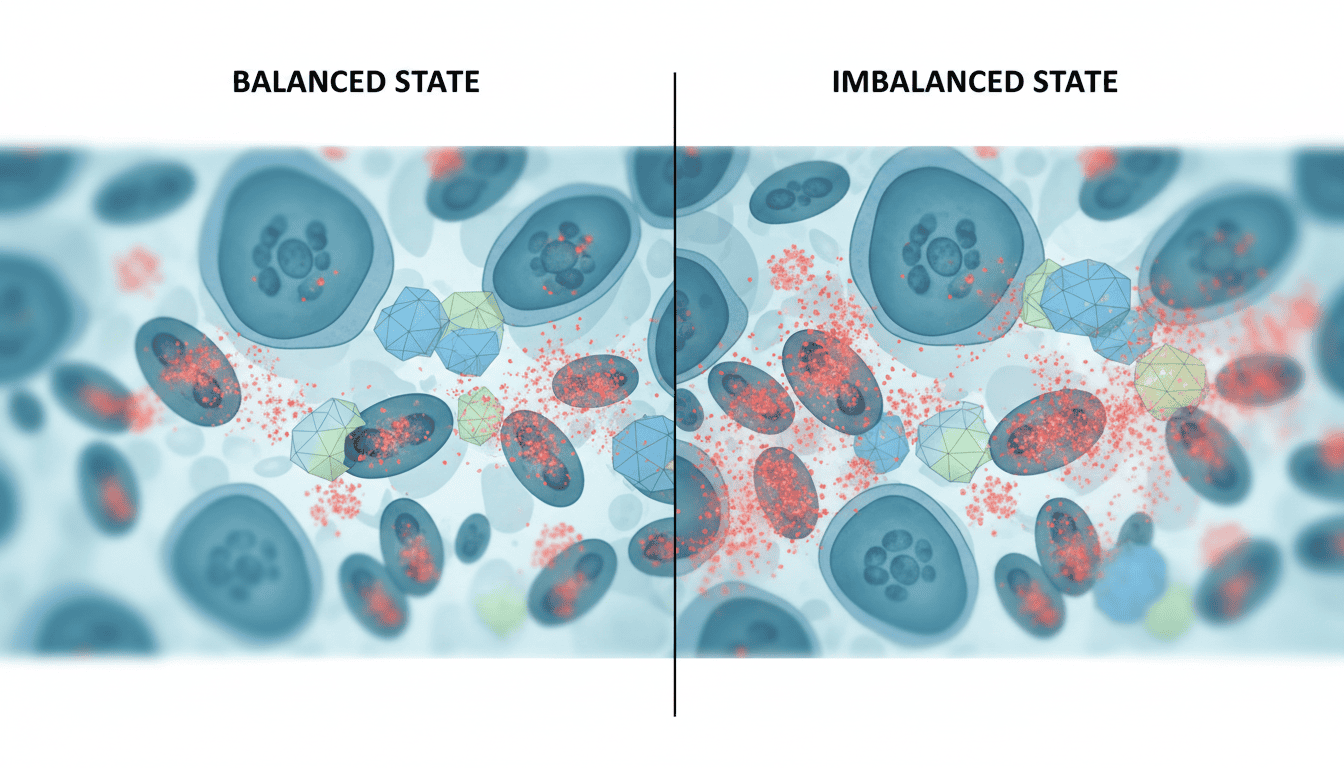
A pregnant woman’s body is performing a metabolic high wire act. Her cells are burning through oxygen at rates that would normally trigger alarm bells, yet most pregnancies proceed without incident. But when the balance tips, when cells generate more reactive oxygen than they can neutralise, pregnancy complications emerge. Preeclampsia, gestational diabetes, miscarriage, poor fetal growth. The common thread running through many of these conditions is oxidative stress, a cellular imbalance that’s only now becoming clear as a central player in pregnancy health.
What is oxidative stress
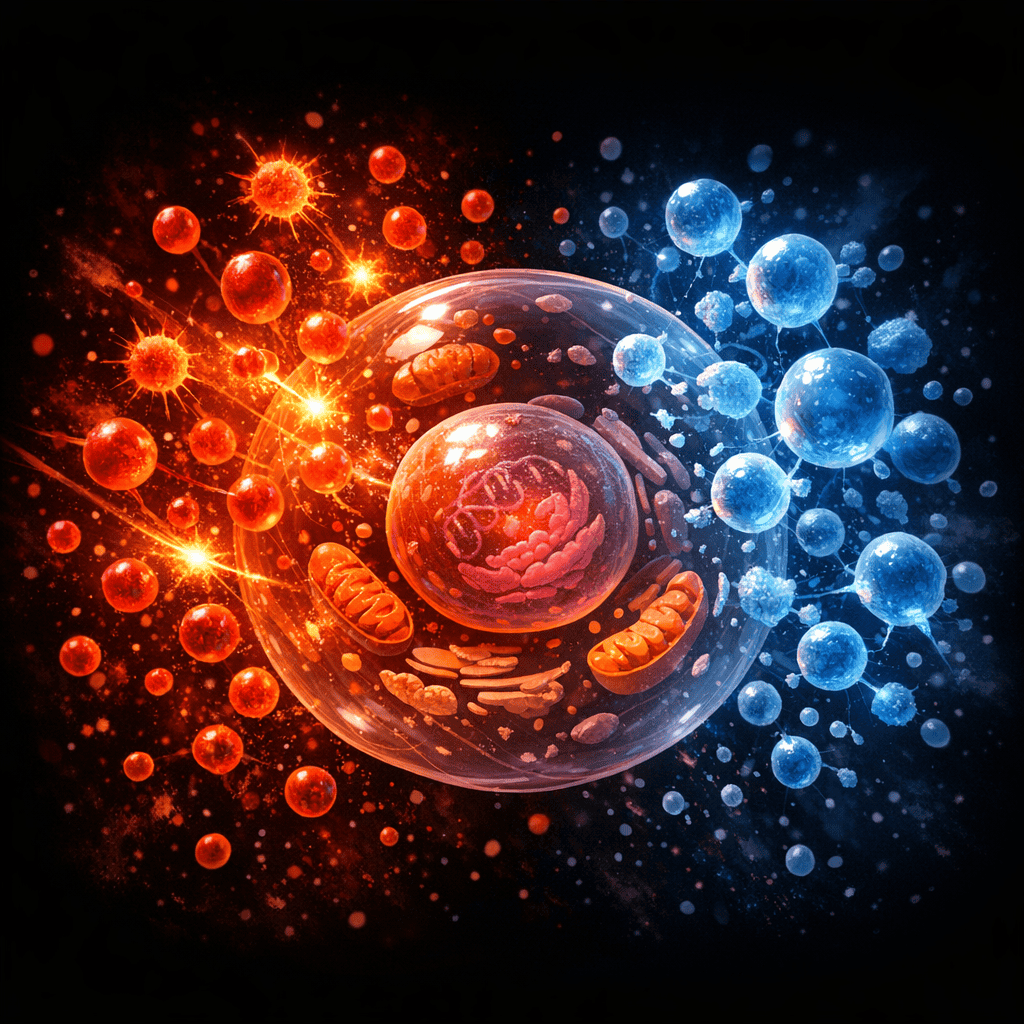
Oxidative stress occurs when cells generate reactive oxygen species (ROS) faster than they can neutralise them. Think of ROS as chemically aggressive molecules produced during normal energy production in mitochondria. They’re like sparks from a fire. Under normal circumstances, antioxidant systems catch and neutralise those sparks before they damage anything. Enzymes like superoxide dismutase and catalase work constantly, along with molecules like glutathione, to keep ROS levels in check.
When this system fails to keep pace, ROS begins attacking the machinery inside cells. They damage proteins, corrupt DNA, and destabilise the membranes that hold organelles together. The cell responds with inflammation and stress signalling. In a healthy pregnancy, the placenta manages this carefully. It exists in a state of controlled oxidative stress, which actually drives some important biological processes. But push it too far and protection becomes damage.
What the research shows
Studies consistently demonstrate that women experiencing pregnancy complications show elevated markers of oxidative stress in blood and placental tissue. Preeclampsia, a dangerous condition characterised by high blood pressure and protein in urine, correlates with reduced antioxidant capacity. Placental cells from these pregnancies show signs of oxidative damage: lipid peroxidation, protein carbonylation, altered mitochondrial function.
Women with gestational diabetes display similar patterns. Their placental tissue shows increased ROS production and decreased antioxidant enzyme activity compared to uncomplicated pregnancies. Miscarriage and intrauterine growth restriction also correlate with oxidative stress markers, though the timeline varies. Early pregnancy losses sometimes involve acute oxidative damage in the developing embryo, whilst late-pregnancy growth restriction reflects chronic placental oxidative stress.
Interestingly, the relationship isn’t simply linear. Some oxidative stress is necessary. The placenta requires ROS signalling to regulate angiogenesis, the formation of new blood vessels that nourish the developing fetus. Animal studies show that completely blocking antioxidant defence systems impairs placental development. The problem emerges when production outpaces the system’s capacity to manage it.
Why cells need this system in pregnancy
Pregnancy demands extraordinary metabolic flexibility from the body. Placental cells must simultaneously build new structures, transport nutrients across barriers, and produce hormones that reshape the mother’s entire physiology. All this activity generates oxygen free radicals at high rates. The antioxidant system exists to keep this metabolically intensive process from spinning out of control.
Evolution has calibrated this balance carefully. The placenta produces its own antioxidant enzymes at higher levels than most tissues. Maternal blood also supplies antioxidant compounds like vitamin C and alpha-tocopherol that cross into placental tissue. This dual defence system appears designed specifically to manage pregnancy’s metabolic demands. When either component weakens, the whole system becomes vulnerable to oxidative damage.
The biological logic extends to fetal development itself. The developing fetus exists in a relatively low-oxygen environment compared to postnatal life, which is protective. But as the placenta expands and the fetus grows, oxygen delivery increases. Managing this transition without triggering excessive oxidative stress is part of healthy fetal development. Complications arise when placental dysfunction impairs either the antioxidant defence or the oxygen delivery itself.
What affects oxidative stress in pregnancy
Maternal diet influences antioxidant capacity significantly. Women consuming diets rich in polyphenols, carotenoids, and vitamins C and E show better antioxidant defence in pregnancy. These dietary compounds upregulate the expression of antioxidant genes. Conversely, diets high in processed foods and low in plant compounds correlate with reduced antioxidant enzyme activity.
Maternal age affects this system too. Older maternal age associates with higher baseline oxidative stress and reduced antioxidant enzyme expression, independent of other health factors. This may partly explain why advanced maternal age increases risk for conditions like preeclampsia. Pre-existing metabolic conditions matter enormously. Women with obesity or type 2 diabetes enter pregnancy with already-compromised antioxidant systems. Their mitochondria generate more ROS, their antioxidant enzymes express at lower levels, and their tissues show baseline inflammation.
Environmental factors contribute as well. Smoking during pregnancy dramatically increases oxidative stress in the placenta. Air pollution exposure, measured by particulate matter, correlates with reduced antioxidant capacity. Sleep quality and chronic stress also influence the system through neuroendocrine pathways. Poor sleep reduces antioxidant gene expression. Chronic stress elevates cortisol, which paradoxically can suppress antioxidant defences over time.
Infections during pregnancy represent another trigger. Viral or bacterial infections that activate the immune system increase ROS production, pushing marginal antioxidant systems into deficit. This may explain why certain infections associate with pregnancy complications and poor fetal outcomes.
What remains unknown
Scientists still can’t predict which individual women will experience excessive oxidative stress during pregnancy. We lack reliable clinical biomarkers that identify at-risk pregnancies early enough to intervene. Current research focuses on identifying whether combinations of biomarkers might work better than single measurements.
The timing question also remains unclear. For conditions like preeclampsia, does oxidative stress drive the disease, or does placental dysfunction caused by other factors trigger oxidative stress secondarily? The answer matters for prevention strategies, but untangling cause from consequence has proven difficult.
Researchers are investigating whether targeted antioxidant interventions might prevent complications in high-risk women. Early trials of antioxidant supplementation showed mixed results, which suggests the biology is more nuanced than simple antioxidant supplementation. The challenge is that too much antioxidant activity can actually interfere with beneficial oxidative signalling. Getting the balance right appears to require precision that current interventions don’t achieve.
Sex differences in antioxidant defence during pregnancy also remain poorly understood. Female hormones influence antioxidant enzyme expression, but exactly how these changes support pregnancy remains incompletely characterised.
Understanding oxidative stress in pregnancy reveals how tightly the developing fetus depends on the precise cellular regulation of its mother’s tissues. It’s not merely about avoiding damage, but about maintaining a dynamic equilibrium where controlled oxidative stress signals necessary biological processes whilst preventing it from escalating into pathology. This balance, achieved through hundreds of millions of years of evolution, remains one of biology’s most delicate acts.

Matt Elliott is the editor of Redox News Today, an independent publication covering peer-reviewed research on cellular health, redox signalling, and related biomedical science.