
Your cells operate within a narrow pH range. Stray too far into acidity and something breaks. Not something small either, but fundamental processes that keep your cells alive and functioning. When intracellular pH drops, cells don’t just experience mild discomfort. They trigger a cascade where oxidative stress floods the environment and the nucleolus, the structure responsible for building the machinery of protein synthesis, begins to malfunction. This isn’t a hypothetical problem. It happens in ageing cells, inflamed tissues, and stressed organs. Understanding how this acidic spiral works is helping researchers see how multiple forms of cellular damage connect.
What is cellular acidification and oxidative stress
Cells maintain their pH through careful balance. Various proteins and buffer systems work constantly to keep the interior slightly alkaline, around pH 7.2 to 7.4. This balance matters because enzymes work best within specific pH ranges. They fold correctly, bind to their targets, and function as intended only when conditions are just right.
Oxidative stress occurs when cells produce reactive oxygen species (ROS) faster than they can neutralise them. These are unstable molecules with unpaired electrons that damage proteins, lipids, and DNA by stealing electrons through chemical reactions. Normally, cells have multiple defences: enzymes like superoxide dismutase and catalase, and molecules like glutathione act as antioxidants, mopping up these reactive species before they cause harm.
When cells become acidic, this protective system weakens. The acidic environment itself disrupts how antioxidant enzymes function. At the same time, acidification activates machinery that produces more ROS, essentially removing the fire extinguisher while turning up the heat. The nucleolus, a distinct region within the nucleus where ribosomal RNA is synthesized and ribosomal proteins are assembled, proves particularly vulnerable. This structure has no protective membrane of its own. When pH drops and oxidative stress rises, the nucleolus loses structural integrity and its synthesis machinery stutters or stops.
What the research shows
Studies examining cells exposed to controlled acidification reveal a predictable pattern. As pH drops from normal levels toward more acidic conditions, cells show increased production of superoxide and hydrogen peroxide within minutes. These ROS accumulate because antioxidant enzyme activity declines at lower pH values. Specifically, researchers observe that the genes controlling these protective enzymes show reduced expression when cells detect acidic conditions.
The nucleolus responds quickly to this stress. Electron microscopy shows that acidified cells develop abnormal nucleolar structure. The normally dense, organised fibrillar centres become disrupted. Quantitative measurements show reduced synthesis of ribosomal RNA. Cells also display markers of nucleolar dysfunction including release of nucleolar proteins into the nucleoplasm, where they accumulate abnormally. This isn’t just structural disarray. Functional tests reveal that ribosomes produced under these conditions are fewer and often improperly assembled.
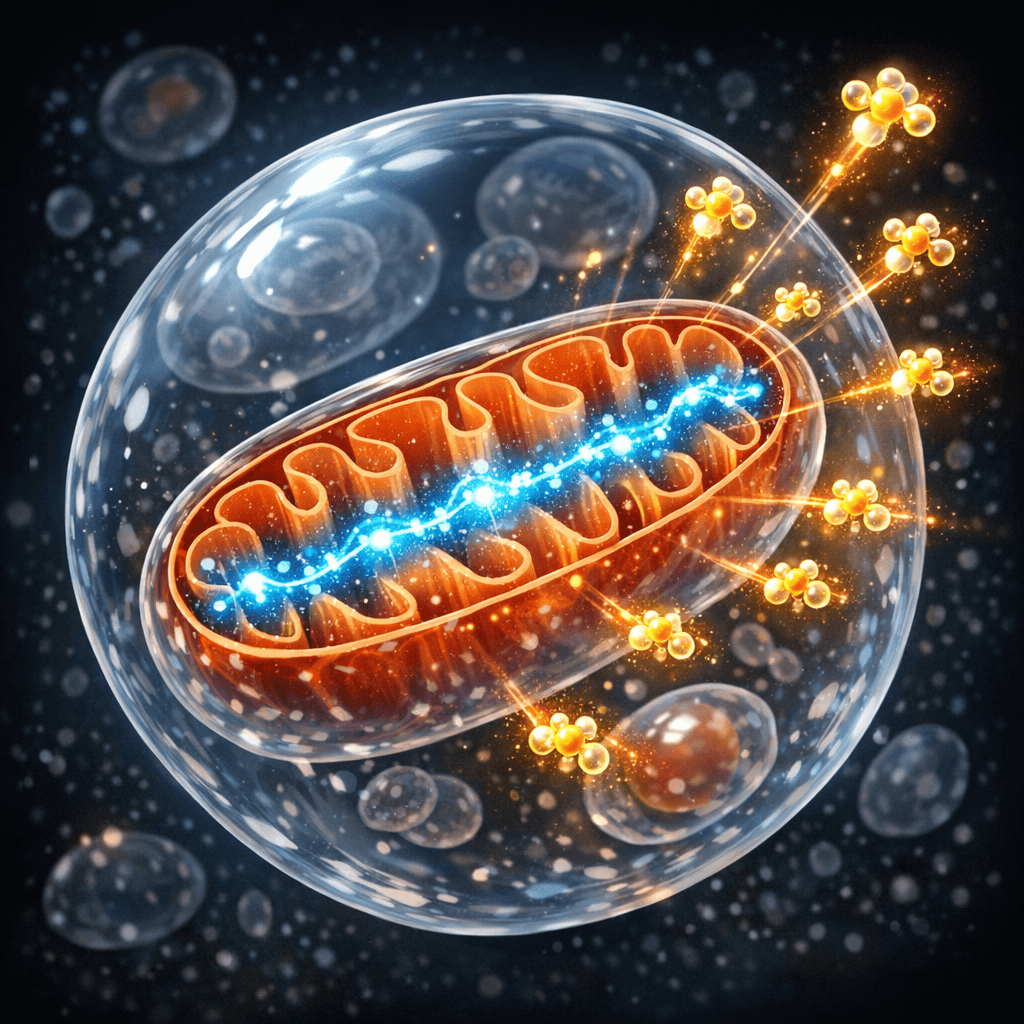
Researchers have identified that acidification affects the redox balance through multiple pathways. Iron storage proteins release their iron when pH drops, and free iron catalyses the Fenton reaction, which converts hydrogen peroxide into highly reactive hydroxyl radicals. This amplifies oxidative damage. Meanwhile, mitochondrial function deteriorates as pH shifts, leading to increased ROS production from the electron transport chain. The combination creates a self-reinforcing cycle where acidification drives oxidative stress, which further impairs the cellular pH buffering systems.
Why cells need pH control and antioxidant defences
Evolution preserved these mechanisms because they work. Maintaining proper pH allows enzymes to fold correctly and maintain their three-dimensional shapes. When structure is right, function follows. The antioxidant defence system evolved because organisms that could neutralise ROS lived longer and reproduced more successfully. Oxidative damage accumulates over time, and without these defences, cells would essentially rust from the inside.
The nucleolus’s sensitivity to pH and oxidative stress makes sense biologically. Ribosomal RNA is one of the most heavily synthesised molecules in growing or active cells. A cell producing thousands of new ribosomes simultaneously must operate in a highly controlled chemical environment. The nucleolus has minimal redundancy. If synthesis stalls, the cell quickly faces a protein production crisis. By being sensitive to stress signals like acidification, the nucleolus acts like an early warning system. When conditions degrade, it stops making new ribosomes, conserving energy and resources until conditions improve.
This stress response makes sense at moderate levels. A temporary shutdown of ribosomal synthesis during stress conserves cellular resources for survival functions. But prolonged acidification with sustained oxidative stress leads to permanent damage. The protective systems that normally allow recovery begin failing, and the cell edges toward dysfunction or death.
What affects cellular pH and oxidative stress
Lactate accumulation is a major driver of intracellular acidification. During intense exercise or in tissues with limited oxygen, cells produce lactate through anaerobic metabolism. This lactate enters cells and can lower intracellular pH. Tumours, which grow rapidly and often lack sufficient blood supply, accumulate lactate in their microenvironment, creating chronically acidic conditions that drive oxidative stress.
Metabolic dysfunction shifts the balance too. Mitochondrial impairment reduces the cell’s ability to generate ATP efficiently, compromising the energy-dependent pumps that maintain pH gradients. Inflammatory conditions expose cells to cytokines and signalling molecules that increase ROS production while simultaneously impairing pH regulation. Ageing cells show declining antioxidant enzyme expression and reduced buffering capacity, making them more susceptible to pH swings.
Diet influences oxidative stress levels through multiple routes. High intake of certain oxidisable compounds and reduced intake of compounds that support antioxidant defences shifts the balance toward excess ROS. Conversely, compounds that support glutathione synthesis or antioxidant enzyme expression help maintain the ability to cope with oxidative stress.
Physical activity influences both pH regulation and antioxidant capacity. Regular exercise improves mitochondrial function and increases expression of antioxidant enzymes, building cellular resilience. Chronic stress activates inflammatory pathways that increase ROS production and impair pH buffering.
What remains unknown
Scientists still don’t fully understand why different cell types show different sensitivity to acidification. Some cells tolerate pH changes that would devastate others. The molecular basis for this variation remains unclear. Do certain cells express pH sensing proteins more effectively? Do they maintain better antioxidant defences? Research is ongoing.
The question of reversibility also remains partially open. Mild acidification appears reversible if the stress is removed and cells are given time to recover. But how much oxidative damage is needed to cross a threshold into irreversible harm? What determines whether a stressed nucleolus regains function or becomes permanently impaired? These answers matter for understanding tissue repair and recovery from various forms of cellular stress.
Researchers are also working to understand whether acidification directly damages nucleolar structures or acts primarily through increasing oxidative stress. Evidence suggests both mechanisms operate, but the relative contribution varies with the severity and duration of the pH change. Untangling these pathways could reveal new intervention points.
The connection between local tissue acidification and systemic aging remains incompletely mapped. Do chronic acid exposures in specific tissues drive systemic decline? Can improving pH regulation in one tissue improve function elsewhere?
Understanding cellular acidification and its role in triggering oxidative stress and nucleolar dysfunction points toward a central principle in cellular biology: cells exist within narrow operating parameters, and multiple systems work together to maintain those parameters. When one fails, others compensate briefly, but sustained failure in multiple systems simultaneously leads to breakdown. This isn’t unique to acidification. It reflects how cells depend on coordinated regulation across dozens of signalling pathways. As research maps these connections more precisely, it becomes clearer that cellular health isn’t about single interventions but about maintaining the orchestrated balance that keeps cells alive and functional.

Matt Elliott is the editor of Redox News Today, an independent publication covering peer-reviewed research on cellular health, redox signalling, and related biomedical science.