
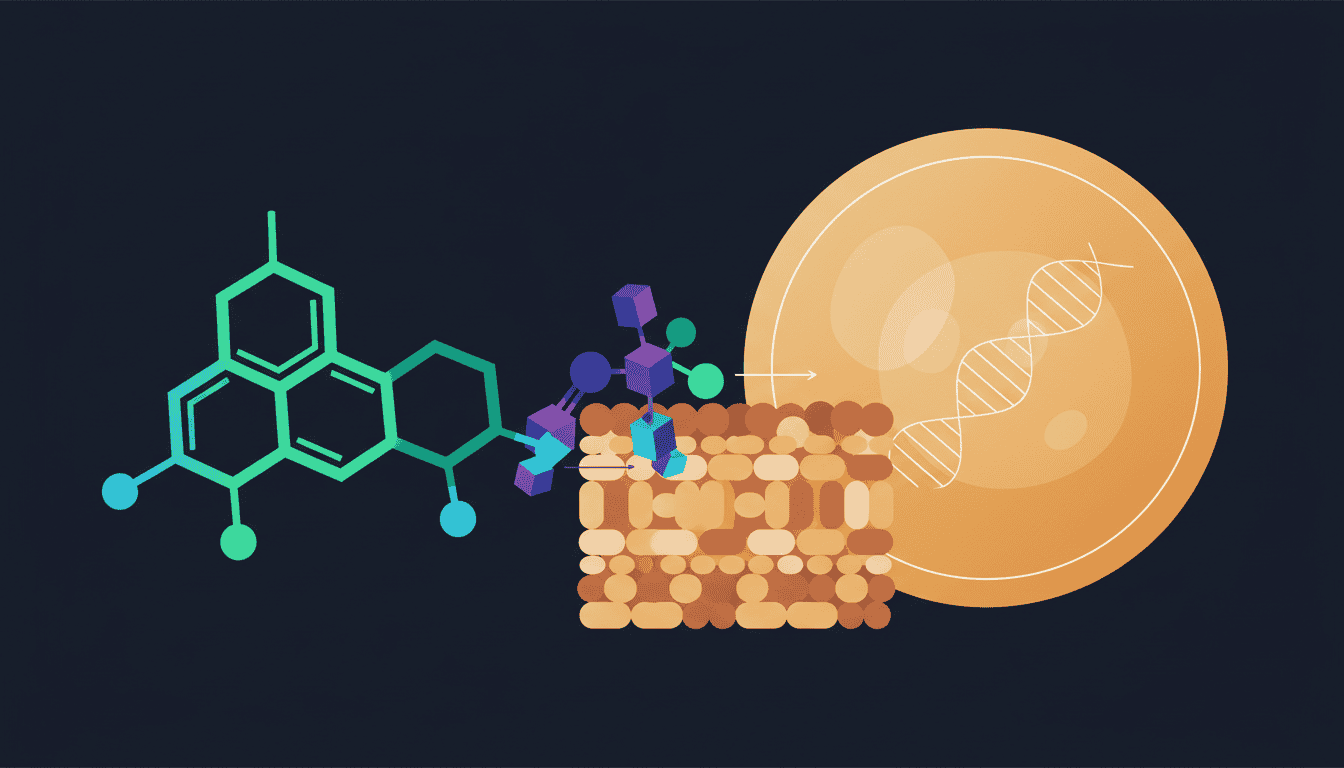
Your morning coffee does something most people never think about: it delivers hundreds of plant compounds directly into your bloodstream. Among these travellers are polyphenols, molecules that coffee plants produce to defend themselves from insects and UV damage. Once inside your cells, some of these compounds appear to flip a switch on a receptor called NR4A1. This receptor sits inside cells like a molecular translator, reading signals and deciding which genes get turned on or off. It’s a conversation happening right now inside billions of your cells, and we’re only beginning to understand what it means.
What is NR4A1
NR4A1 belongs to a family of proteins called nuclear receptors, which act as intracellular sensors. Think of them as cellular mail sorters: they receive chemical signals and decide which genes get delivered to the nucleus for activation. NR4A1 specifically responds to various signals related to cellular stress, metabolism, and immune function.
When NR4A1 gets activated, it travels into the cell nucleus and binds to specific DNA sequences, essentially recruiting other proteins to help turn genes on or off. These genes aren’t random. Many code for proteins involved in cellular defence, managing inflammation, and maintaining metabolic health. The receptor essentially acts as a bridge between what’s happening outside the cell (in your bloodstream, for instance) and what your genes express.
What makes NR4A1 interesting is that it doesn’t stay activated for long. It’s more like a fast-acting alarm system than a sustained defence mechanism. Cells have evolved this design deliberately: quick, coordinated response followed by return to baseline. This prevents cells from staying in constant alert mode, which would be metabolically expensive and potentially harmful.
What the research shows
Studies examining coffee polyphenols and cellular signalling have identified that certain polyphenols, particularly compounds like caffeic acid and chlorogenic acid, can activate NR4A1 in cultured cells. Researchers observed this by measuring changes in gene expression patterns and tracking how quickly NR4A1 moves into the nucleus after polyphenol exposure.
In cell culture experiments, when researchers added coffee polyphenols, they saw increased production of proteins that NR4A1 normally regulates. The response happened relatively quickly, within hours of exposure. More specifically, genes involved in cellular defence against oxidative stress and inflammatory regulation showed elevated activity. Cells essentially mounted a coordinated response to these plant compounds, treating them somewhat like minor stressors that warranted cellular adaptation.
Interestingly, different polyphenols showed varying strengths of effect. This variation matters because it suggests that the specific composition of coffee, influenced by roasting level, origin, and brewing method, might produce different signalling outcomes. Dark roasts contain different polyphenol profiles than light roasts, yet both appear capable of activating these receptors, just through slightly different pathways.
What researchers haven’t fully demonstrated is whether this activation in cultured cells translates directly to the same response in living humans. The gap between a petri dish and a human bloodstream remains substantial, which is why this area continues to generate research interest.
Why cells need this
Evolution didn’t equip cells with NR4A1 to respond to coffee. Instead, this receptor evolved to help cells sense and adapt to various stressors in their environment. When your cells encounter oxidative stress, changes in nutrient availability, or certain immune signals, NR4A1 activation helps coordinate an appropriate response.
Think about what happens when you consume coffee. Your digestive system breaks down the plant material and absorbs various compounds. Some reach your bloodstream and interact with cells lining your digestive tract, blood vessels, and other tissues. From your cells’ perspective, these polyphenols represent foreign molecules that could be either useful or harmful. The cell’s sensors, including NR4A1, help determine which genes to activate based on what’s arriving.
In evolutionary terms, plants and animals have been in chemical conversation for millions of years. When herbivores eat plants, they consume defensive compounds. Over time, some animals evolved receptors that recognised these compounds and mounted adaptive responses. This wasn’t always beneficial to the animal, but sometimes it was. Those individuals with receptors that sensed plant compounds and triggered beneficial cellular responses survived better and passed on these traits. NR4A1 activation might represent one remnant of this ancient evolutionary negotiation.
What affects NR4A1 signalling
The amount of polyphenols you consume obviously matters. Someone drinking three cups of strong coffee daily exposes their cells to far more of these compounds than someone drinking one cup of weak tea. Yet the relationship isn’t simply linear. Your cells can only respond so dramatically before saturation kicks in.
Age appears relevant too. Studies in various organisms show that responsiveness to cellular signalling changes across the lifespan. Older cells sometimes show reduced capacity to activate these defence genes, which could partly explain why cellular adaptation becomes less robust with ageing. This doesn’t mean older people can’t activate NR4A1, but the response may be less vigorous.
Your existing metabolic state influences how cells respond to polyphenols. Someone with chronic inflammation or metabolic dysfunction might activate these receptors differently than someone metabolically healthy. The polyphenols are the same, but the cellular context is entirely different. Genetics also play a role. Variations in how your cells process and respond to these compounds exist between individuals, partly determined by inherited differences in receptor genes and metabolic enzymes.
Gut microbiota compounds the complexity. Your gut bacteria transform some polyphenols into different metabolites, which then enter your bloodstream. These bacterial-derived metabolites might activate NR4A1 more effectively than the original polyphenols. This means your personal microbiome composition actually influences how much benefit your cells get from drinking coffee.
What remains unknown
The biggest gap in our understanding is translating these findings from cells in dishes to whole-organism effects. We know polyphenols can activate NR4A1 in cultured cells. We don’t yet know how much polyphenol needs to reach your cells in vivo, how long the activation lasts, or whether it actually improves cellular function in living people in any measurable way.
We’re also uncertain about the downstream consequences of sustained or repeated NR4A1 activation. What happens to a cell if it’s constantly activated? Does chronic activation help it, harm it, or just keep it in a state of constant vigilance? The answer might depend on the type of cell, the tissue context, and what other signals are arriving simultaneously.
The relationship between coffee consumption patterns and NR4A1 signalling in humans hasn’t been systematically mapped. Do people who drink coffee regularly show different baseline activation patterns than those who rarely drink it? Does your body develop tolerance to these compounds over time? These remain open questions.
We also don’t know which other plant compounds, beyond coffee polyphenols, activate this receptor, or how polyphenols from different sources compare. This knowledge gap is important because it would help researchers understand which dietary patterns might optimally engage these cellular systems.
Understanding how plant compounds interact with our cellular receptors reveals something elegant about biology: we’re not isolated from the organisms we eat. We’re engaged in constant chemical exchange with the living world. Coffee polyphenols and NR4A1 represent just one conversation among thousands happening inside you every moment. As research continues mapping these interactions, we’ll better understand how diet, environment, and cellular machinery form one integrated system rather than separate domains. That integration, it turns out, is where the interesting biology lives.

Matt Elliott is the editor of Redox News Today, an independent publication covering peer-reviewed research on cellular health, redox signalling, and related biomedical science.


