
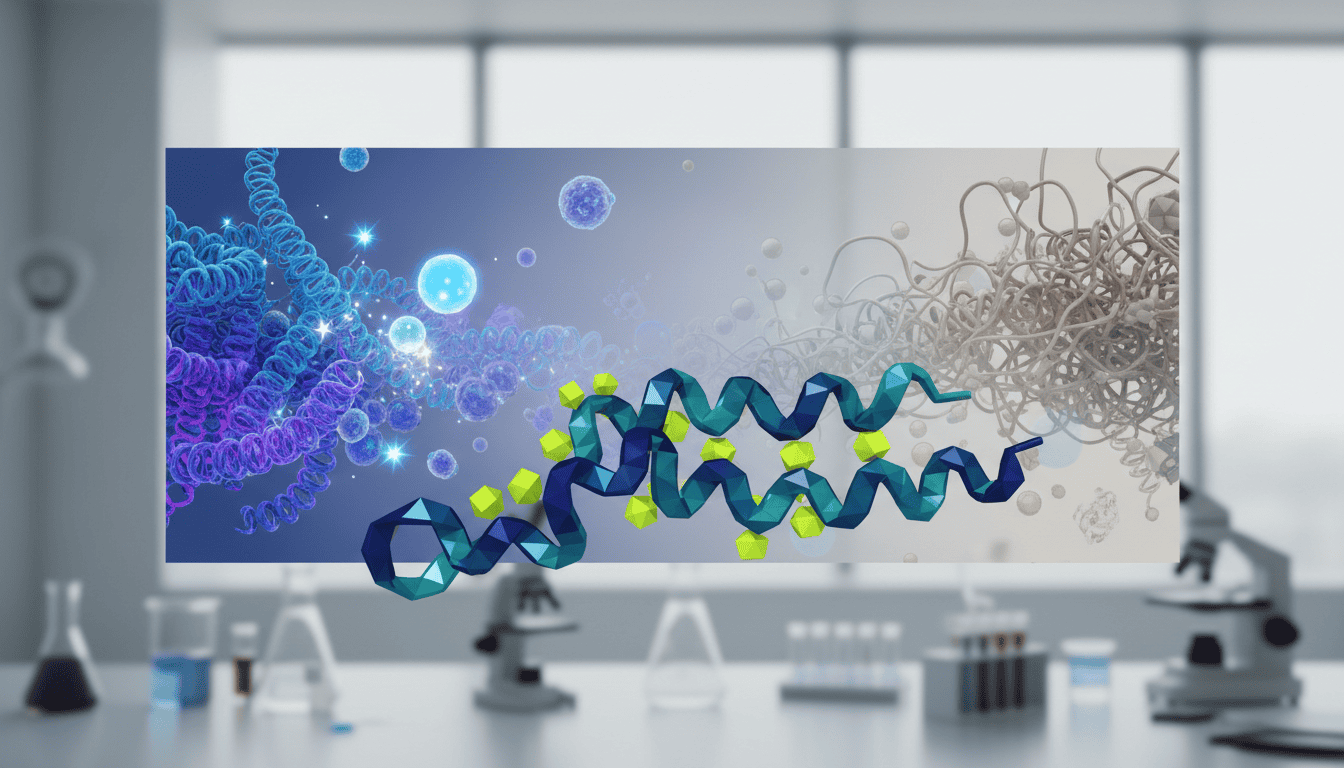
Stem cells sit at a peculiar crossroads in your body. They’re supposed to be immortal, dividing endlessly to replenish tissues. Yet they’re also supposed to know when to stop, when to differentiate, when to surrender their stemness. A single mistake in this negotiation, and you get either exhausted tissues or cancer. Scientists have now found that a specific type of molecular tag applied to the protein Dnmt3L acts like a quality control inspector, determining whether stem cells remain functional or gradually lose their edge.
What is Dnmt3L acetylation
Dnmt3L is a regulatory protein that helps control DNA methylation, a process where chemical markers get added to DNA without changing the genetic sequence itself. Think of methylation as sticky notes attached to instruction manuals. These notes don’t rewrite the instructions, but they tell your cells which pages to read and which to ignore.
Acetylation is when a specific chemical group, an acetyl group, gets attached to proteins. In this case, acetylation happens to Dnmt3L at precise locations. This modification is reversible. Enzymes can add these acetyl tags, and other enzymes can remove them, like putting stickers on and peeling them off. The presence or absence of these acetyl marks changes what Dnmt3L does and how effectively it works.
The connection between these two processes matters because stem cells rely on precise methylation patterns to maintain their identity. When Dnmt3L gets acetylated, it influences how methylation gets laid down across the genome. This affects which genes stay active in stem cells and which get silenced. Get the acetylation wrong, and the cell’s entire regulatory system starts to wobble.
What the research shows
Recent studies reveal that acetylation of Dnmt3L correlates directly with stem cell quality and function. When researchers examined stem cells with high levels of acetylated Dnmt3L, these cells showed better capacity for self-renewal. They divided more predictably. Their methylation patterns remained stable across divisions. They didn’t accumulate the kind of epigenetic damage that marks aged or dysfunctional stem cells.
Conversely, stem cells lacking adequate Dnmt3L acetylation showed signs of decline. Their methylation patterns became chaotic, with critical regulatory regions losing their protective marks. These cells divided less effectively. Over multiple generations in culture, they accumulated mutations at higher rates. The researchers also observed that these poorly acetylated stem cells had trouble maintaining proper gene expression, struggling to keep stemness genes active while keeping differentiation genes properly silenced.
The research team tracked these changes at the molecular level using advanced sequencing technology. They mapped exactly which genes showed altered methylation patterns depending on Dnmt3L acetylation status. They found that genes controlling cell cycle regulation and self-renewal capacity were particularly sensitive to these changes. When acetylation was present, these genes maintained their proper methylation state. When acetylation was absent, methylation patterns drifted toward differentiation.
Why cells need this
Evolution preserved this acetylation system because stem cell maintenance is genuinely difficult. A stem cell must walk a tightrope between two contradictory demands. It needs to divide frequently, copying its entire genome millions of times without accumulating errors. Simultaneously, it needs to maintain its stemness, never accidentally sliding into a differentiated state unless instructed to do so.
DNA methylation provides one layer of this defence. It marks certain genes to stay silent in stem cells. But methylation systems themselves need supervision. Dnmt3L acts as part of that supervisory machinery. Its acetylation status appears to be a checkpoint mechanism, a way for cells to assess whether their methylation system is functioning properly. If Dnmt3L acetylation drops, it signals trouble in the methylation machinery, and cells may respond by changing their behaviour or triggering defence mechanisms.
This becomes especially important during ageing and stress. Maintaining proper stem cell function throughout life requires constant fine-tuning of these epigenetic systems. Cells can’t afford to let their stem cell reserves deteriorate. Tissue repair depends on having a functional pool of stem cells available. The Dnmt3L acetylation system appears to be one of the mechanisms that keeps this pool viable across decades.
What affects Dnmt3L acetylation
Several factors influence how much Dnmt3L gets acetylated in living cells. Histone deacetylase activity, an enzyme class that removes acetyl marks, goes up during cellular stress and ageing. When these enzymes become more active, they strip acetyl groups from various proteins including Dnmt3L. This creates a vicious cycle: stress reduces Dnmt3L acetylation, which impairs stem cell function, which reduces the body’s capacity to respond to stress.
Nutritional factors affect acetylation status as well. The acetylation reaction requires acetyl-CoA, a molecule derived from metabolic processes. Cells with poor energy metabolism or inadequate nutrient availability show reduced protein acetylation across the board. This suggests that nutritional state influences stem cell quality partly through effects on Dnmt3L acetylation.
Environmental factors play a role too. Oxidative stress reduces acetylation through multiple pathways. Chronic inflammation triggers signalling cascades that activate deacetylases. Age itself correlates with declining Dnmt3L acetylation levels, a finding researchers attribute to changes in deacetylase activity that accumulate over time. These factors don’t operate in isolation. A 60-year-old dealing with chronic stress and poor nutrition faces a compound problem with their stem cell maintenance.
What remains unknown
Scientists still don’t fully understand how cells monitor Dnmt3L acetylation status and respond to changes. Is there a sensor mechanism that detects when acetylation levels drop? Does the cell have ways to compensate if Dnmt3L acetylation becomes insufficient? These questions remain open.
The relationship between Dnmt3L acetylation and other epigenetic modifications also needs clarification. DNA methylation works alongside histone modifications and chromatin remodelling. Dnmt3L acetylation might influence these other systems, but the specific mechanisms remain poorly characterised. Researchers also haven’t yet determined whether acetylation at different sites on the Dnmt3L protein has distinct functions, or whether all acetylation sites contribute equally to stem cell maintenance.
Perhaps most intriguingly, scientists don’t know whether selectively increasing Dnmt3L acetylation could enhance stem cell function in practical applications. Laboratory research shows correlation and some causation, but therapeutic translation remains speculative. How age-related changes in Dnmt3L acetylation contribute to tissue decline specifically in different organs represents another frontier.
The study of how Dnmt3L acetylation influences stem cells points toward a bigger realisation in cellular biology. Cells don’t maintain themselves through simple, permanent programs. Instead, they run continuous quality control systems, constantly checking whether their regulatory machinery works properly. Dnmt3L acetylation appears to be one such checkpoint. Understanding these checkpoints helps explain how cells age, why they sometimes fail, and how they occasionally go catastrophically wrong. This layer of cellular surveillance matters more than many people appreciate.

Matt Elliott is the editor of Redox News Today, an independent publication covering peer-reviewed research on cellular health, redox signalling, and related biomedical science.