
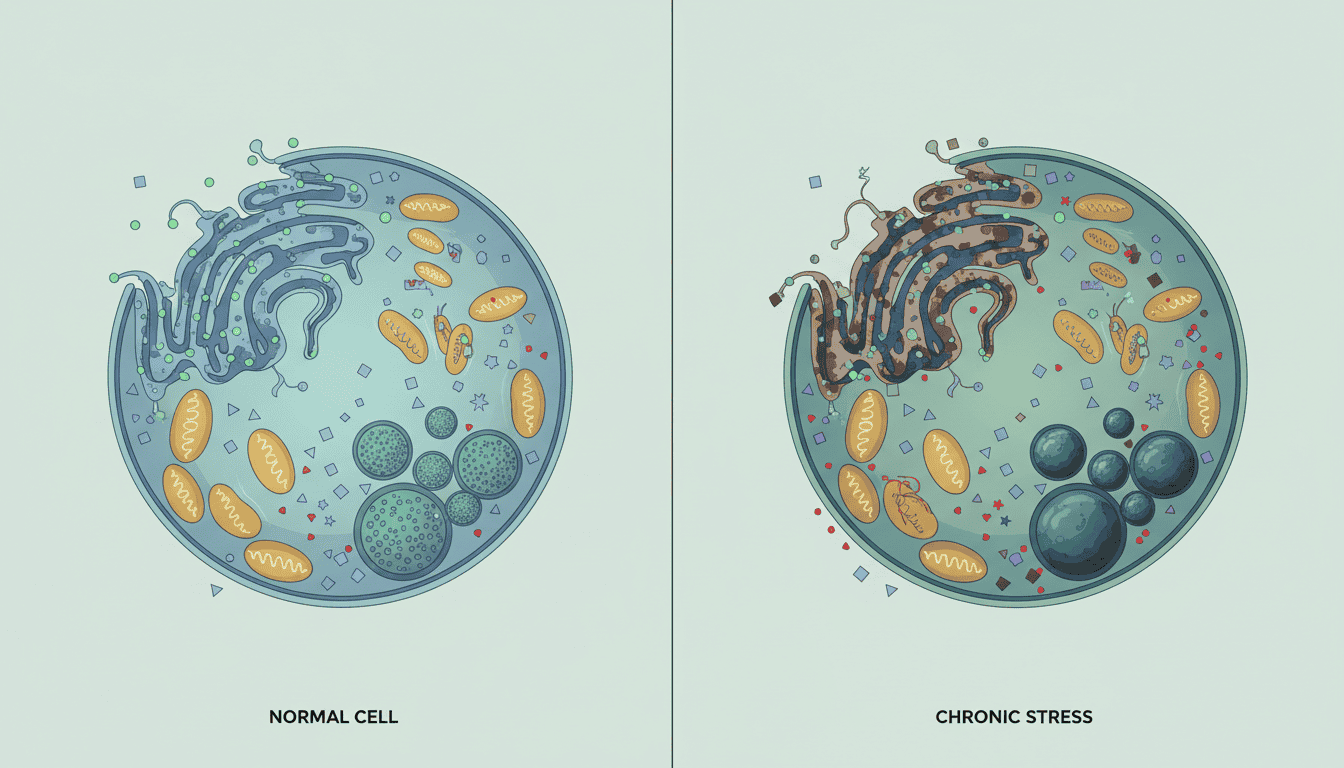
Your pancreas makes insulin in small clusters of cells called islets. Within those islets, beta cells do the actual work: they sense glucose and release insulin to keep blood sugar stable. But here’s the problem. Beta cells are finicky. They’re constantly exposed to metabolic stress, oxidative damage, and inflammatory signals. When these stressors pile up, beta cells don’t just work less efficiently. They often die. Understanding how beta cells respond to stress at the molecular level is helping researchers see why this system fails in type 2 diabetes and what might prop it up again.
What is cellular stress response in beta cells
When a beta cell encounters stress, it doesn’t panic and shut down immediately. Instead, it activates several sophisticated molecular defence systems. The main ones include the unfolded protein response, which manages misfolded proteins building up in the cell. There’s also the oxidative stress response, where beta cells ramp up production of antioxidant enzymes to neutralise harmful free radicals. Autophagy kicks in too, a kind of cellular housekeeping where damaged components get packaged up and recycled.
These responses are survival mechanisms. They buy time. But they’re also metabolically expensive. When a beta cell is busy managing stress, it has fewer resources to produce and secrete insulin. This creates a trade off that matters enormously for glucose control. The cell is essentially choosing between self preservation and its primary job.
What the research shows
Studies using isolated beta cells and pancreatic tissue show that moderate stress activates these defence pathways and beta cells survive fine. But when stress becomes chronic or severe, something shifts. The defence systems start to malfunction. Autophagy can become excessive, leading to unwanted cell death. The unfolded protein response can flip into a proapoptotic state where the cell commits suicide rather than continue struggling.
Researchers have observed that beta cells exposed to prolonged high glucose, chronic inflammation, or elevated free fatty acids show reduced insulin secretion even before cell death occurs. The stress response machinery itself gets exhausted. Genetic studies reveal that people with certain variations in genes controlling these pathways show differences in beta cell function and diabetes risk.
One particularly interesting finding involves the interaction between different stress pathways. When oxidative stress and endoplasmic reticulum stress happen simultaneously, beta cells don’t simply activate both defence systems in parallel. Instead, crosstalk between these pathways can amplify the damage, making the cell more likely to die rather than recover.
Why cells need this
Beta cells are unusual among cell types. They operate at high metabolic intensity constantly. They’re synthesising large amounts of insulin protein, packaging it, and secreting it on demand. This creates significant endoplasmic reticulum stress just as part of normal function. Add metabolic pressure like obesity or chronic overeating, and that baseline stress multiplies.
Evolution preserved these stress response systems in beta cells because they work brilliantly for short term challenges. An acute spike in glucose? The cell can handle elevated protein synthesis demands. A temporary inflammatory signal? The cell ramps up antioxidant defences and carries on. The problem is that modern metabolic challenges aren’t temporary. They persist for years or decades. A defence system built for occasional emergencies breaks down when the emergency becomes chronic.
The stress response also serves a gatekeeping function. By reducing insulin secretion during stress, beta cells prevent themselves from burning out completely. It’s a rational response: shut down production when you’re under threat, preserve your own viability. But when you’re part of a system that depends on maintaining glucose control, this self preservation impulse works against the bigger picture.
What affects cellular stress in beta cells
Multiple factors influence how much stress beta cells experience and how well their defence systems function. High blood glucose triggers endoplasmic reticulum stress directly. Elevated free fatty acids do too, and they also increase oxidative stress by disrupting mitochondrial function. Chronic inflammation from obesity or infection elevates pro inflammatory cytokines that damage beta cells independently of metabolic stress.
Age matters significantly. Ageing impairs autophagy and reduces the efficiency of protein quality control. An older beta cell facing the same metabolic challenge as a younger one will accumulate more damaged proteins and reactive oxygen species. This helps explain why type 2 diabetes typically emerges later in life.
Sleep disruption, chronic stress, and sedentary behaviour all increase systemic inflammation and oxidative stress, which reaches beta cells through the bloodstream. Exercise appears to improve beta cell stress resilience, possibly by reducing circulating inflammatory markers and improving mitochondrial function throughout the body. Diet composition matters too, with evidence suggesting that diets high in refined carbohydrates and low in antioxidant rich foods accelerate beta cell stress.
What remains unknown
Researchers still don’t fully understand why some people’s beta cells remain resilient despite obesity and metabolic stress, while others lose function quickly. Genetic variation clearly plays a role, but the specific molecular differences conferring protection aren’t yet clear. This is a major gap because identifying those protective factors might reveal therapeutic targets.
The sequence and timing of events leading to beta cell failure also needs clarification. Does dysfunction always precede cell death, or do beta cells sometimes fail catastrophically without warning? How much of the dysfunction in type 2 diabetes reflects ongoing stress versus permanent damage from previous stress? These distinctions matter for potential interventions.
Scientists are also puzzled by beta cell heterogeneity. Not all beta cells in an islet respond identically to stress. Some remain functional while neighbours deteriorate. Understanding this cell to cell variation could explain why type 2 diabetes develops gradually rather than suddenly, and whether there are subpopulations of beta cells with distinct stress vulnerabilities.
The relationship between beta cell stress and immune system activation remains incompletely understood. It’s clear that stressed beta cells signal to immune cells, but whether this is primarily harmful, protective, or situation dependent is still being worked out.
Pancreatic beta cells sit at a fascinating junction in cellular biology. They’re specialised secretory cells with extraordinary metabolic demands, pushed relentlessly by the demands of modern life. Their stress response systems are genuinely elegant, but they’re also finite. The more we understand how these systems work and fail, the clearer it becomes that fixing metabolic disease won’t be about finding a single target. It’ll require understanding the complex dance between a cell’s capacity to handle stress and the cumulative burden that modern physiology places on it.

Matt Elliott is the editor of Redox News Today, an independent publication covering peer-reviewed research on cellular health, redox signalling, and related biomedical science.