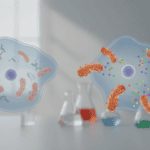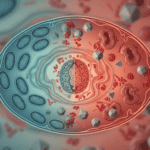

Pancreatic cancer cells do something counterintuitive. They break their own mitochondria, then weaponise the damage to fuel inflammation that helps them survive and spread. This isn’t sabotage. It’s a calculated strategy that turns a sign of cellular failure into a competitive advantage.
What is mitochondrial dysfunction in cancer
Mitochondria are the cell’s power plants, but they’re also information centres. When they work properly, they burn fuel and release energy. When they malfunction, they leak reactive molecules that set off alarm bells inside the cell. Cancer cells, especially pancreatic cancer cells, don’t always avoid this damage. Sometimes they actively create it.
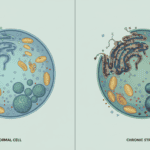
In healthy cells, damaged mitochondria trigger a defensive response. The cell detects problems and either repairs the damage or destroys the broken mitochondria through a process called autophagy. Pancreatic cancer cells have warped this system. They accumulate dysfunctional mitochondria instead of clearing them. These broken organelles then broadcast distress signals that activate inflammatory pathways throughout the cell.
This creates a constant state of controlled alarm. The cell doesn’t shut down. Instead, it harnesses that inflammatory state to promote survival and growth. It’s like running an immune response against your own mitochondria, but weaponising the resulting inflammation for your own benefit.
What the research shows
Scientists studying pancreatic cancer tissue consistently observe mitochondria that look damaged under electron microscopy: swollen, with disrupted inner membranes and fragmented structures. These cells show elevated levels of mitochondrial DNA in the cytoplasm, leaking out of damaged organelles. They also display activation of inflammatory signalling pathways like NF-kB and NLRP3 inflammasome, the cellular equivalent of raising the alarm.
When researchers isolate pancreatic cancer cells and force them to repair their mitochondria (either by removing damaged mitochondria or blocking inflammatory signalling), the cells become less aggressive in culture. They proliferate more slowly and produce fewer inflammatory molecules. Reverse the intervention, allow mitochondrial damage to accumulate again, and the inflammatory response ramps back up.
The pattern holds across different pancreatic cancer subtypes. Whether cells carry KRAS mutations, have lost p53 function, or possess other hallmark cancer changes, those with dysfunctional mitochondria consistently show higher inflammatory signalling. This isn’t noise in the data. It’s a repeated observation across multiple labs and experimental approaches.
Why cells need this
The question isn’t why healthy cells avoid mitochondrial damage. The real puzzle is why cancer cells embrace it. The answer lies in what inflammation does for these cells.
Inflammatory signalling promotes survival under stress. Pancreatic tumours are hostile environments: low oxygen, limited glucose, acid from lactate accumulation, attack from immune cells. A pancreatic cancer cell living in this chaos needs constant survival signals. Mitochondrial dysfunction provides a built-in generator for those signals. No external inflammatory molecules required. The cell creates its own stimulus.
This also helps cancer cells remodel their surroundings. Inflammatory cytokines secreted by cancer cells recruit immune cells, activate cancer-associated fibroblasts, and trigger formation of the tumour stroma. That thick, fibrous tissue around pancreatic tumours isn’t accidental. It’s partly constructed by signals originating from cells with broken mitochondria.
There’s also a metabolic angle. Dysfunctional mitochondria can’t efficiently produce energy, so cancer cells shift toward glycolysis and glutamine metabolism. These alternative pathways don’t just provide energy. They supply building blocks for making new proteins, nucleotides, and lipids. Inflammation from broken mitochondria actually supports this metabolic rewiring.
What affects mitochondrial dysfunction in pancreatic cancer
Cancer cells don’t passively accumulate damaged mitochondria. Specific mutations and cellular pressures actively drive this state. KRAS mutations, present in 90 percent of pancreatic cancers, alter how cells regulate mitochondrial fission and fusion. Cells break apart their mitochondria more aggressively, creating smaller, damaged versions.
Metabolic stress intensifies mitochondrial damage. When glucose becomes scarce or oxygen drops, mitochondria struggle. Cancer cells exposed to repeated cycles of nutrient starvation and replenishment develop more dysfunction. Hypoxia, common in dense pancreatic tumours, pushes mitochondria toward malfunction even in the absence of genetic mutations.
Age matters too. Older cells have more mitochondrial damage to begin with. In pancreatic tissue from older individuals, cancer cells seem to accumulate dysfunction more readily. This likely contributes to why pancreatic cancer risk increases sharply with age.
Environmental factors play a role. Some research suggests chronic pancreatitis, often triggered by alcohol or smoking, creates a tissue environment where mitochondrial dysfunction becomes advantageous for nascent cancer cells. Cells adapt to the inflammation they’re exposed to.
What remains unknown
The basic observation is solid: pancreatic cancer cells have dysfunctional mitochondria that drive inflammation. The mechanisms powering specific aspects remain murky. Researchers still don’t fully understand which molecules inside damaged mitochondria trigger the strongest inflammatory signals. Is it free DNA? Oxidised lipids? Calcium released from broken organelles? Probably all three, but the hierarchy matters for developing interventions.
It’s also unclear whether mitochondrial dysfunction causes pancreatic cancer development or appears as a consequence of transformation. Does chronic mitochondrial damage in pancreatic tissue increase cancer risk? Or do early cancer cells acquire mutations that force mitochondrial dysfunction? The answer probably involves both, but the relative contributions remain unresolved.
There’s a practical question too: can pancreatic cancer cells survive without mitochondrial dysfunction? If you remove the damage, do they die or simply adapt a different survival strategy? Early evidence suggests they adapt, becoming dependent on different inflammatory pathways. Understanding this adaptive capacity would be essential for targeting this vulnerability.
Pancreatic cancer’s relationship with mitochondrial damage reveals something fundamental about how cancer cells operate. They don’t simply break and die. They break and repurpose the damage. They exploit the warning systems cells evolved to protect themselves, converting cellular danger signals into survival advantages. Understanding this reversal, and finding ways to prevent it, remains one of the open challenges in pancreatic cancer biology.

Matt Elliott is the editor of Redox News Today, an independent publication covering peer-reviewed research on cellular health, redox signalling, and related biomedical science.